
Watermelon can be a refreshing occasional treat for many healthy dogs when it is prepared correctly.
The soft red flesh is the part to serve. Remove the rind and mature seeds, keep portions modest, and remember that watermelon is an extra—not a replacement for complete and balanced dog food.
Is Watermelon Safe for Dogs?
Yes, properly prepared watermelon flesh is generally safe for most healthy dogs.
Serve watermelon:
- plain
- without the rind
- without mature seeds
- in pieces appropriate for your dog’s size
- in moderation
Avoid watermelon-flavored candy, drinks, syrups, or other processed products that may contain added sugar, artificial sweeteners, or ingredients that are not appropriate for dogs.
If watermelon is new to your dog, start with a small amount and watch for digestive upset before offering it again.
Is Watermelon Good for Dogs?
Watermelon is mostly water and contains nutrients including vitamins A, B6, and C as well as potassium.
Its high water content can make it a refreshing treat, especially during warm weather.
However, watermelon should not be treated as a nutritional supplement.
A complete and balanced dog food is formulated to provide the nutrients your dog needs. Watermelon is simply an optional treat that can add variety.
Potential advantages include:
- high water content
- relatively low calorie density compared with many treats
- vitamins and minerals
- a soft texture that is easy to portion
- the option to serve it chilled or frozen
The presence of nutrients does not mean dogs need large servings. Watermelon also contains natural sugar, and too much can cause digestive upset or add unnecessary calories.
Which Parts of Watermelon Can Dogs Eat?
Not every part of a watermelon belongs in your dog’s bowl.
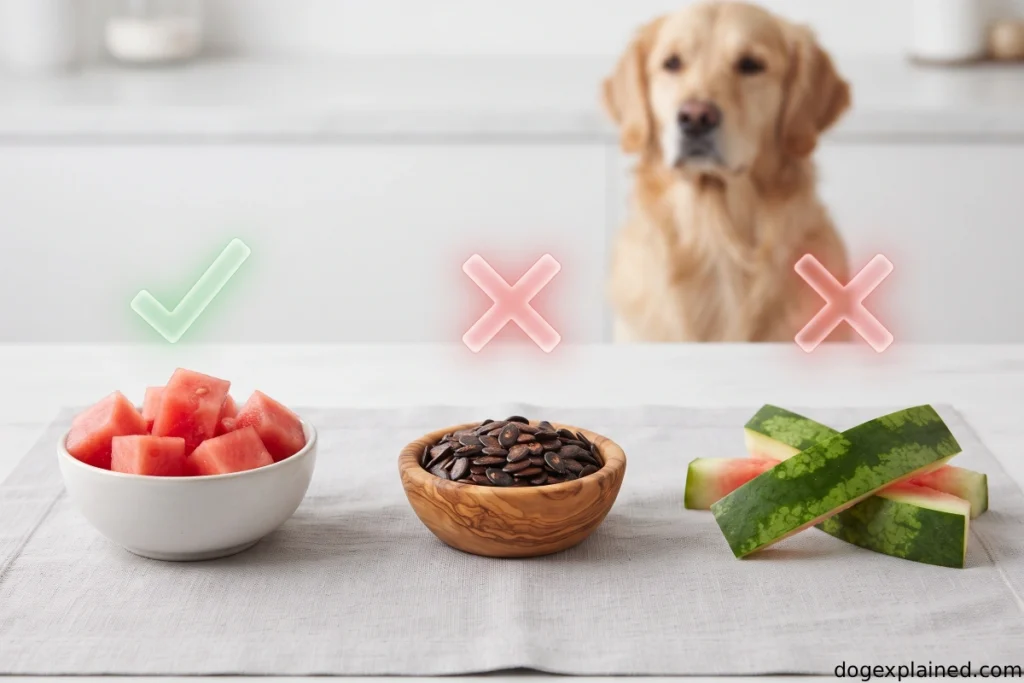
Watermelon Flesh
The soft red or pink flesh is the part dogs can eat.
Cut it away from the rind, remove mature seeds, and serve it in small pieces.
Plain fresh watermelon is the simplest option.
Watermelon Seeds
Mature black or brown watermelon seeds should be removed before serving.
A few accidentally swallowed seeds are unlikely to cause problems for most healthy dogs, but intentionally feeding seeds is unnecessary, and larger ingestions may create choking or gastrointestinal concerns.
If your dog has already swallowed seeds, see our detailed guide to watermelon seeds and dogs.
Watermelon Rind
Dogs should not intentionally eat watermelon rind.
The rind is tough and difficult to chew and digest. It may cause gastrointestinal upset and can create a choking or intestinal-obstruction risk if a problematic piece is swallowed.
If your dog has already eaten rind, see our watermelon rind safety guide for what to watch for and when to contact a veterinarian.
How Much Watermelon Can a Dog Eat?
There is no single number of watermelon cubes that is appropriate for every dog.
A Chihuahua and a Great Dane have very different calorie requirements, and portion size also depends on factors such as:
- body size
- age
- activity level
- body condition
- regular diet
- other treats
- health conditions
A useful general rule is that all treats and extras combined should provide no more than about 10% of a dog’s daily calories. The remaining 90% or more should come from a complete and balanced diet.
The 10% figure is a maximum guideline for all treats combined—not a target for watermelon.
For more detailed portion guidance, see our guide to how much watermelon a dog can eat.
How to Prepare Watermelon Safely
Proper preparation removes most of the avoidable risks.

Before serving watermelon:
- Wash the outside of the fruit.
- Cut away the entire rind.
- Remove mature black or brown seeds.
- Cut the soft flesh into pieces appropriate for your dog’s size.
- Serve it plain.
- Start with a small amount if your dog has never eaten watermelon before.
Seedless watermelon is usually the easiest option, although you should still inspect it for any mature dark seeds.
Do not add sugar, syrup, chocolate, sweeteners, or other toppings.
Can Puppies Eat Watermelon?
Properly prepared watermelon flesh can also be offered to many puppies as an occasional treat.
Puppies have specific nutritional requirements for growth, so most of their calories should come from complete and balanced puppy food.
Remove the rind and mature seeds, introduce only a small amount initially, and avoid using fruit as a substitute for nutritionally complete puppy food.
For puppy-specific guidance, see our Can Puppies Eat Watermelon? guide.
Can Dogs Eat Seedless Watermelon?
Yes. Seedless watermelon is usually the easiest type to prepare for dogs.
Remove the rind and inspect the flesh for any mature dark seeds before serving.
Seedless watermelon can contain small soft white undeveloped seed structures. These are different from mature black or brown seeds, but there is still no need to deliberately feed seeds as part of the treat.
Serve only the soft flesh in moderation.
Can Dogs Eat Frozen Watermelon?
Yes, plain watermelon flesh can be frozen after the rind and mature seeds have been removed.
Frozen watermelon can make a refreshing warm-weather treat.
Cut the fruit into pieces appropriate for your dog’s size before freezing it. For smaller dogs or dogs that tend to gulp food, consider allowing frozen pieces to soften slightly before serving.
Do not use commercially prepared frozen watermelon products if they contain added sugar, artificial sweeteners, or other unnecessary ingredients.
When Watermelon May Not Be a Good Choice
Watermelon is not appropriate for every dog.
Speak with your veterinarian before adding watermelon or other human foods if your dog has:
- diabetes
- obesity or a strict weight-management plan
- digestive disease
- sensitivity to dietary changes
- another condition that affects food choices
- a veterinarian-prescribed diet
Dogs on prescription diets generally should not receive additional foods or treats unless their veterinarian says they are appropriate.
Even a food that is considered safe for most healthy dogs can be unsuitable for an individual dog.
Can Too Much Watermelon Make a Dog Sick?
Yes.
Eating too much watermelon can cause digestive upset, particularly if a dog is not accustomed to eating fruit.
Possible signs include:
- loose stool or diarrhea
- gas
- bloating
- vomiting
- stomach discomfort
- reduced appetite
Stop offering watermelon if digestive symptoms develop.
If symptoms are severe or persistent, or your dog becomes lethargic, repeatedly vomits, or appears significantly uncomfortable, contact your veterinarian.
Frequently Asked Questions
Can Dogs Have Watermelon Every Day?
Some healthy dogs may tolerate small amounts regularly, but watermelon does not need to be part of a dog’s daily diet.
An occasional small serving is sufficient for most dogs.
If watermelon is given frequently, it still counts toward the same overall treat allowance as training treats, biscuits, chews, and other extras.
Is Seedless Watermelon Better for Dogs?
Seedless watermelon is usually more convenient because there are fewer mature seeds to remove.
The same rules still apply: discard the rind, inspect for mature seeds, serve only the soft flesh, and keep the portion modest.
Can Watermelon Give Dogs Diarrhea?
Yes. Too much watermelon can cause loose stool or diarrhea in some dogs.
Introduce it gradually and reduce or discontinue it if digestive problems occur.
For routine feeding, serve only plain watermelon flesh after removing the rind and mature seeds. Keep the serving modest and count it together with all other treats. If your dog has a health condition, follows a prescription diet, or develops symptoms after eating watermelon, ask your veterinarian for individualized guidance.
Another fruit option is covered in our guide to blueberries for dogs.