
Ripe mango can be an occasional treat for many healthy dogs when it is prepared properly.
The soft flesh contains fiber, vitamins, minerals, and naturally occurring plant compounds, but mango is also relatively high in natural sugar. That makes portion control important.
The skin and pit should be removed before serving.
Are Mangoes Safe for Dogs?
Yes. Ripe mango flesh is generally safe for most healthy dogs when served plain and in moderation.
For safer feeding:
- wash the mango before cutting it
- remove the skin
- remove the pit completely
- cut the flesh into pieces appropriate for your dog’s size
- serve it plain
- introduce only a small amount if mango is new to your dog
Avoid mango served in syrup, heavily sweetened mango products, desserts, or foods containing ingredients that may be unsafe for dogs.
Mango should remain an occasional extra rather than replacing part of a complete and balanced dog diet.
Are Mangoes Good for Dogs?
Mango contains several nutrients, including:
- fiber
- vitamin A
- vitamin B6
- vitamin C
- vitamin E
- potassium
- naturally occurring antioxidants
These nutrients are one reason mango can be a more nutritious treat choice than many highly processed snacks.
However, a dog eating a complete and balanced diet does not need mango to meet its nutritional requirements.
Mango also contains natural sugar. Feeding larger portions does not necessarily provide more benefit and may simply add unnecessary calories or contribute to digestive upset.
If you are comparing other fruit treats, our guide to bananas for dogs covers another commonly offered option.
How Much Mango Can a Dog Eat?
There is no single amount of mango that is appropriate for every dog.
A suitable portion depends on factors such as:
- body size
- age
- activity level
- body condition
- daily calorie requirements
- regular diet
- other treats
- medical conditions
- digestive tolerance
A useful general guideline is that all treats and extras combined should provide no more than about 10% of a dog’s daily calories.
The remaining 90% or more should come from complete and balanced dog food.
That 10% is not a separate mango allowance. Biscuits, training treats, chews, fruit, table foods, and other extras all count toward the same limit.
If your dog has never eaten mango before, start with a small piece and see how the dog responds.
How to Prepare Mango Safely
Preparing mango correctly matters because both the skin and the large central pit should be removed.
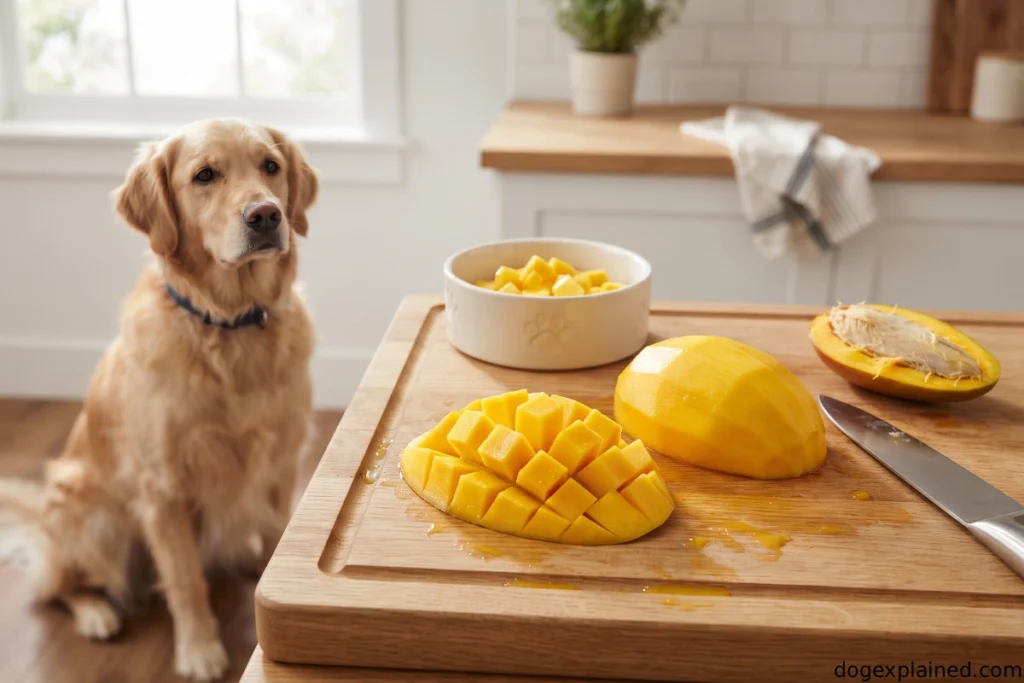
Before serving mango:
- Wash the outside of the fruit.
- Peel away the skin completely.
- Remove the pit.
- Cut only the soft flesh into pieces appropriate for your dog’s size.
- Serve it plain.
- Start with a small amount if mango is new to your dog.
Mango can also be mashed and used as a small food topper or enrichment ingredient.
Whatever form you use, it still counts toward the dog’s overall treat intake.
Can Dogs Eat Mango Skin?
It is better not to intentionally feed mango skin to dogs.
Although the skin is not the main toxic concern, it is tougher and more difficult to digest than the soft flesh.
Removing the skin makes mango easier to chew and digest and avoids exposing the dog to an unnecessary part of the fruit.
If your dog accidentally eats a small amount of mango skin and remains well, monitor for digestive upset.
Contact your veterinarian if vomiting, persistent diarrhea, significant discomfort, or another concerning symptom develops.
Can Dogs Eat Mango Pit?
No. Mango pits should not be intentionally given to dogs.
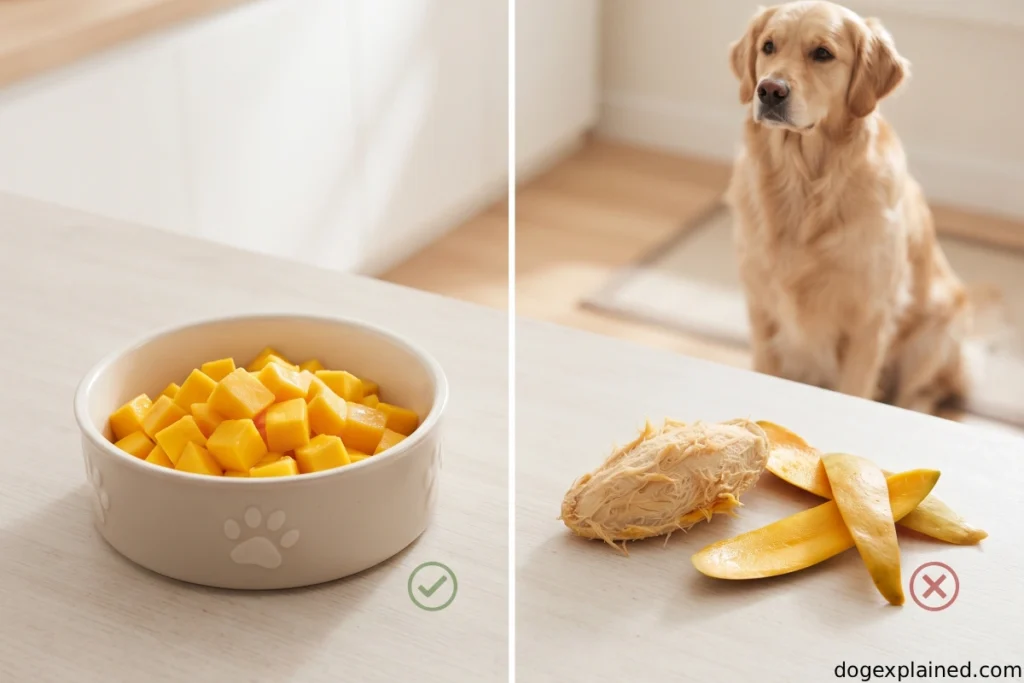
A mango pit is large, hard, and difficult to digest. It can create a choking hazard or become lodged in the gastrointestinal tract and cause an obstruction.
The safest approach is simple: remove the pit completely before any mango reaches your dog’s bowl.
What If My Dog Ate a Mango Pit?
If your dog swallowed a mango pit or a substantial piece of one, contact your veterinarian promptly for guidance.
Do not assume that the pit will pass safely just because your dog appears normal immediately afterward.
Risk can depend on factors such as:
- the size of the dog
- whether the pit was swallowed whole or in pieces
- the size of the swallowed piece
- how long ago it happened
- whether symptoms have developed
Possible signs of a gastrointestinal obstruction include:
- repeated vomiting
- loss of appetite
- abdominal pain or discomfort
- unusual lethargy
- weakness
- difficulty passing stool
- abdominal swelling
- persistent diarrhea or another significant digestive change
Seek veterinary attention promptly if any concerning symptoms develop.
Do not try to make your dog vomit unless a veterinarian specifically instructs you to do so.
Can Puppies Eat Mango?
Many healthy puppies can eat a small amount of ripe mango flesh once they are eating solid foods and tolerating treats.
Puppies have specific nutritional requirements for growth, so most of their calories should continue to come from complete and balanced puppy food.
For puppies:
- remove both the skin and pit
- cut the flesh into small pieces
- introduce only a small amount
- watch for digestive upset
- keep all treats within the puppy’s overall treat allowance
Mango is optional. Puppies do not need fruit as part of a balanced growth diet.
Can Dogs Eat Frozen Mango?
Yes. Plain frozen mango can be an occasional treat for many healthy dogs.
Remove the skin and pit before freezing the flesh.
Use appropriately sized pieces, and consider allowing frozen mango to soften slightly for smaller dogs or dogs that tend to gulp food.
Avoid frozen mango products with added sugar, syrup, chocolate, artificial sweeteners, or other unnecessary ingredients.
Freezing mango does not reduce its sugar or calorie contribution, so portion control still applies.
You can also see our guide to blueberries for dogs, which covers fresh and frozen serving options.
When Mango May Not Be a Good Choice
Mango is not suitable for every dog.
Ask your veterinarian before adding mango or other human foods if your dog:
- has diabetes
- is overweight or on a controlled-calorie diet
- has a sensitive gastrointestinal tract
- follows a veterinarian-prescribed diet
- has a history of food reactions
- is currently vomiting or experiencing diarrhea
- has another condition that affects diet
Because mango is naturally sweet, dogs whose calorie or sugar intake needs close control may be better suited to another treat.
Signs Your Dog Ate Too Much Mango
Too much mango may cause gastrointestinal upset.
Possible signs include:
- loose stool or diarrhea
- vomiting
- gas
- bloating
- abdominal discomfort
- reduced appetite
Stop offering mango if it appears to cause digestive problems.
Contact your veterinarian if symptoms are severe or persistent, or if your dog develops repeated vomiting, significant abdominal pain, weakness, blood in vomit or stool, collapse, or another concerning change.
Frequently Asked Questions
Can Dogs Have Mango Every Day?
Some healthy dogs may tolerate small amounts regularly, but mango does not need to be part of a dog’s daily diet.
Because it contains natural sugar and calories, it is better treated as an occasional extra.
Can Dogs Eat Dried Mango?
Plain unsweetened dried mango may be suitable in very small amounts, but dried fruit is more concentrated than fresh fruit.
Commercial dried mango may also contain added sugar or other ingredients.
Fresh mango flesh is usually the simpler option.
Can Dogs Eat Mango With Yogurt?
Plain mango may be combined with a small amount of dog-safe plain yogurt if your dog tolerates dairy.
Avoid sweetened or flavored products and check the ingredient list carefully.
Any yogurt containing xylitol should never be given to a dog.
Can Dogs Eat Unripe Mango?
Ripe, soft mango flesh is the better option.
Unripe mango is firmer and may be harder to chew or digest, so there is little reason to offer it when ripe mango is available.
For routine feeding, remove both the skin and pit, serve only a modest amount of ripe mango flesh, and count it together with all other treats. If your dog swallows a mango pit, has a medical condition, follows a prescription diet, or develops concerning symptoms after eating mango, contact your veterinarian for individualized advice.