
Fresh strawberries can be an occasional treat for many healthy dogs when they are prepared properly and served in moderation.
They are not a necessary part of a dog’s diet, but they can offer variety alongside a complete and balanced dog food.
Is It Safe for Dogs to Eat Strawberries?
Yes. Fresh strawberries are generally safe for most healthy dogs when served in sensible portions.
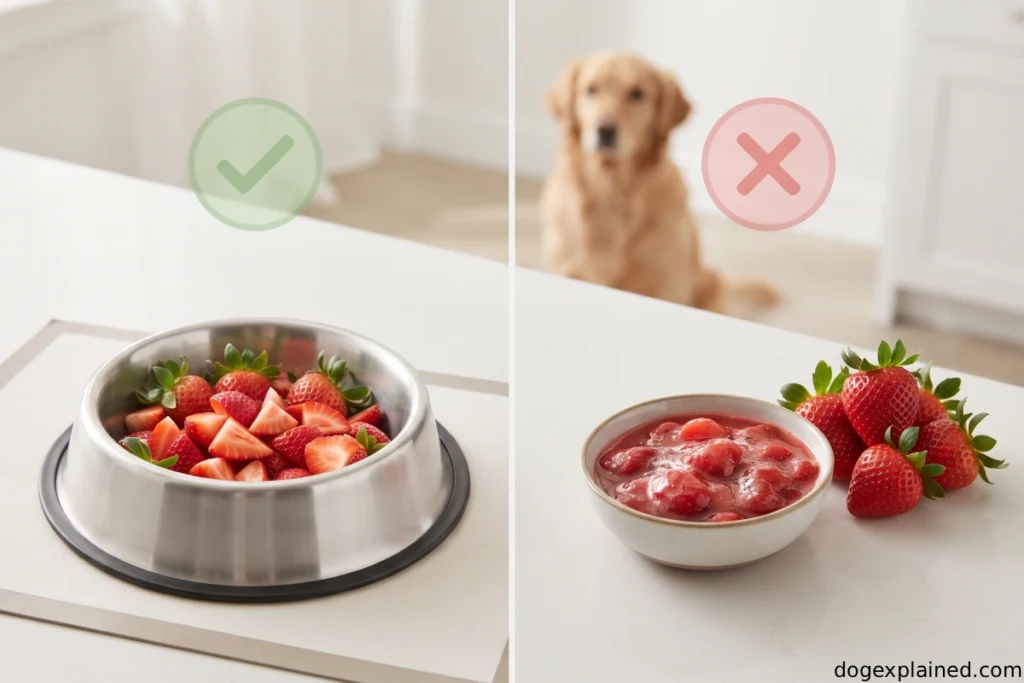
For safer feeding:
- wash the berries thoroughly
- remove the leafy tops and stems
- cut them into pieces appropriate for your dog’s size
- serve them plain
- introduce only a small amount at first if strawberries are new to your dog
Whole strawberries may be too large for some dogs, especially small breeds or dogs that tend to gulp food.
Processed strawberry foods are a different matter. Avoid canned strawberries in syrup, sugary desserts, jams, and products containing artificial sweeteners or other dog-unsafe ingredients.
Are Strawberries Good for Dogs?
Strawberries contain water, fiber, vitamin C, and naturally occurring antioxidants.
They can be a relatively low-calorie alternative to some more calorie-dense treats and can provide variety in a dog’s treat rotation.
However, strawberries should not be treated as a nutritional supplement.
A complete and balanced dog food should remain the foundation of the diet. The nutrients in strawberries are an added benefit, not a reason to feed large amounts.
Strawberries also contain natural sugar, so moderation still matters.
How Many Strawberries Can a Dog Eat?
There is no single number of strawberries that is appropriate for every dog.
A dog’s safe treat allowance depends on factors such as:
- body size
- age
- activity level
- body condition
- daily calorie needs
- regular diet
- other treats
- health conditions
A useful general guideline is that all treats and extras combined should provide no more than about 10% of a dog’s daily calories.
The remaining 90% or more should come from complete and balanced dog food.
That 10% is a maximum guideline for all treats combined, not a target for strawberries alone.
For a dog trying strawberries for the first time, start with a small amount rather than trying to reach the full treat allowance.
How to Prepare Strawberries Safely
Proper preparation helps reduce choking and digestive concerns.

Before serving strawberries:
- Wash them thoroughly.
- Remove the green leafy tops and stems.
- Cut larger berries into small pieces appropriate for your dog’s size.
- Serve the fruit plain.
- Start with a small amount if your dog has never eaten strawberries before.
Small dogs may need smaller pieces than large dogs.
You can also mash strawberries for dogs that have difficulty chewing, provided the fruit is served plain without added sugar or sweeteners.
Can Dogs Eat Strawberry Tops and Leaves?
It is better to remove the leafy tops and stems before serving strawberries.
These parts are not needed as part of the treat and can be more difficult to digest than the soft fruit.
Removing the tops also makes strawberries easier to portion and prepare safely.
If your dog accidentally eats a small amount of strawberry leaf or stem and is acting normally, monitor for digestive upset.
Contact your veterinarian if vomiting, persistent diarrhea, significant discomfort, or another concerning symptom develops.
Can Dogs Eat Frozen Strawberries?
Yes. Plain frozen strawberries can be an occasional treat for many healthy dogs.
Wash the strawberries, remove the leaves and stems, and cut them into appropriately sized pieces before freezing.
For small dogs or dogs that gulp food, allowing frozen pieces to soften slightly can make them easier to manage.
Avoid commercially prepared frozen strawberry products containing added sugar, syrups, chocolate, artificial sweeteners, or other unnecessary ingredients.
When Strawberries May Not Be a Good Choice
Strawberries are not appropriate for every dog.
Ask your veterinarian before adding strawberries or other human foods if your dog:
- has diabetes
- is overweight or on a strict calorie plan
- has a sensitive gastrointestinal tract
- has a history of food reactions
- follows a veterinarian-prescribed diet
- is currently experiencing vomiting or diarrhea
- has another medical condition that affects diet
Dogs on prescription diets may need tighter control over additional foods and treats.
Signs Your Dog Ate Too Many Strawberries
Yes.
Even a generally safe food can cause problems if a dog eats too much of it.
Possible signs of digestive upset include:
- loose stool or diarrhea
- vomiting
- gas
- bloating
- stomach discomfort
- reduced appetite
Stop offering strawberries if they appear to cause digestive problems.
Contact your veterinarian if symptoms are severe, persistent, or accompanied by lethargy, repeated vomiting, weakness, swelling, breathing difficulty, or another concerning change.
Can Puppies Eat Strawberries?
Many healthy puppies can also eat small amounts of properly prepared strawberries.
Because puppies have specific nutritional requirements for growth, most of their calories should come from complete and balanced puppy food.
Strawberries should remain an occasional treat.
For puppy-specific preparation and feeding guidance, see our Can Puppies Eat Strawberries? guide.
Frequently Asked Questions
Problems are more likely when a dog eats too much, has a health condition that makes extra sugar or calories unsuitable, or is given processed strawberry products containing inappropriate ingredients.
Can Dogs Have Strawberries Every Day?
Some healthy dogs may tolerate small portions regularly, but strawberries do not need to be part of a dog’s daily diet.
If they are given frequently, they still count toward the same overall treat allowance as biscuits, training rewards, chews, and other snacks.
Can Dogs Eat Strawberry Yogurt?
Plain fresh strawberries are a simpler option than strawberry-flavored yogurt.
Many flavored yogurts contain added sugar or other ingredients that dogs do not need, and some products may contain artificial sweeteners.
Always check the ingredient list carefully. Products containing xylitol should never be given to dogs.
You can also read our guide to bananas for dogs.
Can Dogs Eat Strawberry Jam?
Strawberry jam is not a good choice for dogs.
It usually contains concentrated sugar and may include sweeteners or other ingredients that are unnecessary or unsafe for dogs.
Serve fresh strawberries instead.
For routine feeding, choose fresh strawberries, wash them thoroughly, remove the tops and stems, cut them into appropriately sized pieces, and keep the serving modest. If your dog has a medical condition, follows a prescription diet, or develops symptoms after eating strawberries, ask your veterinarian for individualized guidance.
You can also read our guide to blueberries for dogs.