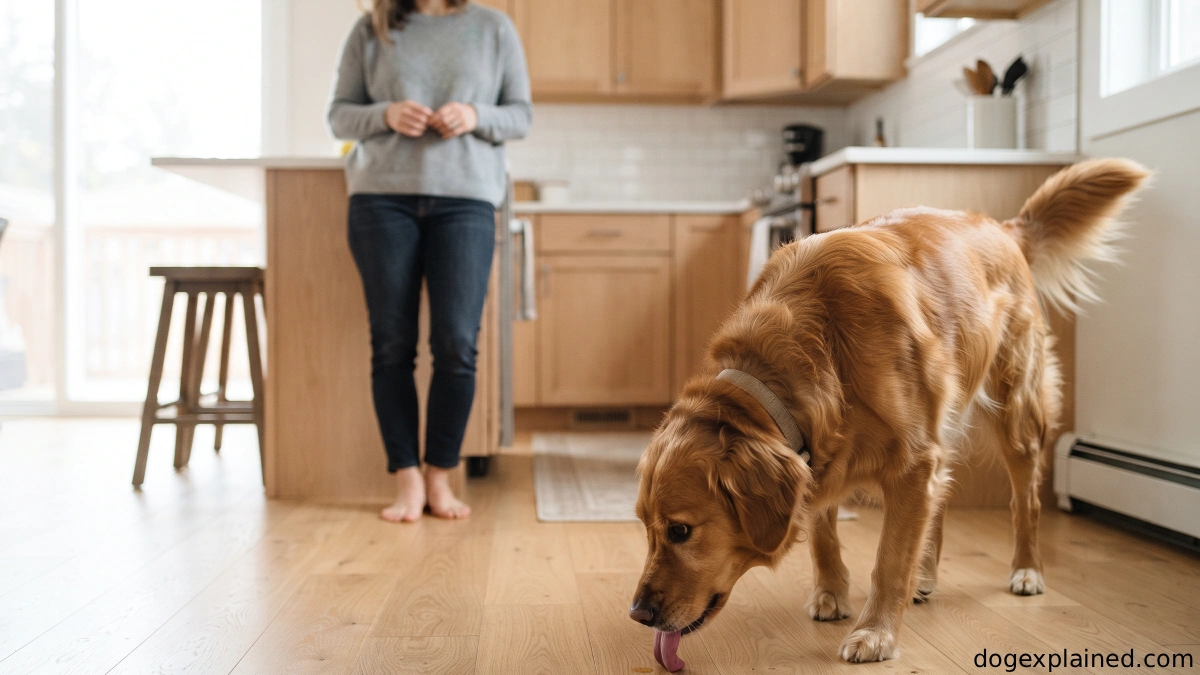
Dogs use their mouths and tongues to explore the world, so an occasional lick of the floor, couch, your hand, or another object usually isn’t surprising.
But if your dog suddenly starts licking everything in sight—or the behavior becomes frequent, intense, or difficult to interrupt—it deserves a closer look.
Sometimes the explanation is simple, such as an interesting smell or a learned habit. In other cases, repeated licking can be associated with stress, gastrointestinal discomfort, oral pain, another medical problem, or compulsive behavior.
The important thing is not simply to stop the licking. It is to work out why the behavior is happening.
Why Is My Dog Licking Everything?
The first question isn’t simply what is causing the licking. It’s whether the licking has actually become unusual for your dog.
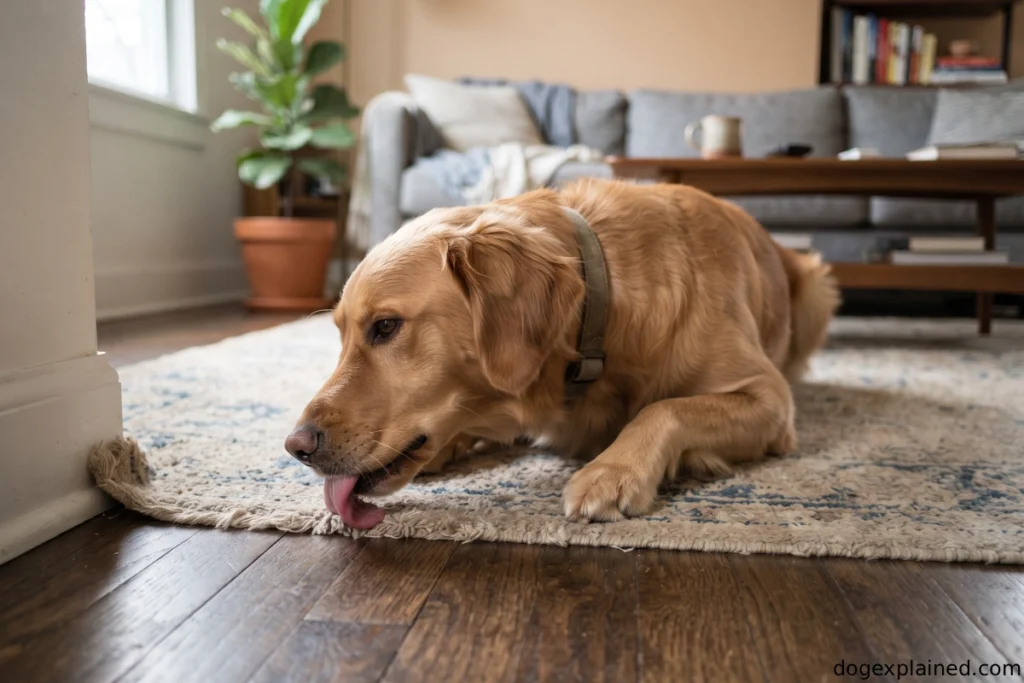
A dog briefly licking the kitchen floor after dinner is very different from a dog repeatedly moving from the carpet to the couch to the walls and back again.
Veterinary literature sometimes uses the term excessive licking of surfaces, or ELS, for dogs that lick objects or surfaces more frequently, intensely, or for longer than would normally be expected.
Pay closer attention when the licking:
- suddenly increases
- happens across many unrelated surfaces
- continues without an obvious food or scent trigger
- is difficult to interrupt
- repeatedly starts again after interruption
- interferes with eating, sleeping, playing, or resting
- occurs alongside other physical or behavioral changes
Those patterns make the underlying cause more important than simply stopping the behavior.
1. Your Dog Is Exploring Smells and Tastes
Not every dog that licks things has a problem.
Dogs gather a huge amount of information through scent and taste. Floors, furniture, bedding, hands, and other household surfaces can carry food residue or interesting smells that aren’t obvious to us.
Think about what happened immediately before the licking.
Did someone just eat on the couch? Did food fall on the kitchen floor? Has another animal been lying there? Is your dog licking something that has a particularly interesting smell?
If the behavior is brief and stops once the interesting scent or taste is gone, it may simply be normal exploration.
That is quite different from persistent licking that seems disconnected from anything in the environment.
2. Licking Gets Your Attention
Dogs can learn surprisingly quickly which behaviors make people respond.
Your dog licks the carpet. You say their name.
They lick again. You walk over.
They continue. You touch them, move them, talk to them, or offer something else.
From the dog’s perspective, licking may now reliably produce interaction.
That doesn’t mean you should automatically assume an attention-seeking motive whenever your dog licks things. Medical causes still need consideration when the behavior is new, intense, or persistent.
But if your dog is otherwise well and licking predictably produces attention, reinforcement may be helping maintain the habit.
Instead of repeatedly making the licking itself the focus of attention, reward an alternative behavior such as settling on a mat, engaging with an appropriate toy, or responding to a simple cue.
3. Boredom or Too Little Mental Stimulation
Some dogs develop repetitive behaviors when their daily routine doesn’t give them enough appropriate physical or mental activity.
Boredom may be more plausible when licking:
- happens during long periods of inactivity
- appears when your dog is waiting for interaction
- occurs at predictable quiet times of day
- becomes less frequent after walks, play, training, or enrichment
For an otherwise healthy dog, a balanced routine can help.
Useful activities may include:
- regular walks
- sniffing opportunities
- reward-based training
- appropriate chewing
- food puzzles
- play
- social interaction
- opportunities to explore safely
However, don’t use boredom as the default explanation for a dog that suddenly starts licking floors or furniture constantly.
If the behavior is new, unusually intense, or accompanied by physical signs, increasing enrichment should not replace investigating a possible health problem.
4. Stress, Anxiety, or Emotional Conflict
Licking can sometimes occur when a dog is stressed, worried, frustrated, or unable to settle.
You may notice it together with signs such as:
- panting when your dog isn’t hot
- pacing
- repeated lip licking
- trembling
- whining
- restlessness
- difficulty settling
- changes associated with a particular trigger
For example, some dogs may show repetitive behaviors during stressful household changes, unfamiliar situations, separation, conflict, or other events they find difficult.
But don’t automatically label excessive licking as anxiety.
Physical problems can produce behaviors that look behavioral. Gastrointestinal discomfort, dental disease, skin irritation, pain, and other conditions can all affect a dog’s behavior.
If your dog suddenly starts licking everything and you cannot identify an obvious reason, it is better to consider both medical and behavioral possibilities rather than assuming anxiety is the answer.
5. Nausea or Gastrointestinal Discomfort
Gastrointestinal discomfort is one important reason excessive surface licking should not automatically be dismissed as a quirky habit.
A small prospective veterinary study examined 19 dogs presented for excessive licking of surfaces. Gastrointestinal abnormalities were identified in 14 of those dogs.
After treatment based on the findings, excessive licking resolved in some dogs and improved substantially in others.
That does not mean that most dogs who occasionally lick the floor have gastrointestinal disease.
The study was small and involved dogs that were already showing excessive surface licking. What it does show is that gastrointestinal problems belong on the list of possibilities when licking becomes persistent or abnormal.
Pay attention to other signs such as:
- vomiting
- reduced appetite
- repeated swallowing
- excessive drooling
- gagging
- restlessness
- changes in bowel movements
- other digestive changes
If your dog is licking floors or other surfaces repeatedly and you also notice digestive symptoms, tell your veterinarian about the licking as well as the physical signs.
The two may be related.
6. Dental or Mouth Pain
Sometimes the problem isn’t the stomach. It may be the mouth.
A painful tooth, inflamed gums, another oral condition, or something uncomfortable inside the mouth can change a dog’s normal oral behavior.
Signs that make mouth or dental discomfort more suspicious include:
- excessive drooling
- bad breath
- pawing at the mouth
- dropping food
- chewing more slowly
- chewing on one side
- reluctance to eat hard food or treats
- reduced interest in food
- resistance to having the face or mouth touched
If you suspect mouth pain, don’t force your dog’s mouth open or try to remove something that appears deeply embedded.
A veterinarian can examine the mouth safely and determine what is actually causing the discomfort.
7. Pain, Itching, or Another Physical Problem
What your dog is licking matters.
A dog licking many household surfaces presents a different pattern from a dog repeatedly licking the same paw, leg, joint, or patch of skin.
Persistent licking of one body area may be associated with problems such as:
- skin irritation
- infection
- allergies
- parasites
- localized pain
- joint discomfort
- nerve-related discomfort
If your dog keeps licking the same area, look for changes such as redness, swelling, hair loss, odor, moisture, wounds, or sensitivity.
Do not assume persistent body licking is simply a bad habit.
Your dog may be responding to discomfort.
8. The Licking Has Become Compulsive
Compulsive licking is not simply a dog enjoying licking things.
Veterinary behavior specialists describe compulsive disorders as repetitive behaviors that occur frequently enough to interfere with normal life and may become difficult for the dog to control.
Licking surfaces is one repetitive behavior that can occur in dogs.
Possible warning signs include licking that:
- consumes significant amounts of time
- occurs regardless of the situation
- is difficult to interrupt
- resumes almost immediately after interruption
- interferes with eating, sleeping, playing, or normal interaction
- causes skin damage
- creates a risk of swallowing unsafe material
However, compulsive disorder should not be the first diagnosis you jump to.
Pain, gastrointestinal problems, neurological conditions, skin disease, and other physical problems can produce similar behaviors.
That is why medical causes should be considered before deciding that the licking is purely compulsive.
Punishing the behavior is also unlikely to solve the underlying problem and may add fear or frustration.
9. Age-Related Cognitive or Neurological Changes
If an older dog suddenly develops repetitive behaviors, age-related changes are another possibility worth discussing with your veterinarian.
Canine cognitive dysfunction is an age-related condition that affects the brain and can cause changes in behavior.
Signs may include:
- seeming confused or disoriented
- altered sleep patterns
- pacing or wandering
- house-training accidents
- changes in social interaction
- staring
- increased restlessness
- changes in normal routines
- new anxiety-like behavior
New repetitive licking in a senior dog does not automatically mean cognitive dysfunction.
Pain, sensory changes, systemic illness, neurological disease, and other health conditions can sometimes produce similar changes.
The important point is that a significant new behavior in an older dog deserves attention rather than being dismissed as simply getting old.
Why Is My Dog Suddenly Licking Everything?
A sudden change deserves more attention than a long-standing habit that happens occasionally in predictable situations.
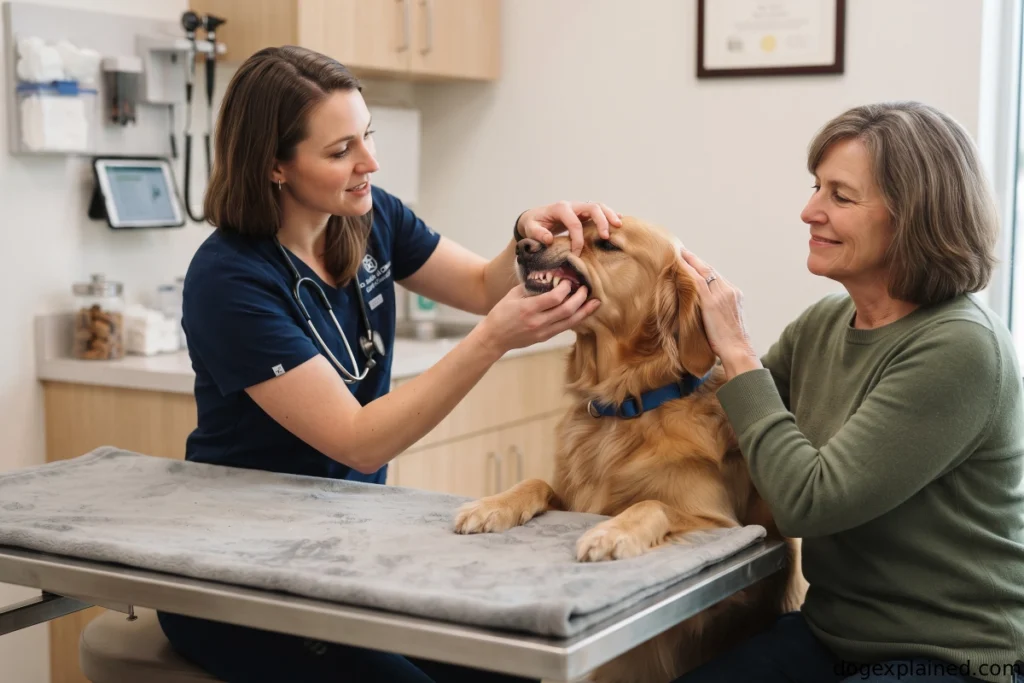
If your dog suddenly starts licking floors, walls, carpets, furniture, or multiple other surfaces, ask what else has changed.
Pay particular attention to:
- vomiting
- gagging
- repeated swallowing
- excessive drooling
- decreased appetite
- mouth discomfort
- restlessness
- signs of pain
- unusual tiredness
- behavioral changes
- licking that seems extremely difficult to interrupt
Sudden licking alone cannot tell you exactly what is wrong.
But because excessive surface licking can occur with both medical and behavioral problems, a new and persistent pattern is worth discussing with your veterinarian rather than simply trying to stop it.
What Is Your Dog Licking?
The target of the licking can provide useful clues.
Floor or Carpet
Consider:
- food residue
- interesting smells
- normal exploration
- gastrointestinal discomfort
- repetitive behavior
A dog that gives the kitchen floor a few licks after dinner is very different from a dog that repeatedly licks large areas of carpet for no obvious reason.
Furniture or Bedding
Possible explanations include:
- interesting scents
- food residue
- learned behavior
- attention-seeking
- repetitive licking
Look at when the behavior happens and whether it occurs on one particular item or across many unrelated surfaces.
People
Dogs may lick people as part of social interaction, because of taste, because licking receives attention, or for several other reasons.
If your dog’s licking is mainly directed at you rather than household objects, see our guide:
Why Does My Dog Lick Me So Much?
If your dog’s licking is mainly directed at you rather than household objects, see our guide to why dogs lick their owners so much.
Paws or Body
Repeated licking of the body deserves a different type of investigation.
Possible causes include:
- normal grooming
- itching
- allergies
- skin irritation
- infection
- localized pain
- joint discomfort
Persistent licking of one area may be your dog’s response to discomfort rather than the same behavior as licking floors or furniture.
Lips or Air
Occasional lip licking can occur in many normal situations.
Persistent licking of the lips or air, however, should be considered in context with other signs such as:
- repeated swallowing
- drooling
- digestive changes
- oral discomfort
- unusual repetitive behavior
Many Unrelated Surfaces
If your dog moves from the carpet to furniture to walls to other objects without an obvious environmental reason, it becomes more important to think beyond a simple interesting smell.
Medical as well as behavioral causes should be considered.
When Should You Call a Vet?
Contact your veterinarian when excessive licking is:
- new or suddenly much worse
- frequent or persistent
- difficult to interrupt
- interfering with normal activities
- accompanied by vomiting
- associated with appetite changes
- accompanied by repeated swallowing
- associated with excessive drooling
- accompanied by dental or mouth pain
- associated with obvious discomfort
- causing skin damage
- associated with your dog swallowing non-food objects or unsafe substances
- occurring together with other unexplained behavioral changes
A sudden change in a senior dog is also worth mentioning, particularly if you notice changes in sleep, orientation, house training, mobility, or social behavior.
You don’t need to wait for the behavior to reach an arbitrary number of episodes per day before asking for advice.
What matters is the change from your dog’s normal behavior and the other signs occurring with it.
What Can You Do at Home?
While you’re figuring out why your dog is licking everything, a few simple steps can make the pattern easier to understand.
1. Look for a Pattern
Write down:
- what your dog licks
- when it happens
- how long it lasts
- what happened immediately beforehand
- whether it happens around meals
- whether it occurs during particular situations
- whether other symptoms happen at the same time
Patterns often provide more useful information than trying to remember individual episodes during a veterinary appointment.
2. Record a Video
If possible, record one or two typical episodes.
A video can be useful because repetitive behavior may not happen while your dog is at the veterinary clinic.
Try to record the behavior naturally rather than encouraging your dog to perform it.
3. Remove Obvious Temptations and Hazards
Keep potentially dangerous substances out of reach, including:
- household cleaners
- medications
- unsafe foods
- toxic plants
- small objects
- packaging
- chemicals
- anything your dog may swallow
Clean food residue from floors and other surfaces where practical.
4. Provide Appropriate Enrichment
For an otherwise healthy dog, a more engaging routine may help reduce repetitive habits associated with inactivity.
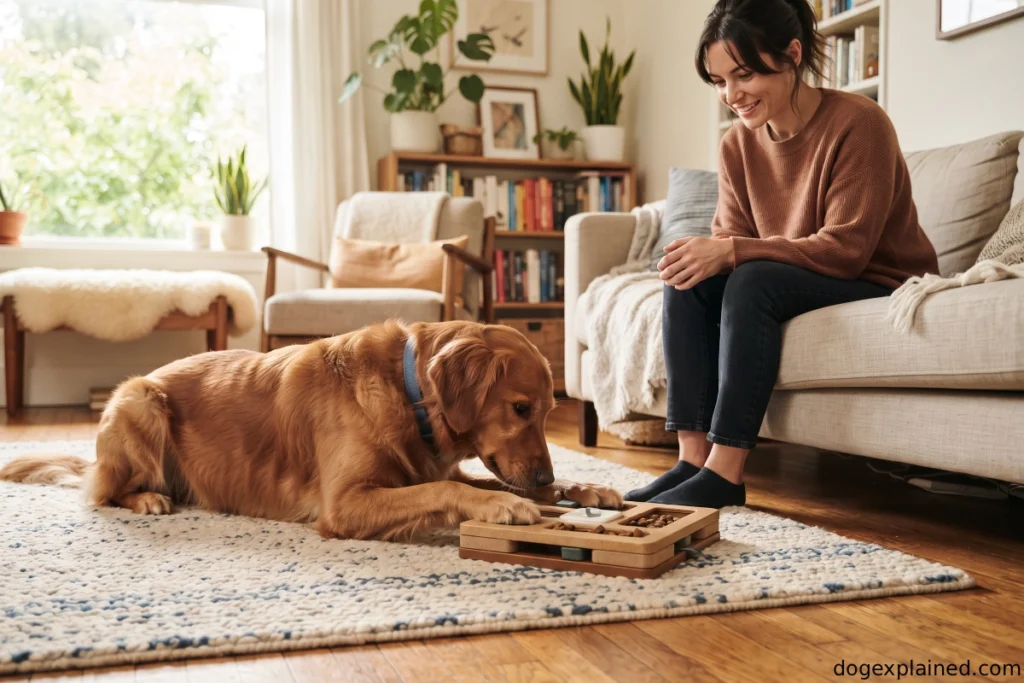
Useful options include:
- walks
- sniffing opportunities
- play
- reward-based training
- food puzzles
- safe chewing activities
- appropriate social interaction
Choose activities that suit your dog’s age, health, temperament, and physical ability.
5. Redirect Instead of Punishing
If a medical problem has been ruled out and the licking appears behavioral, calmly redirect your dog toward an appropriate activity.
Punishment does not explain to your dog what to do instead and may add stress to an already repetitive behavior.
6. Don’t Treat the Symptom Blindly
Avoid giving medications, supplements, or home remedies simply because you have assumed the licking represents nausea, anxiety, or another condition.
Different causes require different approaches.
First identify what you are actually dealing with.
How Might a Vet Investigate Excessive Licking?
There isn’t one test for a dog that licks everything.
Your veterinarian will usually begin with your dog’s history and the pattern of the behavior.
Depending on what else is happening, the evaluation may include attention to:
- general physical health
- mouth and teeth
- skin
- digestive symptoms
- possible areas of pain
- medications
- recent dietary changes
- environmental changes
- neurological signs when relevant
- behavioral history
This is why a video and a simple record of when episodes happen can be so useful.
If physical causes are not found and the licking remains persistent or disruptive, behavioral assessment may become part of the next step.
Frequently Asked Questions
Is It Normal for Dogs to Lick Everything?
Occasional licking can be normal, especially when a dog is investigating food residue, interesting scents, people, or unfamiliar objects.
It becomes more concerning when licking is persistent, suddenly increased, difficult to interrupt, or accompanied by other symptoms.
Why Does My Dog Lick the Floor Constantly?
The floor may contain interesting smells or food residue, but persistent floor licking can also occur with gastrointestinal discomfort or repetitive behavioral problems.
Excessive surface licking has been associated with gastrointestinal abnormalities in veterinary research, so constant unexplained licking deserves more attention than an occasional lick.
Does Licking the Floor Mean My Dog Is Nauseous?
Not necessarily.
Nausea and gastrointestinal discomfort are possible explanations, but you cannot diagnose nausea from floor licking alone.
Look at the entire picture, including:
- appetite
- repeated swallowing
- drooling
- vomiting
- restlessness
- digestive changes
- general behavior
If several of these changes occur together, contact your veterinarian.
Why Does My Dog Lick Everything at Night?
Consider what is different at night.
Your dog may have less activity, follow a learned routine, respond to something in the environment, or engage in repetitive behavior during quiet periods.
But if nighttime licking is new, intense, or accompanied by physical symptoms, don’t assume boredom is the only explanation.
Why Is My Older Dog Suddenly Licking Everything?
A new repetitive behavior in a senior dog can have several possible causes, including physical discomfort and age-related cognitive changes.
If you also notice:
- disorientation
- altered sleep
- pacing
- house-training changes
- changes in social behavior
- other new symptoms
discuss the pattern with your veterinarian.
Should I Stop My Dog From Licking Everything?
Prevent your dog from licking or swallowing anything unsafe, but don’t focus only on stopping the behavior.
Persistent licking may be a clue to an underlying medical or behavioral problem.
Finding the reason matters more than repeatedly interrupting the symptom.
The Bottom Line
An occasional lick of the floor or furniture isn’t automatically a problem.
What matters is how often your dog is licking, what they’re licking, whether the behavior has suddenly changed, and what else is happening at the same time.
Persistent surface licking can have both behavioral and medical explanations, including gastrointestinal discomfort, oral pain, other physical problems, and compulsive behavior.
If the licking is new, intense, difficult to interrupt, or accompanied by other symptoms, your veterinarian is the right place to start.