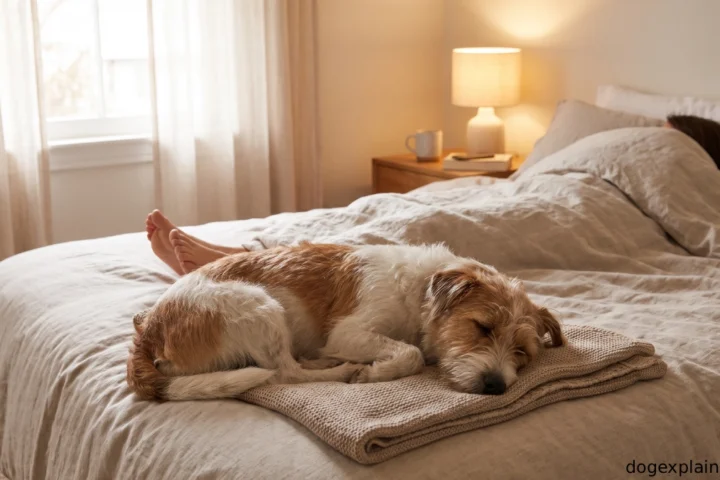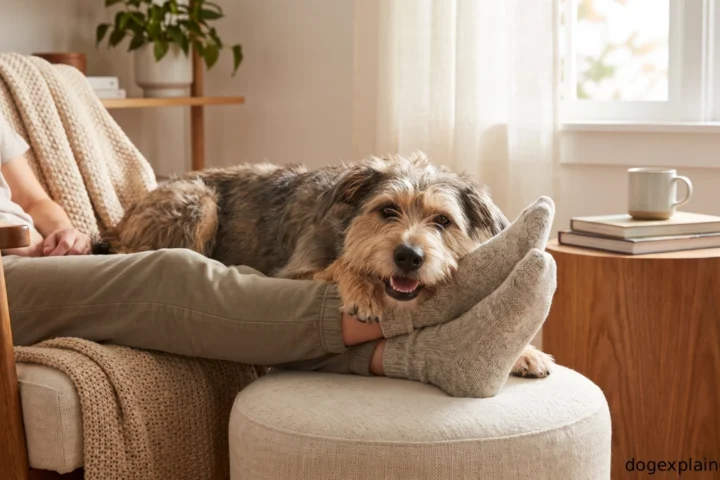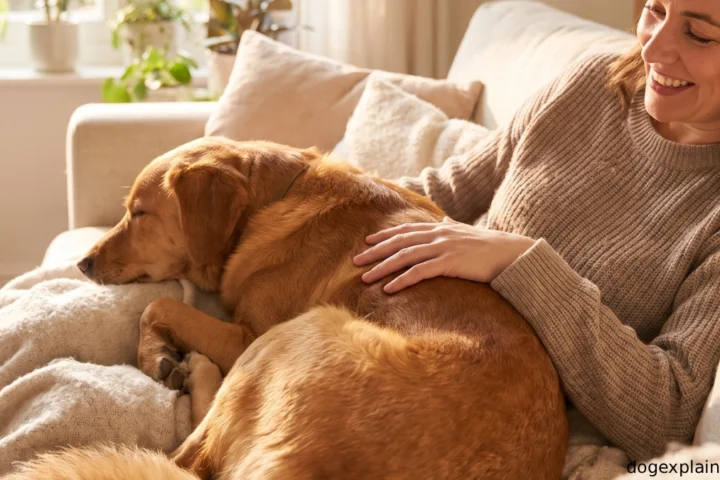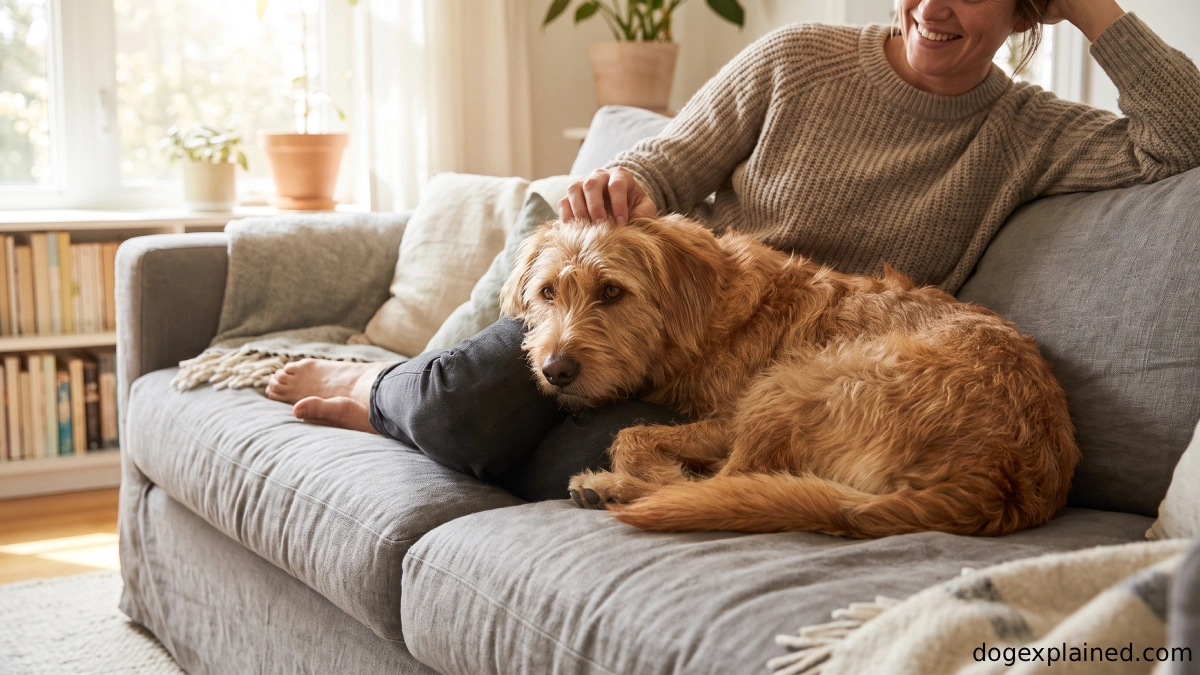
You finally sit down after a long day, and within seconds your dog climbs onto your lap, plants themselves across your legs, or simply sits directly on top of you.
Even when there is an empty couch cushion six inches away.
So why does your dog sit on you instead of beside you?
Sometimes the answer is simple: you are warm, comfortable, familiar, and very good at giving attention. Dogs also form strong social attachments to their caregivers, and staying physically close can be part of that relationship.
But sitting on you does not have one universal meaning. It does not automatically mean your dog is dominant, protecting you, claiming ownership of you, or experiencing separation anxiety.
The best explanation usually comes from looking at what happens before, during, and after your dog climbs onto you.
Why Does My Dog Sit on Me?
Dogs are social animals, but that does not mean every dog wants the same amount of physical contact.
Some dogs are happiest sleeping at the other end of the room.
Others seem convinced that the most comfortable seat in the house is whichever part of your body they can fit onto.
Research on dog-human attachment shows that dogs can form selective attachment-like bonds with their caregivers. Dogs may seek proximity to their owners and can use them as a source of security in unfamiliar or challenging situations.
That helps explain why closeness to you can matter.
It does not, however, tell us that every dog sitting on a person is expressing exactly the same emotion.
A dog sitting on your lap during a quiet movie, climbing onto you when thunder starts, and jumping onto your chest because you just picked up their leash may all look superficially similar while having very different motivations.
Context is what turns the behavior into useful information.
1. Your Dog Wants to Be Close to You
For many dogs, this is probably the least complicated explanation.
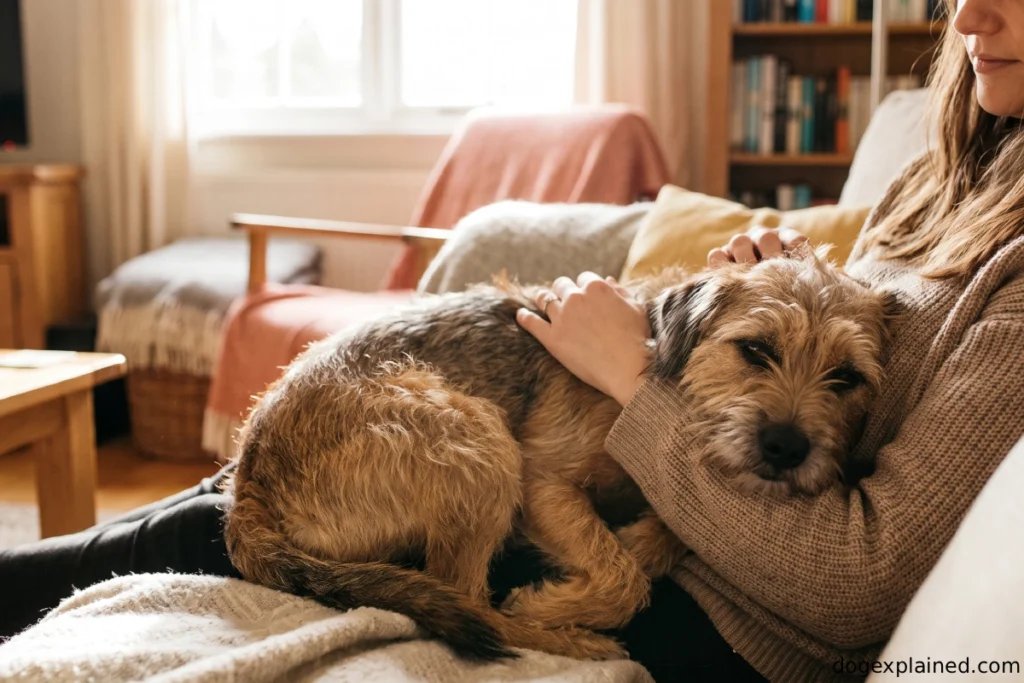
They like being near you.
Studies of dog-human attachment have found that dogs often seek proximity to familiar caregivers and behave differently when their owner is present compared with when they are alone or with an unfamiliar person.
So if your dog regularly chooses to sit on your legs, lap, or beside you when everyone is relaxed, physical closeness can be consistent with a strong social bond.
That does not mean sitting on you is a scientifically validated sign of “love” in isolation.
Instead, consider it alongside the rest of the relationship.
Does your dog also:
- choose to rest near you?
- approach you willingly?
- relax in your presence?
- seek you out in unfamiliar situations?
- enjoy normal social interaction with you?
Those behaviors together tell you much more than one sitting position.
Sometimes a dog simply wants to share your space as closely as possible.
And for a small dog, “close to you” may naturally turn into “on top of you.”
2. You Are Warm and Comfortable
From your dog’s point of view, you may be a heated cushion that occasionally provides ear scratches.
Body heat can make physical contact especially appealing when the room is cool or your dog is settling down to rest.
Dogs may also find a person’s legs, lap, or side softer and more supportive than a hard floor.
This explanation often fits when your dog:
- climbs onto you mainly while resting
- settles quickly once there
- curls up or relaxes their muscles
- does it more in cooler weather
- seems interested in sleeping rather than getting something from you
There does not always need to be a deep behavioral message behind the choice.
If your dog immediately falls asleep on your lap, comfort may be doing most of the explaining.
3. Sitting on You Gets Attention
Dogs are very good at learning what makes humans react.
Imagine the pattern:
Your dog sits beside you.
Nothing happens.
Then your dog climbs directly onto your lap.
You laugh, talk to them, pet them, move them, make eye contact, or ask what they want.
From the dog’s perspective, sitting on you worked.
Attention can function as a reward for many dogs, and behavior that repeatedly produces a desirable consequence is more likely to happen again.
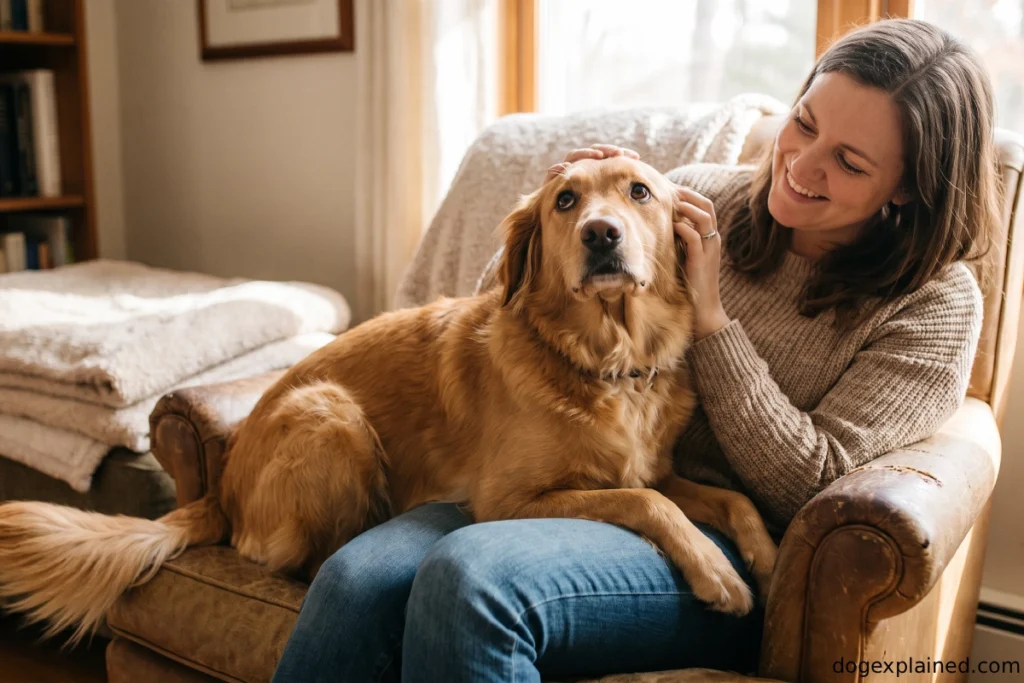
That is why a dog can gradually turn occasional lap-sitting into a reliable routine.
Even pushing a dog away can sometimes provide interaction if attention itself is what the dog wanted.
You can often spot this explanation by looking at what happens immediately afterward.
Does your dog sit on you and then:
- stare at you?
- paw at you?
- nudge your hand?
- wait for petting?
- become excited when you respond?
If so, sitting on you may be part of a learned way of starting an interaction.
That is not manipulation in a sinister sense.
Your dog has simply learned a behavior that reliably works.
4. Your Dog Wants Something
Sometimes sitting on you is less about cuddling and more about communication.
Dogs cannot say:
“Could we go outside now?”
But they can experiment with behaviors that get your attention.
A dog may climb onto you when they want:
- petting
- play
- dinner
- a walk
- access to something
- help reaching or opening something
- your attention after you have been focused elsewhere
Look for patterns.
If your dog sits on you every evening five minutes before dinner, the timing matters.
If they jump into your lap, stare at you, then run toward the door when you stand up, that context tells you much more than the sitting behavior itself.
The same behavior can therefore mean different things at different times.
Instead of asking only, “Why is my dog sitting on me?” ask:
“What usually happens next?”
That question often reveals the answer.
5. It Has Become a Habit
Dogs are excellent students of routine, even when nobody intentionally teaches them.
Maybe your puppy climbed onto your lap when they weighed 10 pounds.
You petted them every time.
Months later they weigh 60 pounds, but nobody informed the dog that the seating arrangement was supposed to change.
Behaviors can become habitual when they are consistently comfortable, rewarding, or simply part of a predictable routine.
Your dog may have learned:
person sits on couch → I climb onto person → we relax together.
At that point, sitting on you may not reflect a new emotional need every time it happens.
It may simply be the normal sequence your dog expects.
This is especially plausible when the behavior:
- happens in the same location
- occurs around the same time each day
- has been present for a long time
- leads to the same predictable interaction
- stops without distress if your dog settles somewhere else
Habits are not automatically problems.
If you enjoy the arrangement and your dog is relaxed, there may be nothing to change.
6. Your Dog May Be Looking for Reassurance
Dogs can use familiar people as a source of security.
Research on dog-human attachment has found evidence that an owner’s presence can affect a dog’s behavior in unfamiliar or challenging situations.
So if your dog normally sleeps beside you but suddenly climbs into your lap during fireworks, a thunderstorm, travel, visitors, or another stressful event, the timing may be meaningful.
Look at the rest of your dog’s body language.
Possible signs that your dog is uncomfortable or worried can include:
- panting when they are not hot
- trembling
- pacing
- difficulty settling
- repeated lip licking
- drooling
- whining
- lowered posture
- trying to stay unusually close
The important distinction is that sitting on you alone does not diagnose anxiety.
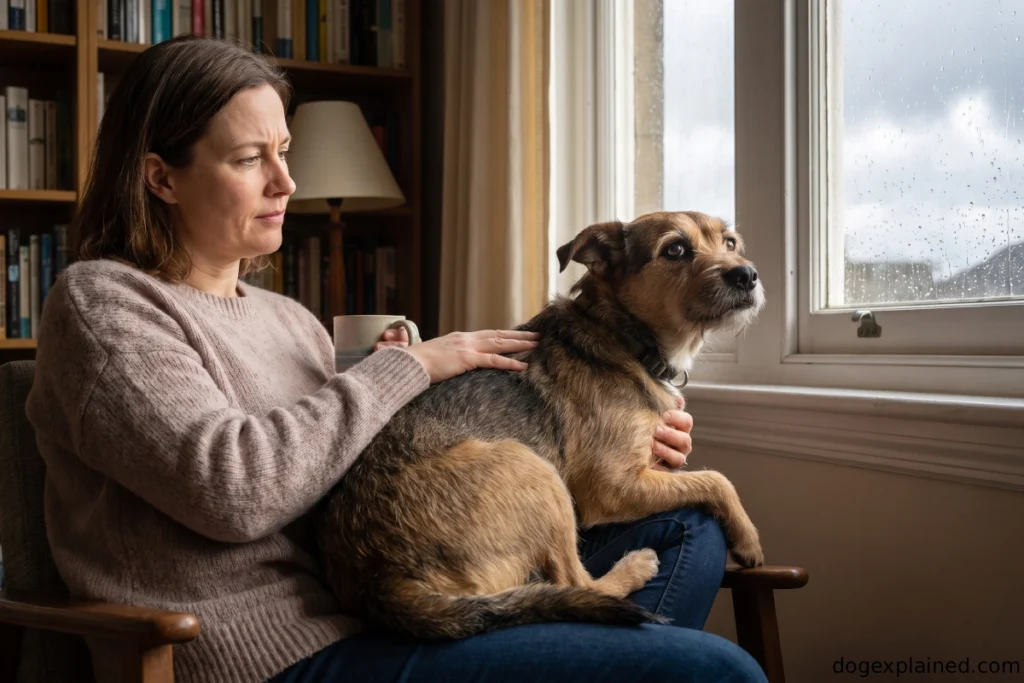
A relaxed dog sitting on your lap while you watch television is very different from a dog climbing onto you while trembling during a storm.
The surrounding behavior tells you whether reassurance is a plausible explanation.
7. Your Dog Simply Prefers Physical Contact
Individual dogs vary enormously.
One dog may want to touch you whenever possible.
Another may adore you but prefer a dog bed several feet away.
Breed tendencies, early experiences, personality, learning history, temperature, household routine, and the dog’s relationship with individual people can all affect how much physical contact they seek.
This means there is no correct amount of lap-sitting.
A dog that enjoys leaning against you, resting a head on your leg, or sitting partly on your lap may simply prefer contact as part of relaxation.
You do not need to turn every instance into a behavioral diagnosis.
If your dog is healthy, relaxed, and choosing the interaction freely, sometimes the most accurate explanation is simply:
“This is where my dog likes to sit.”
Does My Dog Sit on Me Because They Love Me?
Possibly, in the everyday sense that your dog enjoys being close to you and has a positive social relationship with you.
But we should be careful about translating one behavior directly into a human emotion.
What research does support is that dogs can form selective attachment relationships with their caregivers, seek proximity to them, and use familiar people as a source of security.
So voluntarily choosing close contact can fit comfortably within a strong dog-human bond.
The more defensible interpretation is:
Your dog choosing to spend relaxed time close to you is meaningful.
The exact sitting position is only one small piece of that relationship.
Does Sitting on Me Mean My Dog Is Dominant?
No. Sitting on you by itself is not evidence that your dog is trying to dominate you.
This is one of the most persistent myths around ordinary dog behavior.
Veterinary behavior organizations caution against interpreting routine unwanted behaviors primarily through outdated ideas that dogs are constantly trying to achieve higher social rank over people.
Behavior often has a much simpler explanation.
If sitting on you gets warmth, comfort, petting, attention, or access to something your dog likes, those consequences can explain why the behavior continues without invoking dominance.
You do not need to “show your dog who is boss” because they climbed onto your lap.
If you want them to sit elsewhere, teach and reward the behavior you actually want.
Is My Dog Trying to Protect Me?
You cannot determine that simply because your dog sits on you.
A dog sitting calmly in your lap is not automatically acting as a bodyguard.
The situation becomes different if your dog sits on you and then:
- stiffens when someone approaches
- blocks another person or dog
- gives a hard stare
- growls
- lifts their lip
- snaps
- lunges when someone comes close
That pattern may involve resource guarding, fear, conflict, or another aggression-related issue rather than ordinary affection.
Dogs can guard valuable resting places or even preferred people.
If your dog becomes threatening when others approach while they are on you, do not dismiss the behavior as “cute protection.”
Avoid provoking or testing the dog, manage situations to prevent escalation, and seek qualified professional behavioral help.
Why Does My Dog Always Sit on Me?
If your dog sits on you every chance they get, look at what the behavior consistently provides.
It may give them:
- closeness
- warmth
- comfort
- petting
- attention
- access to your activity
- a predictable resting routine
Repeated behavior usually survives because something about it works for the dog.
If you do not mind, there is no need to stop a relaxed and harmless habit.
If you would prefer more personal space, the goal should not be to punish your dog for approaching you.
Teach another behavior that gives them an equally clear option.
For example, reward your dog for settling on a nearby bed or designated section of the couch.
Why Does My Dog Sit on My Lap?
Sitting on your lap is usually just a more specific version of sitting on you.
Your lap offers three things many dogs value at once:
physical closeness, warmth, and easy access to your attention.
Small dogs may fit there naturally, while larger dogs sometimes continue trying long after they have outgrown the available space.
If your dog climbs onto your lap and immediately relaxes, the behavior may simply be about comfortable social contact.
If they climb up and then paw, stare, bark, or jump down toward the door, they may be asking for something.
Once again, context matters more than the location itself.
Why Does My Dog Sit on My Chest?
A dog sitting or lying across your chest may be seeking very close physical contact, warmth, attention, or a comfortable position.
This behavior is especially common when a person is lying on a bed or couch and the dog’s usual route to getting close happens to put them across the upper body.
There is no good evidence that sitting on your chest has one special emotional meaning.
It does not automatically mean your dog is:
- protecting your heart
- detecting your emotions
- asserting dominance
- “claiming” you
Look at what your dog is doing overall.
A relaxed dog settling on your chest is different from a dog repeatedly jumping onto you while highly aroused.
And your comfort matters too.
If your dog is heavy, makes it difficult for you to breathe comfortably, causes pain, or you simply do not enjoy the position, calmly encourage them to settle beside you instead.
You are allowed to have boundaries even when your dog is being affectionate.
Should I Let My Dog Sit on Me?
If both you and your dog are comfortable, there is usually no reason that relaxed lap-sitting must be stopped.
It becomes worth changing when:
- the dog’s weight causes discomfort
- the behavior interferes with daily activities
- your dog constantly demands access to your body
- the dog becomes distressed when prevented from sitting on you
- the dog guards you from other people or animals
- children or vulnerable people could be knocked over
- the behavior creates conflict between pets
If you want to change the habit, focus on teaching an alternative.
A nearby dog bed, mat, or designated couch space can become highly rewarding if you consistently reinforce your dog for using it.
Avoid yelling, physically pinning the dog, or using “dominance” techniques.
You want your dog to learn where to settle, not to become worried about approaching you.
What If My Dog Suddenly Starts Sitting on Me?
A sudden increase in closeness does not automatically mean something is wrong.
First consider whether anything in your dog’s environment has changed.
For example:
- unusual noises
- visitors
- travel
- a move
- a change in household routine
- another animal in the home
- colder weather
- less access to their usual resting place
But pay closer attention if unusual clinginess appears together with other changes such as:
- persistent panting or pacing
- trembling
- inability to settle
- appetite changes
- sleep changes
- signs of pain
- stiffness or mobility changes
- vomiting or diarrhea
- unusual vocalization
- confusion or disorientation
- a major change in normal personality
Sitting on you is not a diagnosis.
A broader change in behavior, especially when paired with physical signs, is more useful information for your veterinarian.
Frequently Asked Questions
Why Does My Dog Want to Sit on Me All the Time?
Your dog may enjoy the closeness, warmth, comfort, or attention they receive when sitting on you. If the behavior has been rewarded repeatedly, it can also become a strong habit.
Look at whether your dog is relaxed or whether they seem unable to settle unless they are physically on you.
Why Does My Dog Sit on Top of Me Instead of Beside Me?
Being directly on you may provide more physical contact, warmth, or attention than sitting nearby.
Some dogs simply prefer close contact.
There does not have to be a dominance or protection explanation.
Is My Dog Claiming Me by Sitting on Me?
Not simply because they sit on you.
If your dog is relaxed while other people or pets approach, ordinary closeness is a more plausible explanation.
If your dog stiffens, growls, snaps, or prevents others from approaching while sitting on you, that is a different pattern that may involve resource guarding.
Does My Dog Sit on Me Because They Are Anxious?
Sometimes a dog may seek extra proximity when frightened or uncertain, but sitting on you alone does not establish anxiety.
Look for additional signs such as trembling, panting, pacing, difficulty settling, whining, or a clear stressful trigger.
Why Does My Dog Sit on Me When I Sit Down?
Your sitting down may have become a cue.
If relaxing on the couch has repeatedly led to your dog climbing onto you and receiving petting or cuddling, they may simply have learned the routine.
Is It Bad to Let My Dog Sit on My Lap?
Not inherently.
If your dog is relaxed, you are comfortable, and there is no guarding or distress involved, lap-sitting can simply be part of normal social interaction.
The Bottom Line
If your dog sits on you, the explanation is usually much simpler than internet myths make it sound.
They may want closeness, warmth, comfort, attention, reassurance, or simply the familiar routine of sitting in their favorite place.
Dogs can form strong attachment relationships with their caregivers, so choosing physical proximity can fit naturally within that bond.
But sitting on you does not automatically mean dominance, protection, possession, or anxiety.
Watch the context.
A relaxed dog curling up on your lap is telling you something very different from a dog that climbs onto you trembling during a storm or growls when another person approaches.
If the behavior is comfortable and harmless for everyone involved, you may not need to change anything at all.