
Can Puppies Eat Watermelon?
Watermelon can be a refreshing treat on a warm day, and your puppy may be very interested when you are eating it. The good news is that most puppies can have small amounts of plain watermelon flesh when it is prepared correctly.
The important part is preparation. Remove the rind and seeds, serve only a small amount, and remember that watermelon is a treat—not a replacement for a complete and balanced puppy food.
Puppies are growing rapidly, so most of their calories need to come from food formulated to support healthy growth. New foods can also be harder on a puppy’s digestive system than they are on an adult dog’s, so introduce watermelon gradually rather than offering a large serving the first time.
For general watermelon safety and preparation, see our complete guide to watermelon for dogs.
When Is Watermelon Safe for Puppies?
Yes, most healthy puppies can eat a small amount of watermelon flesh.
Serve watermelon:
- Plain
- Without the rind
- Without seeds
- In small, puppy-sized pieces
- In moderation
If your puppy has a medical condition, is eating a veterinarian-prescribed diet, or regularly experiences digestive problems, ask your veterinarian before introducing watermelon or other human foods.
A puppy trying watermelon for the first time should receive only a small piece. Introducing one new food at a time makes it easier to notice whether it causes vomiting, diarrhea, gas, or another digestive reaction.
Does Watermelon Offer Any Benefits?
Watermelon is mostly water and contains nutrients including vitamins A, B6, and C as well as potassium. However, your puppy does not need watermelon to obtain these nutrients if they are already eating a complete and balanced puppy diet.
Think of watermelon as an occasional treat rather than a nutritional supplement.
Its high water content can make it an enjoyable snack, especially in warm weather, but it also contains natural sugar. Too much fruit can add unnecessary calories and may cause digestive upset.
For a growing puppy, the nutritional balance of their regular puppy food is much more important than any benefit they might receive from fruit.
Which Parts of Watermelon Are Safe?
Not every part of a watermelon should go into your puppy’s bowl.
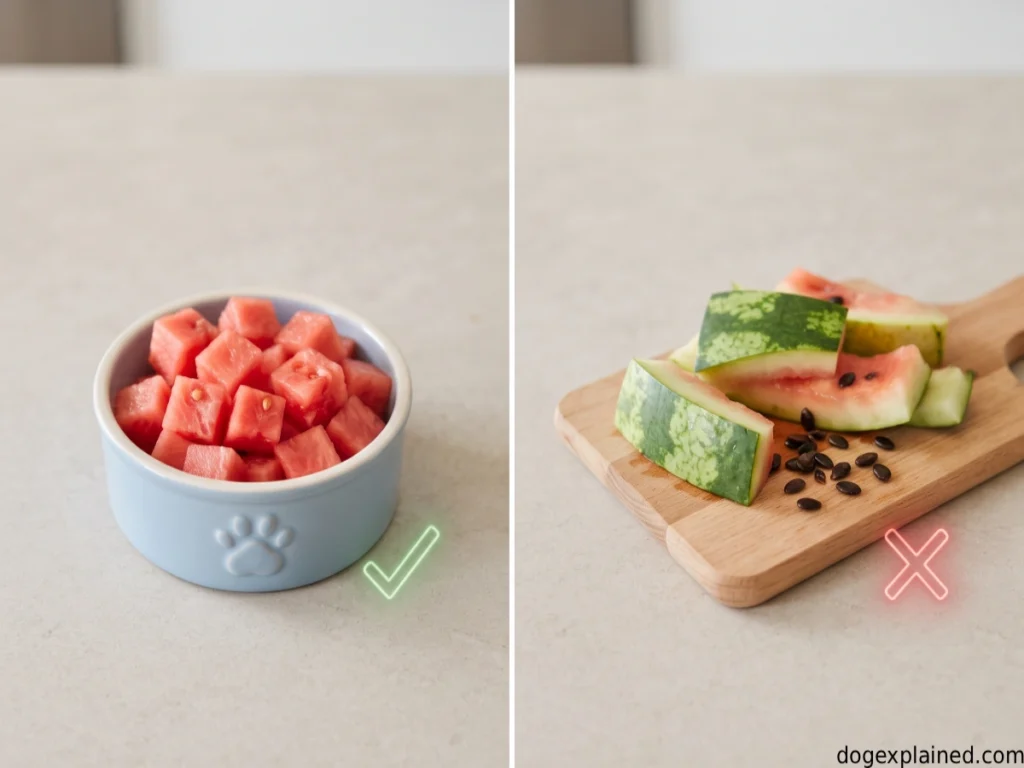
Watermelon Flesh
The soft pink or red flesh is the part puppies can eat.
Remove the rind and seeds first, then cut the flesh into pieces appropriate for your puppy’s size. For a small puppy, the pieces should be considerably smaller than what you might give a large adult dog.
Start with a very small amount, particularly if watermelon is new to your puppy.
Watermelon Seeds
It is safest to remove watermelon seeds before feeding the fruit to a puppy.
Seeds can present choking or digestive risks, particularly for small dogs, and consuming many seeds may contribute to an intestinal obstruction.
Seedless watermelon is therefore the easiest option, although you should still check it for occasional mature seeds before serving.
If your puppy accidentally swallows one or two small seeds, that does not necessarily mean there will be a problem. If they eat a large quantity or subsequently appear unwell, contact your veterinarian.
For general portion guidance, see how much watermelon a dog can eat.
Watermelon Rind
Do not intentionally give watermelon rind to a puppy.
The rind is much tougher than the fruit and is difficult to chew and digest. Pieces of rind can become a choking hazard or, if swallowed, potentially contribute to an intestinal blockage.
Always cut the edible flesh completely away from the rind before giving watermelon to your puppy.
For more detail on accidental rind ingestion and warning signs, see our guide to watermelon rind and dogs.
How Much Watermelon Is Enough?
There is no single number of watermelon cubes that is appropriate for every puppy.
A Chihuahua puppy and a Great Dane puppy can have dramatically different calorie requirements, and a puppy’s nutritional needs also change as they grow.
A useful general rule is that all treats and snacks combined should account for no more than about 10% of a puppy’s daily calories. The other 90% or more should come from a complete and balanced diet appropriate for growth.
For a first taste, however, there is no need to approach the 10% limit. Give only a small piece and see how your puppy responds.
Remember that the 10% guideline applies to all treats combined, including training treats, chews, fruit, table foods, and other snacks—not 10% for each type of treat.
If you want an exact daily treat allowance for your puppy, your veterinarian can calculate it from your puppy’s age, weight, breed, growth rate, and diet.
How to Prepare Watermelon Safely
Safe preparation is simple:
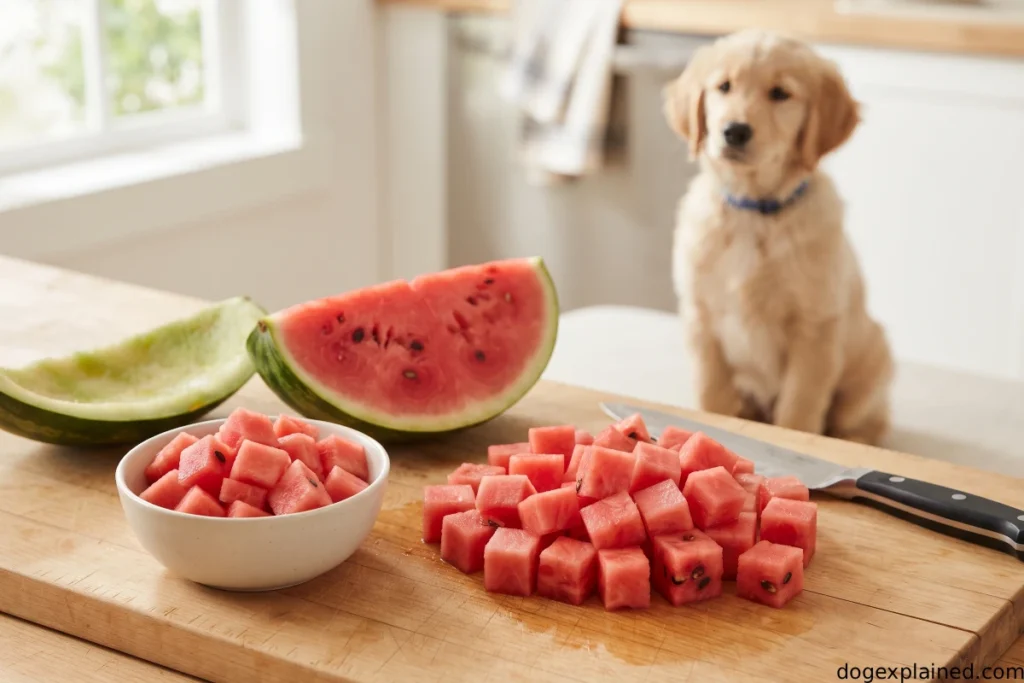
- Wash the watermelon. This reduces dirt and residue on the outside before you cut it.
- Remove the rind completely.
- Remove the seeds. Seedless watermelon is the easiest choice.
- Cut the flesh into small pieces. Size the pieces for your puppy rather than for an adult dog.
- Start with a small amount.
- Serve it plain.
Avoid watermelon products containing added sugar, syrups, chocolate, sweeteners, or other ingredients.
Plain fresh watermelon is the simplest choice.
What About Very Young Puppies?
For a very young puppy, ask your veterinarian…
Young puppies have specific nutritional requirements for growth, and their regular complete puppy food should remain the priority. Their digestive systems may also be more sensitive to dietary changes.
If your puppy has only recently been weaned, has just come home, is changing diets, or is experiencing diarrhea or another digestive issue, it is sensible to avoid unnecessary new foods until things are stable.
For a very young puppy, ask your veterinarian whether introducing treats such as watermelon is appropriate rather than relying on a particular age cutoff.
Possible Digestive Side Effects
Yes. Even a food that is generally safe can cause digestive problems when a puppy eats too much or is not accustomed to it.
Possible signs include:
- Loose stool or diarrhea
- Vomiting
- Gas
- Bloating
- Stomach discomfort
- Reduced appetite
If your puppy develops mild digestive upset after trying watermelon, stop offering it.
Persistent vomiting, repeated diarrhea, significant lethargy, abdominal pain, or an inability to keep water down warrants veterinary advice.
If Your Puppy Ate Watermelon Rind
The level of concern depends on factors such as:
- Your puppy’s size
- How much rind was swallowed
- The size and shape of the pieces
- Whether your puppy is showing symptoms
A tiny chewed piece is different from a small puppy swallowing a large chunk.
Because rind can create a choking hazard or intestinal obstruction, contact your veterinarian for guidance if your puppy swallowed a substantial amount.
Watch for warning signs such as:
- Repeated vomiting
- Loss of appetite
- Abdominal pain or swelling
- Unusual lethargy
- Difficulty passing stool
- Persistent diarrhea
A suspected intestinal blockage can become an emergency and should not be managed at home without veterinary guidance.
Serving Watermelon Frozen
Yes, properly prepared watermelon flesh can also be frozen.
Before freezing it:
- Remove all rind
- Remove seeds
- Cut it into appropriately sized pieces
Frozen watermelon can be a refreshing occasional treat, but consider your puppy’s chewing habits. Avoid pieces that are too large or hard for them to manage safely.
Allowing a frozen piece to soften slightly may make it easier for a small puppy to eat.
Do not use commercially prepared frozen watermelon products if they contain sweeteners, added sugar, or other ingredients.
Can Puppies Eat Seedless Watermelon?
Yes. Seedless watermelon is generally the easiest type to prepare for puppies.
You should still remove the rind and inspect the fruit because seedless watermelons can contain small undeveloped seeds.
Serve only the soft flesh in small portions.
Can Puppies Eat Watermelon Every Day?
Watermelon does not need to be part of a puppy’s everyday diet.
Your puppy’s regular food should provide the carefully balanced nutrients required for growth. Watermelon and other treats are extras.
Rotating small amounts of appropriate treats can provide variety, but there is no nutritional reason a puppy needs watermelon every day.
Your veterinarian can provide an individualized amount if you are unsure.
Bottom Line
Most healthy puppies can enjoy small amounts of seedless watermelon flesh as an occasional treat.
For the safest serving:
- Remove all rind
- Remove the seeds
- Cut the flesh into puppy-sized pieces
- Introduce it slowly
- Keep treats to a small part of the overall diet
Watermelon should complement—not replace—a nutritionally complete puppy food.
If your puppy has a medical condition, follows a special diet, develops digestive symptoms, or swallows a significant amount of watermelon rind, contact your veterinarian for individualized advice.
For more detail on accidental seed ingestion and warning signs, see our guide to watermelon seeds and dogs.