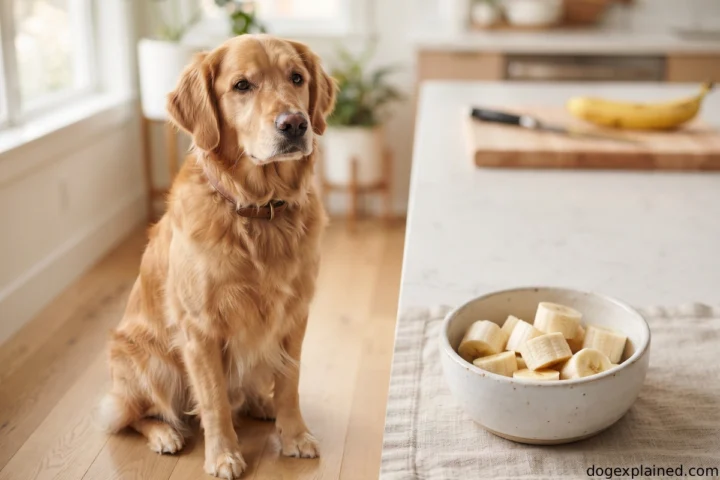
If your dog has already swallowed watermelon seeds, the most useful questions are how much was eaten, whether rind was swallowed too, your dog’s size, and whether any symptoms are developing.
My Dog Ate Watermelon Seeds — What Should I Do?
The appropriate response depends on the amount swallowed and how your dog is behaving.
If Your Dog Swallowed a Few Seeds and Is Acting Normally
A few accidentally swallowed watermelon seeds are unlikely to cause problems for most healthy dogs.
Prevent access to additional seeds and monitor your dog for changes in appetite, behavior, bowel movements, or signs of digestive discomfort.
Do not try to make your dog vomit unless a veterinarian or animal poison-control professional specifically instructs you to. Do not give home remedies in an attempt to make the seeds pass.
If Your Dog Swallowed Many Seeds or the Amount Is Unknown
Contact your veterinarian for advice if your dog swallowed a large amount of mature watermelon seeds or you cannot estimate how much was eaten.
The level of concern varies with the amount swallowed, the size of the dog, whether rind was eaten as well, and whether symptoms develop.
Why Your Dog’s Size Matters
Dog size is one factor to consider after a larger ingestion.
A small accidental amount may be less concerning in an otherwise healthy dog, while the same larger ingestion may deserve more attention in a small dog.
There is no reliable universal rule stating that a specific number of watermelon seeds is safe based on a dog’s weight.
Avoid relying on seed-count or bodyweight charts that claim a certain number of seeds is always safe.
If Your Dog Swallowed Rind Too
Tell your veterinarian if watermelon rind was swallowed along with the seeds.
Watermelon rind is difficult to digest and can create its own choking or intestinal-obstruction risk.
If Symptoms Develop
Seek veterinary advice promptly if your dog begins showing concerning gastrointestinal or behavioral changes.
Why Can Watermelon Seeds Be a Problem?
Dogs do not need watermelon seeds as part of their diet, so removing mature seeds eliminates an unnecessary risk.
Possible concerns include:
- choking
- digestive upset
- possible gastrointestinal obstruction after a larger ingestion
One reason veterinary sources recommend removing watermelon seeds is the possibility of intestinal obstruction when a significant quantity is swallowed.
This does not mean every accidental seed ingestion causes an obstruction. A small accidental amount may pass without any noticeable problem, while larger ingestions deserve more caution.
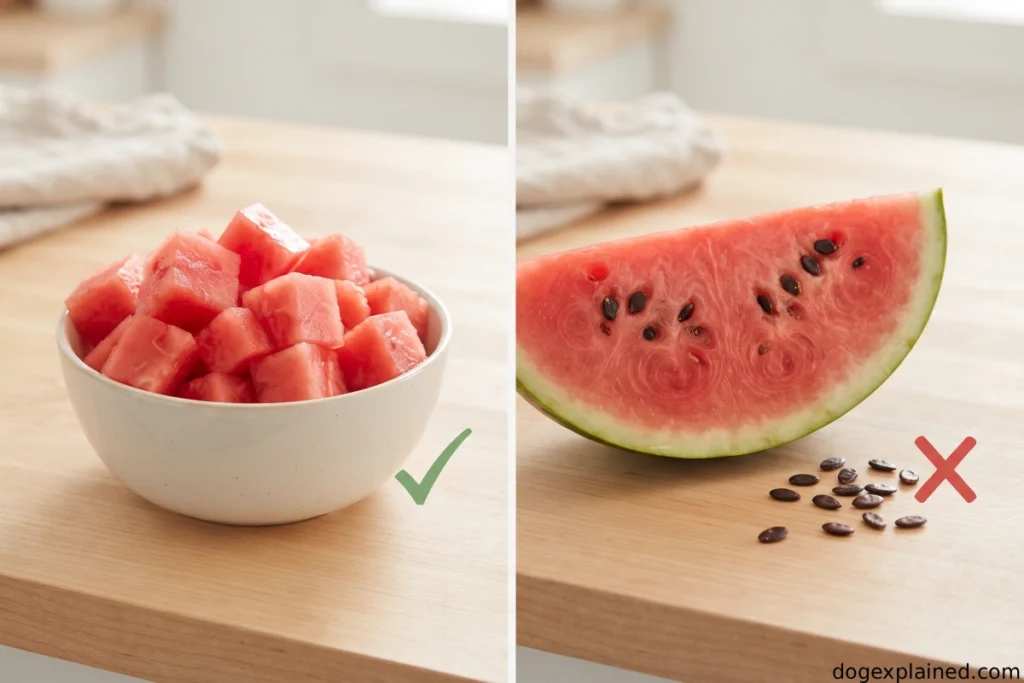
Black Seeds vs. White Seeds
Not everything that looks like a watermelon seed is the same.
Mature Black or Brown Seeds
Traditional seeded watermelon contains mature black or brown seeds with firmer seed coats.
These are the seeds that should be removed before watermelon is intentionally given to a dog.
White Structures in Seedless Watermelon
Seedless watermelon can still contain small, soft white structures.
These are undeveloped seed coats rather than fully developed mature seeds.
This botanical distinction should not be used to claim that a particular number of white seed structures is medically guaranteed safe for every dog.
For routine feeding, inspect the watermelon and remove any mature dark seeds you find.
If you are unsure what your dog swallowed or symptoms develop, contact your veterinarian.
Symptoms That Mean You Should Contact a Vet
After a large or uncertain ingestion, watch for changes such as:
- repeated vomiting
- loss of appetite
- abdominal pain or tenderness
- unusual lethargy or weakness
- persistent diarrhea
- difficulty or straining when passing stool
- producing unusually small amounts of stool
These signs are not specific to watermelon seeds, but they can occur with gastrointestinal foreign-body problems.
Contact your veterinarian if:
- your dog swallowed a large quantity of mature seeds
- the amount eaten is unknown and you are concerned
- rind was swallowed as well
- your dog begins showing any of the symptoms above
- your dog already has gastrointestinal or other relevant health problems
A suspected gastrointestinal obstruction requires veterinary evaluation rather than home treatment.
How to Serve Watermelon Safely
Watermelon can be offered as an occasional treat when it is prepared correctly.
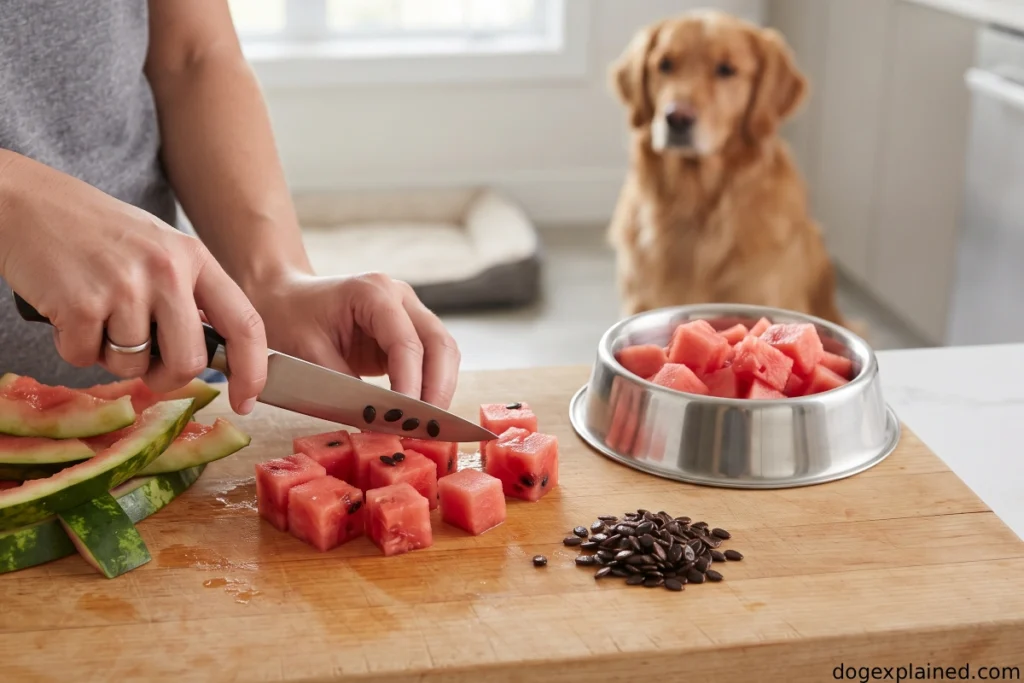
- Wash the watermelon before cutting it.
- Remove the rind completely.
- Remove mature black or brown seeds.
- Cut the soft flesh into pieces appropriate for your dog’s size.
- Serve the watermelon plain.
- Introduce only a small amount initially if your dog has never eaten watermelon before.
Avoid watermelon products containing added sugar, syrups, chocolate, artificial sweeteners, or other unnecessary ingredients.
Watermelon should remain an occasional treat rather than a replacement for complete and balanced dog food.
What About Watermelon Rind?
Watermelon rind should not intentionally be fed to dogs.
It is difficult to chew and digest and can create its own choking or intestinal-obstruction risk.
If your dog swallowed rind as well as seeds, mention that when contacting your veterinarian.
When our dedicated watermelon-rind guide is published, this section can link to it for more detailed guidance.
For detailed guidance, see Can Dogs Eat Watermelon Rind?
Frequently Asked Questions
Are Watermelon Seeds Poisonous to Dogs?
A few accidentally swallowed watermelon seeds are not normally treated as a poisoning emergency.
For practical dog-safety purposes, the more relevant concerns with larger quantities are choking, digestive problems, and possible gastrointestinal obstruction.
Mature watermelon seeds should still be removed before serving the fruit.
Can Puppies Eat Watermelon Seeds?
Puppies should not intentionally be given mature watermelon seeds.
Properly prepared watermelon flesh can be offered as an occasional treat when the rind and mature seeds are removed.
For puppy-specific guidance, see our Can Puppies Eat Watermelon? guide.
What About Seedless Watermelon and White Seeds?
Seedless watermelon is generally easier to prepare because it contains fewer mature dark seeds than traditional seeded watermelon.
The small white structures commonly seen in seedless watermelon are undeveloped seed coats.
Even so, inspect the fruit before serving and remove any mature black or brown seeds you find.
Portion size matters too; see our watermelon portion guide for dogs.
For routine feeding, use seedless watermelon or remove mature seeds yourself, discard the rind, and serve only small pieces of plain watermelon flesh.
If your dog has already swallowed a large or unknown quantity of seeds or develops symptoms, contact your veterinarian.
For the complete overview, see Can Dogs Eat Watermelon?