Finding your dog with cat litter around their mouth can trigger an immediate question: Is this dangerous?
Sometimes the dog has swallowed only a few grains stuck to cat poop. In other cases, they may have eaten a noticeable amount directly from the litter box.
Those situations are not equivalent.
What matters most is the type of litter, approximately how much was swallowed, the size and health of the dog, whether cat feces were eaten too, and whether symptoms develop.
My Dog Ate Cat Litter — What Should I Do First?
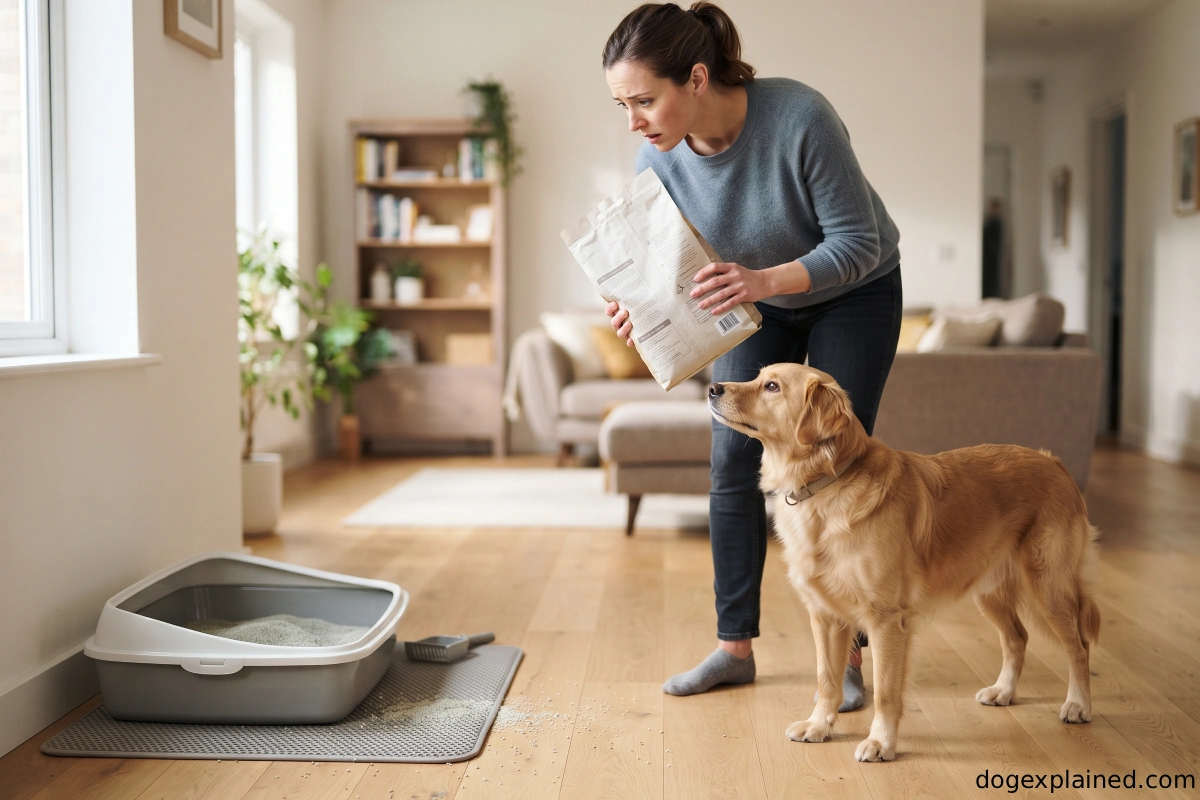
Start with four practical steps.
- Stop your dog from eating any more litter.
- Check the litter packaging so you know exactly what product was involved.
- Estimate how much may be missing, if possible.
- Watch your dog closely for signs of gastrointestinal trouble.
Keep the litter package or take a photo of the ingredient label. If you need to call your veterinarian, that information may help them assess the situation.
Do not give a home antidote or try to make your dog vomit unless a veterinarian or animal poison professional specifically instructs you to do so.
If your dog is already vomiting repeatedly, appears painful, weak, unusually lethargic, has a swollen abdomen, or cannot pass stool, contact a veterinarian promptly.
Is Cat Litter Toxic to Dogs?
Not all cat litter should be described simply as “toxic.”
Many litter ingredients are not classic poisons, but eating them can still create problems.
Depending on the product and amount, concerns may include:
- vomiting or diarrhea
- gastrointestinal irritation
- constipation
- difficulty passing stool
- dehydration
- ingestion of additives or fragrances
- intestinal blockage after a substantial amount is swallowed
The physical properties of the litter can matter as much as its ingredients.
A material does not need to be chemically poisonous to cause trouble if enough of it accumulates in the gastrointestinal tract.
What Happens If a Dog Eats Cat Litter?
A dog that swallows only a few grains stuck to cat feces may never develop symptoms.
A dog that eats a larger amount may develop digestive problems.
Possible signs include:
- vomiting
- diarrhea
- reduced appetite
- abdominal discomfort
- gas or bloating
- constipation
- straining to defecate
- unusually small or abnormal stools
- lethargy
More serious concern arises when material does not move normally through the gastrointestinal tract.
An intestinal obstruction can prevent food and fluid from passing properly and may require urgent veterinary treatment.
How Much Cat Litter Is Dangerous for a Dog?
There is no reliable universal amount that is safe or dangerous for every dog.
Risk depends on factors such as:
- litter type
- amount swallowed
- dog size
- whether the litter expands, absorbs moisture, or clumps
- whether cat feces were swallowed
- additives in the product
- existing gastrointestinal disease
- symptoms
A few grains accidentally swallowed by a large healthy dog are very different from an unknown amount eaten by a small puppy.
This is why we do not give a universal number of teaspoons, cups, or grams.
If the amount was substantial or you cannot estimate how much your dog ate, call your veterinarian and give them the product information.
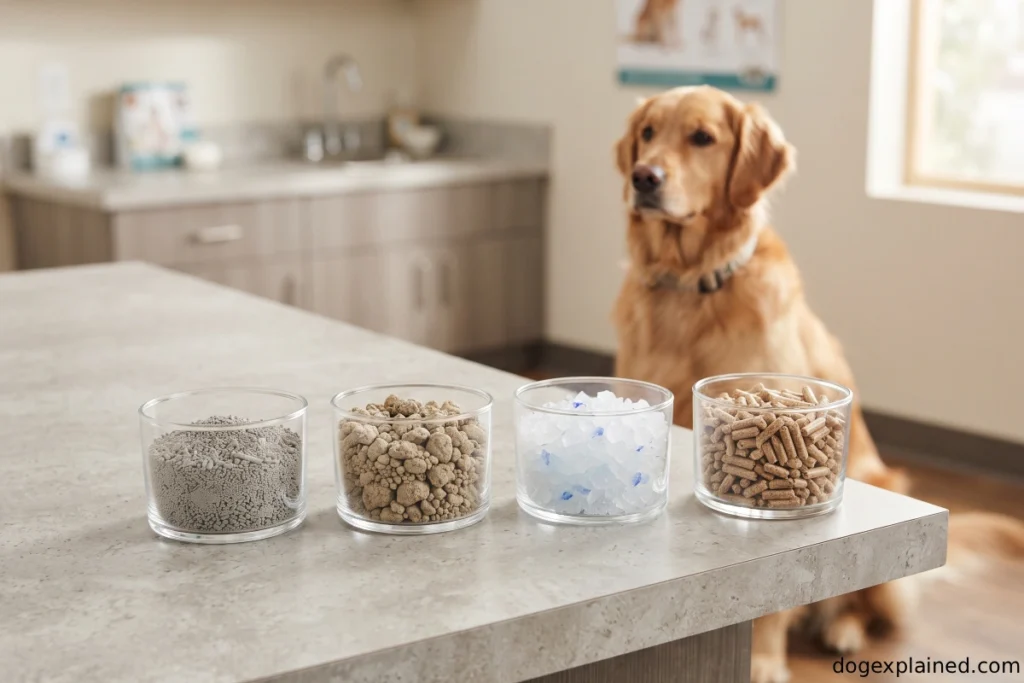
Dog Ate Clumping Cat Litter
Clumping litter deserves extra caution.
Many traditional clumping litters use bentonite clay, which absorbs moisture and forms clumps.
The concern is not simply “poisoning.” If enough material is swallowed, its ability to clump and the overall volume of material in the gastrointestinal tract can contribute to digestive problems or obstruction.
If your dog ate clumping litter:
- identify the product
- estimate the amount
- prevent further access
- monitor appetite and bowel movements
- watch for vomiting, abdominal discomfort, or straining
Contact your veterinarian if a significant or unknown amount was swallowed, particularly for a small dog or puppy.
Seek veterinary care promptly if your dog cannot pass stool, repeatedly vomits, becomes lethargic, refuses food, or appears painful.
Dog Ate Non-Clumping Clay Litter
Non-clumping clay litter does not form the same type of clumps as bentonite-based litter, but swallowing a large amount can still cause gastrointestinal irritation or contribute to constipation or blockage.
Do not assume “non-clumping” means unlimited ingestion is harmless.
For a small incidental exposure with no symptoms, monitoring may be appropriate.
For a larger or unknown amount, contact your veterinarian for individualized advice.
Dog Ate Crystal or Silica Cat Litter
Crystal litters commonly contain silica gel.
Silica gel itself is generally considered low in toxicity, but that does not mean eating a large quantity of crystal litter is desirable or risk-free.
Problems may still arise from:
- gastrointestinal irritation
- the physical amount swallowed
- other ingredients or additives in the litter
- eating cat feces along with the litter
Some crystal products also use formulations that behave differently when exposed to moisture.
If your dog ate a meaningful or unknown amount of crystal litter, check the exact product and call your veterinarian if you are uncertain about the risk.
Dog Ate Paper, Wood, Pellet, or Other Natural Litter
Paper- and wood-based litters are often less concerning from a toxicity standpoint than some other materials, but large amounts of any indigestible or highly absorbent material can cause gastrointestinal upset or blockage.
Plant-based litters may contain materials such as:
- corn
- wheat
- walnut
- grass
- wood
- paper
The ingredient list matters.
Do not assume that a product marketed as “natural” is automatically safe to eat.
If your dog swallowed more than a small incidental amount, identify the exact product and contact your veterinarian if you are unsure how to proceed.
What If My Dog Ate Cat Poop and Litter Together?
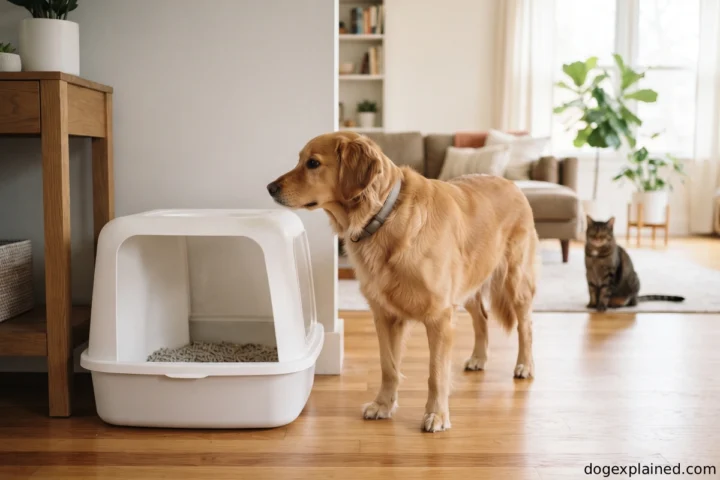
This is common because dogs often swallow litter while raiding the litter box for feces.
Now there are two separate considerations:
- the physical effect of the litter
- exposure to organisms or substances present in the cat feces
Cat feces can potentially expose dogs to parasites or harmful bacteria, particularly when the cat’s health or parasite status is unknown.
Our guide to why dogs eat cat poop explains the behavioral reasons, infection concerns, and warning signs in more detail.
If your dog ate cat feces plus a substantial amount of litter, tell your veterinarian about both exposures.
Signs to Watch For
After litter ingestion, monitor your dog’s normal routine rather than checking only once.
Pay attention to:
- appetite
- energy level
- vomiting
- diarrhea
- abdominal discomfort
- abdominal swelling
- normal bowel movements
- straining
- inability to pass stool
- unusual behavior
A dog that is eating, drinking, behaving normally, and continuing to pass normal stool is more reassuring than a dog that develops progressive gastrointestinal symptoms.
However, absence of symptoms immediately after ingestion does not guarantee that a larger swallowed amount will cause no later problems.
When Should I Call a Veterinarian?
Call your veterinarian if:
- the amount swallowed was large
- you do not know how much was eaten
- your dog is very small or a young puppy
- clumping litter was eaten in a meaningful amount
- your dog has an existing gastrointestinal condition
- the product contains ingredients you are unsure about
- your dog repeatedly raids and eats litter
Seek prompt veterinary care if your dog develops:
- repeated vomiting
- significant abdominal pain
- a swollen abdomen
- marked lethargy or weakness
- refusal to eat
- repeated straining
- little or no stool despite trying
- collapse
- another major change in condition
An intestinal blockage can become a veterinary emergency.
Should I Make My Dog Vomit?
Not unless a veterinarian or animal poison professional specifically tells you to.
Inducing vomiting is not appropriate for every substance or every animal, and doing it incorrectly can create additional complications.
Do not give hydrogen peroxide, salt, oil, milk, activated charcoal, or another home treatment simply because you found it recommended online.
Instead, tell the veterinary professional:
- what litter was eaten
- the approximate amount
- when it happened
- your dog’s weight or size
- whether cat feces were involved
- what symptoms, if any, are present
Follow their instructions for that specific situation.
Why Does My Dog Keep Eating Cat Litter?
If your dog repeatedly goes back to the litter box, the problem is no longer only an accidental-ingestion question.
Dogs often raid litter boxes because they are attracted to cat feces, because access has become a habit, or because the environment repeatedly allows the behavior.
Other possibilities may deserve consideration if your dog is persistently eating litter itself rather than mainly seeking cat feces.
Discuss repeated ingestion of non-food material with your veterinarian, particularly if it is new or associated with:
- unusual hunger
- weight loss
- gastrointestinal changes
- eating other non-food objects
- behavioral changes
Repeated access also increases the chance that one future episode involves a much larger amount.
How to Prevent It From Happening Again
Once the immediate safety concern is over, focus on preventing access.
The most effective options are environmental.
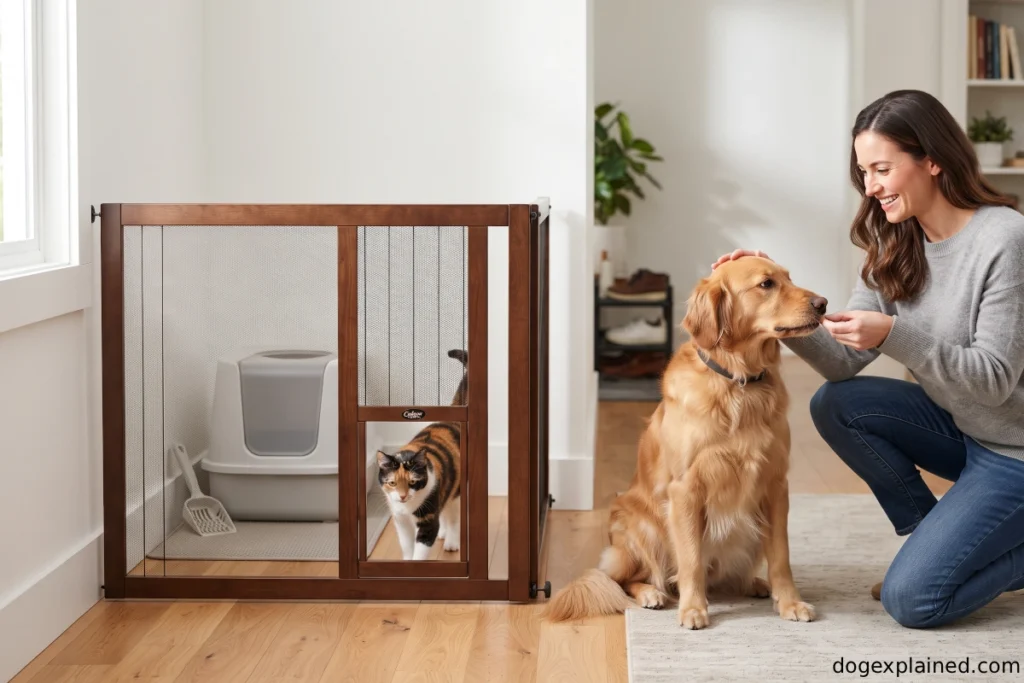
Move the litter box
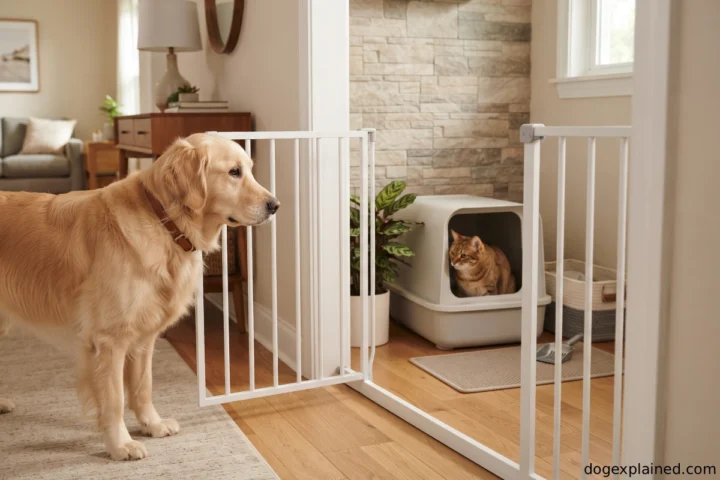
Put it in an area that your cat can comfortably access but your dog cannot.
Use a physical barrier
A pet gate, cat-only room, or appropriate pet door may prevent repeated raids.
Scoop frequently
Removing feces promptly reduces what attracts many dogs to the box.
Supervise problem areas
If your dog consistently approaches the litter box at certain times, intervene before they reach it.
Teach “leave it”
Reward-based training can help, but it should support environmental management rather than replace it.
Our detailed guide on how to keep a dog out of the litter box covers gates, room setup, cat access, training, older cats, and dog-proof litter-box options.
Frequently Asked Questions
Is a Small Amount of Cat Litter Dangerous for a Dog?
A few incidental grains may cause no symptoms in many dogs, but risk depends on the product, amount, and individual dog.
If you are uncertain about what or how much was swallowed, contact your veterinarian.
Can Cat Litter Cause a Blockage in Dogs?
Yes, a sufficiently large amount of litter can contribute to gastrointestinal obstruction.
Clumping litter deserves particular caution because it absorbs moisture and forms clumps.
Watch for vomiting, abdominal pain, reduced appetite, lethargy, straining, or failure to pass stool.
Is Clumping Cat Litter Poisonous to Dogs?
“Poisonous” is not the most useful way to describe the main concern.
The important risk is that ingestion of enough clumping litter can cause gastrointestinal problems, including obstruction.
The exact product, amount, and dog’s size matter.
Can a Dog Die From Eating Cat Litter?
A tiny accidental amount is very different from a major ingestion.
A severe gastrointestinal obstruction or another serious complication can become life-threatening if untreated.
That is why a large or unknown ingestion and signs such as repeated vomiting, abdominal pain, weakness, or inability to pass stool deserve prompt veterinary attention.
My Dog Ate Cat Litter but Seems Fine. Should I Worry?
Being symptom-free is reassuring, particularly after a very small exposure.
Continue monitoring appetite, behavior, vomiting, and bowel movements.
If the amount was large or unknown, contact your veterinarian even if the dog currently appears normal.
Can Puppies Eat Cat Litter?
Puppies should not be allowed to eat cat litter.
Their smaller body size means a given quantity may represent a more significant exposure, and young dogs are also prone to swallowing non-food objects.
Contact your veterinarian if a puppy ate a meaningful or unknown amount.
Does Cat Litter Dissolve in a Dog’s Stomach?
Do not rely on the assumption that litter will simply dissolve harmlessly.
Different products behave differently when exposed to fluid, and large amounts of material may remain problematic in the gastrointestinal tract.
The package information and amount swallowed are more useful than assuming all litters behave the same way.
If your dog ate cat litter, the best response is based on what actually happened rather than panic or a universal rule. Identify the litter, estimate the amount, monitor your dog, and contact a veterinarian when the exposure or symptoms make the risk uncertain. Then change the litter-box setup so the next incident never happens.