Watching your dog turn around and eat poop can be alarming—and, for most people, pretty disgusting.
Dogs see the situation differently.
Poop eating has a name: coprophagia. It can occur for several reasons, ranging from normal puppy exploration and scavenging behavior to habits that have been accidentally reinforced. Less commonly, a medical problem that affects appetite or digestion may contribute.
The useful question is not simply, “How do I make this stop?”
First work out when it happens, whose stool the dog is eating, and whether anything else about the dog’s health or behavior has changed.
What Is Coprophagia?
Coprophagia means eating feces.
A dog may eat:
- their own stool
- another dog’s stool
- cat feces
- stool from wildlife or other animals
Those situations are not necessarily identical.
Puppies commonly investigate things with their mouths, and mother dogs normally consume the waste of very young puppies while keeping the nesting area clean.
In an adult dog, particularly one that suddenly begins eating its own stool or another dog’s stool, it is worth looking more carefully at possible behavioral, environmental, dietary, and medical factors.
Why Do Dogs Eat Poop?
There is rarely one explanation that fits every dog.
Here are some of the more common possibilities.
1. Dogs Are Natural Scavengers
Dogs investigate the world with their noses and mouths.
Something that seems obviously disgusting to a person may still be interesting to a dog because of its smell, taste, freshness, or connection to food.
For some dogs, finding stool outdoors is simply another scavenging opportunity.
If eating it is rewarding and nothing prevents access, the behavior can repeat.
This does not automatically mean something is missing from the dog’s diet.
2. Puppies Explore With Their Mouths
Puppies put many things in their mouths while learning about their surroundings.
Unfortunately, that can include feces.
A puppy may sniff stool, pick it up, play with it, or eat it before anyone has had time to intervene.
For many puppies the behavior decreases as they mature, particularly when owners prevent repeated access and reinforce better habits.
Persistent poop eating should still be discussed with a veterinarian if it is frequent or occurs alongside diarrhea, weight loss, excessive hunger, poor growth, or another health concern.
3. Easy Access Can Turn Poop Eating Into a Habit
Imagine the same sequence happening every day:
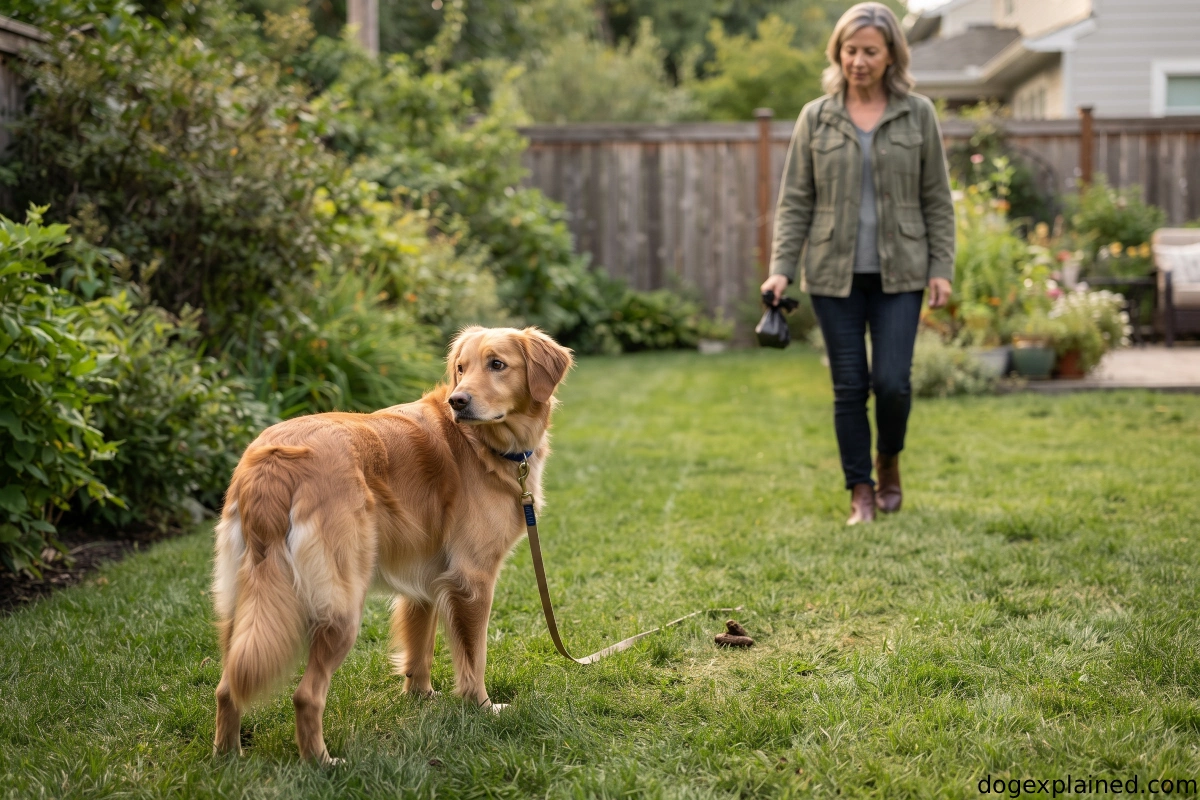
Your dog goes into the yard, eliminates, turns around, and immediately has access to the stool.
If the dog finds eating it rewarding, repetition makes the pattern easier to establish.
This is why management matters so much.
You do not have to win a contest between your recall cue and a pile of fresh poop if you can prevent the dog from repeatedly practicing the behavior in the first place.
Prompt cleanup removes the reward before the habit gets another rehearsal.
4. Attention Can Accidentally Reinforce the Behavior
Poop eating gets an impressive reaction from humans.
A dog grabs stool and suddenly everyone is:
- shouting
- running toward the dog
- calling their name
- chasing them
- trying to grab something from their mouth
For some dogs, that entire sequence becomes exciting.
The dog may learn that grabbing poop reliably starts an interaction.
The same learning principle can appear in other everyday behaviors; our guide to why dogs lick people explains how human attention can unintentionally reinforce a behavior.
That does not mean you should ignore a safety problem. It means the long-term training plan should focus on calm interruption, prevention, and rewarding the behavior you actually want.
Dogs can learn similar attention-based patterns with other behaviors too; our guide on why dogs lick people explains how human reactions can unintentionally reinforce a behavior.
5. Stress, Boredom, or the Environment May Contribute
Environmental factors can influence coprophagia in some dogs.
A dog may be more likely to develop repetitive unwanted behaviors when there is:
- limited supervision
- inadequate enrichment
- prolonged confinement
- stress
- inconsistent routines
- repeated access to feces
This does not mean every poop-eating dog is anxious or bored.
Instead, look at the pattern.
If the behavior happens mainly during long periods outside alone, during stressful situations, or alongside other repetitive behaviors, the dog’s environment deserves attention as part of the solution.
6. Mother Dogs Have a Normal Cleanup Behavior
A nursing mother normally stimulates and cleans very young puppies and may consume their feces to keep the nesting area clean.
This is different from an adult pet dog suddenly developing a persistent interest in feces.
Puppies may also observe or encounter this behavior early in life, although that does not mean every puppy will become a long-term poop eater.
7. Sometimes a Medical Cause Needs to Be Ruled Out
Most poop-eating cases are not proof of a serious disease.
Still, some medical problems can increase appetite, reduce nutrient absorption, alter digestion, or otherwise contribute to unusual eating behavior.
Veterinary evaluation may be appropriate for conditions involving:
- intestinal parasites
- digestive or malabsorption problems
- nutritional imbalance or inadequate calorie intake
- conditions that markedly increase appetite
- certain medications that increase hunger
A veterinarian may consider the dog’s diet, stool quality, body condition, appetite, medications, parasite status, and other symptoms when deciding whether testing is needed.
A sudden new behavior in an adult dog deserves more attention than a puppy occasionally investigating stool.
Why Does My Dog Eat Its Own Poop?
Eating one’s own feces is sometimes called autocoprophagia.
The reasons can still vary.
A dog may have developed a habit because stool is consistently available. Attention or chasing may reinforce it. Puppies may begin through exploration.
Medical or dietary issues also become more relevant when an adult dog suddenly starts eating its own stool, especially if there are other changes such as:
- increased hunger
- weight loss
- diarrhea
- unusually large or poorly formed stools
- vomiting
- increased thirst
- changes in energy
- a recent medication change
Do not diagnose the reason based on poop eating alone.
Look at the whole dog and discuss persistent or newly developed behavior with your veterinarian.
Is It Dangerous for Dogs to Eat Poop?
The level of risk depends partly on whose feces the dog eats and what that stool contains.
Eating feces can expose a dog to organisms or substances present in the stool.
Feces from another dog or another species may contain:
- intestinal parasites
- bacteria
- viruses or other infectious organisms
- residues of substances the other animal consumed
That is one reason poop eating should be discouraged even when the dog appears unaffected afterward.
A dog eating its own freshly passed stool may not face exactly the same exposure as eating unknown animal feces, but the behavior still should not be encouraged.
If your dog becomes ill after eating feces, contact your veterinarian.
Can Dogs Get Parasites or Illness From Eating Poop?
Yes, depending on what is present in the feces.
Dogs can encounter parasites and infectious organisms through contaminated fecal material.
Risk is especially difficult to judge when the stool comes from:
- an unknown dog
- wildlife
- an animal with diarrhea
- an animal with an unknown parasite status
Routine parasite prevention, veterinary care, prompt feces cleanup, and preventing scavenging all help reduce exposure.
If your dog repeatedly eats other animals’ feces, mention the behavior at veterinary visits so your veterinarian can advise you about appropriate parasite monitoring and prevention.
How to Stop a Dog From Eating Poop
There is no single trick that works for every dog.
The most reliable strategy starts by making poop harder to access and making another behavior more rewarding.
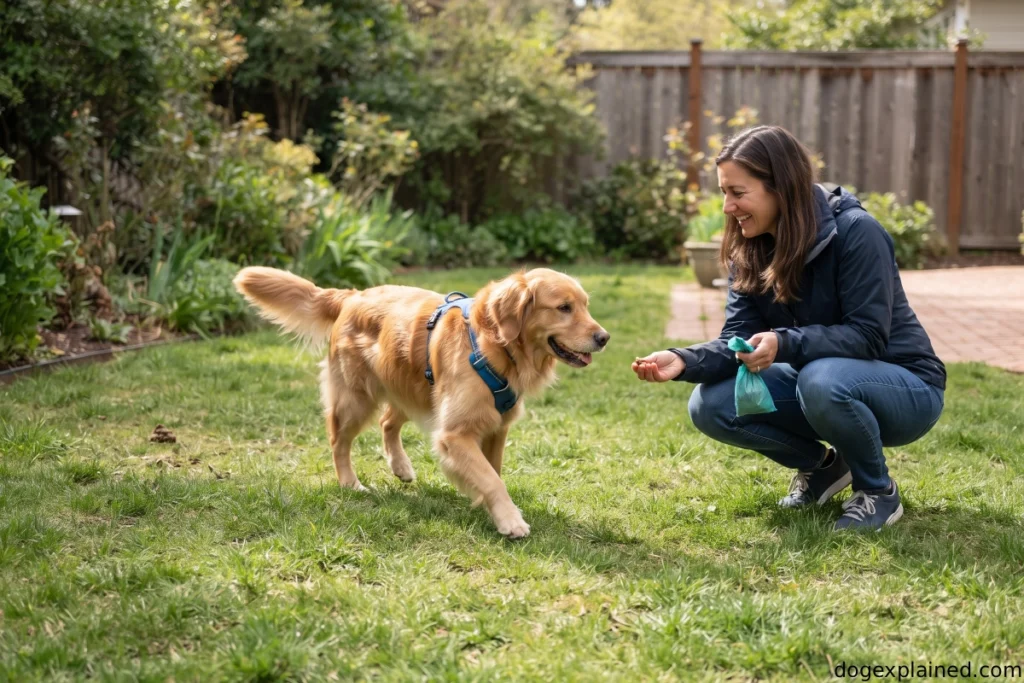
1. Pick Up Stool Promptly
This sounds simple because it is.
If feces disappear before your dog can eat them, the behavior cannot be practiced.
In a yard, accompany the dog outside rather than opening the door and checking later.
As soon as your dog finishes:
- calmly call the dog toward you
- reward them away from the stool
- pick the stool up immediately
Consistency matters more than drama.
2. Supervise Bathroom Trips
For a dog with an established habit, use a leash or stay close enough to intervene before the dog reaches the stool.
Supervision allows you to reinforce the sequence you want:
eliminate → move toward owner → receive reward → leave the area.
Over time, that routine can compete with the old habit.
3. Teach a Strong “Leave It”
Practice away from poop first.
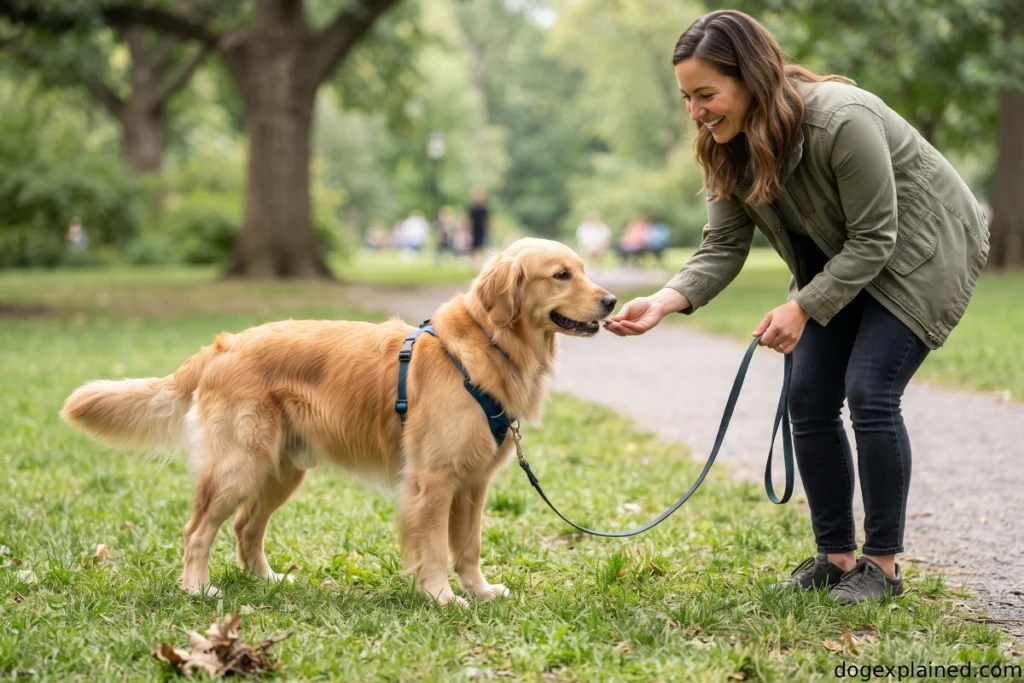
Start with lower-value objects where the dog can succeed.
Reward the dog for disengaging and looking toward you.
As the skill improves, practice around more distracting items while keeping the dog on leash and preventing access.
Do not use real feces as an uncontrolled training experiment.
4. Reward the Dog for Coming Away
After your dog eliminates, make moving toward you worthwhile.
Use something your dog genuinely values:
- a small food reward
- praise
- a favorite toy
- moving directly into a walk or another activity
The goal is not to bribe the dog after they already have poop in their mouth.
The goal is to build a new predictable routine before they reach it.
5. Reduce Unsupervised Access
Check the environment for predictable sources:
- backyard stool
- multi-dog household waste
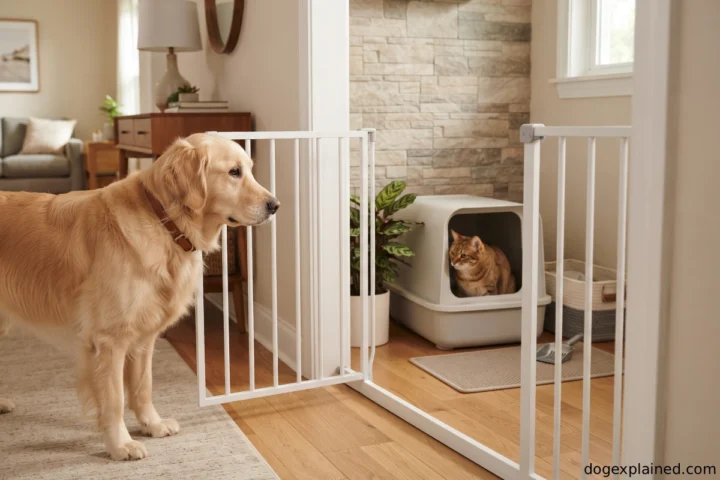
- litter boxes
- walking routes with frequent feces
- farms or areas with livestock
- wildlife droppings
Management is not “cheating.”
Every prevented repetition makes training easier.
6. Make Sure the Dog’s Needs Are Being Met
Review the basics:
- complete and balanced food appropriate for life stage
- enough calories for the individual dog
- regular exercise
- sniffing and exploration
- training
- play
- social contact
- opportunities to rest
If you are concerned about nutrition or unusually strong hunger, discuss the diet with your veterinarian instead of automatically adding supplements.
What Not to Do
Do Not Punish the Dog After the Fact
A dog cannot use punishment delivered minutes later to understand what behavior caused it.
Scolding after discovering missing poop is unlikely to teach the lesson you intended.
Do Not Rub the Dog’s Nose in Feces
This is outdated and inappropriate.
It can increase fear or stress and does not teach the dog what to do instead.
Do Not Turn It Into a Chase Game
If the dog grabs poop and you repeatedly chase them around the yard, the interaction itself can become rewarding.
Work on management, leash supervision, “leave it,” and exchanging or redirecting calmly.
Do Not Assume a Vitamin Deficiency
Poop eating alone does not prove that your dog needs vitamins, digestive enzymes, or another supplement.
If you suspect a nutritional or digestive issue, veterinary evaluation is more useful than guessing.
Do Poop-Eating Deterrents or Home Remedies Work?
You may see advice online suggesting:
- pineapple
- pumpkin
- yogurt
- meat tenderizer
- digestive enzymes
- vitamin supplements
- commercial stool-taste deterrents
There is no simple home ingredient that reliably solves every case of coprophagia.
Some approaches have limited or inconsistent evidence, and they do not address problems such as unrestricted stool access, learned behavior, stress, parasites, or medical disease.
Do not add supplements, enzymes, medications, or unusual ingredients solely because an internet recipe claims they will make feces taste bad.
Start instead with:
- prompt cleanup
- supervision
- reward-based training
- appropriate diet
- enrichment
- veterinary assessment when indicated
Those steps address the behavior without depending on an unproven shortcut.
When to See a Veterinarian
Arrange a veterinary appointment if poop eating:
- begins suddenly in an adult dog
- becomes frequent or difficult to control
- occurs with weight loss
- occurs with diarrhea or persistent abnormal stool
- occurs with vomiting
- accompanies excessive hunger or thirst
- appears after a medication change
- occurs with lethargy or other illness
- persists despite consistent management
A veterinarian may recommend a physical examination, diet review, fecal parasite testing, or other testing based on the dog’s history and symptoms.
If medical causes are ruled out but the behavior remains persistent, your veterinarian can also help determine whether additional behavioral support is appropriate.
Can Puppies Grow Out of Eating Poop?
Many puppies become less interested in feces as they mature, but owners should not simply wait and allow the behavior to be practiced repeatedly.
Use the puppy stage to establish a better routine:
- supervise elimination
- clean stool up immediately
- teach “leave it”
- reward the puppy for moving toward you
- provide appropriate chewing, play, training, and exploration
Talk to your veterinarian if your puppy’s coprophagia is frequent or is accompanied by diarrhea, poor growth, weight loss, unusual hunger, or another health concern.
Frequently Asked Questions
Why Do Dogs Eat Other Dogs’ Poop?
Dogs may investigate or eat another dog’s stool because of scavenging behavior, smell, taste, habit, or easy access.
Medical causes that increase hunger or affect digestion should also be considered when the behavior is persistent.
Because another dog’s stool may expose your dog to parasites or infectious organisms, discourage the behavior and clean shared spaces promptly.
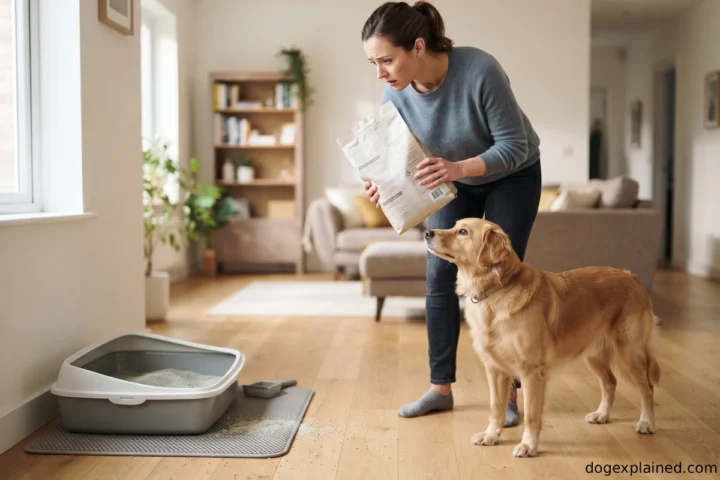
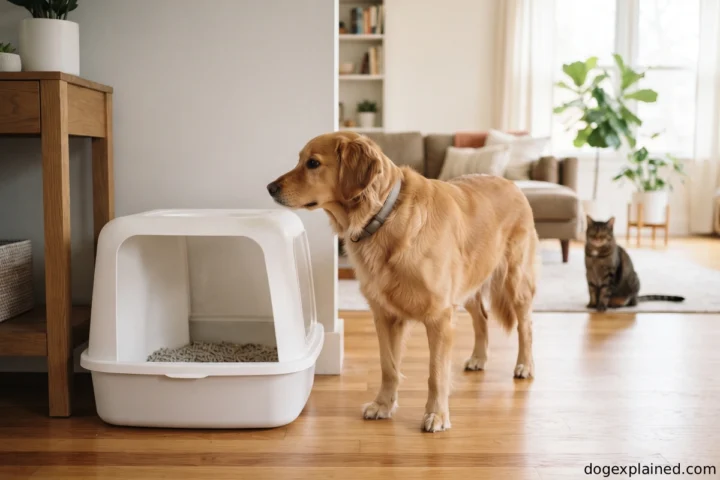
Why Do Dogs Eat Cat Poop?
Dogs may find cat feces attractive because of its smell and the remnants of a cat’s nutrient-rich food.
However, cat feces may expose dogs to parasites or harmful bacteria, and litter itself can create additional concerns.
We will cover litter-box scavenging and cat feces in a separate guide because the prevention strategy is different from a dog eating its own stool.
Why Does My Dog Suddenly Eat Poop?
A sudden change deserves attention.
First consider environmental changes, new access to stool, stress, changes in feeding, or newly learned behavior.
In an adult dog, persistent sudden-onset coprophagia is also a reason to discuss possible medical causes with your veterinarian.
Is Poop Eating a Sign My Dog Is Hungry?
Sometimes increased hunger can contribute, but poop eating does not automatically mean a dog is underfed.
Review the dog’s calorie intake, body condition, diet, medications, and any changes in appetite with your veterinarian if hunger seems unusually intense.
Should I Use a Muzzle to Stop My Dog Eating Poop?
A properly introduced basket muzzle can sometimes be part of a management plan for dogs that repeatedly scavenge outdoors, but it should not replace training or veterinary evaluation.
The dog must be able to pant, drink, and receive rewards appropriately, and the muzzle should be introduced gradually and positively.
For most household cases, prompt cleanup, supervision, leash management, and training are the logical first steps.
Coprophagia is unpleasant, but it is usually easier to manage when you stop treating it as a mysterious bad habit. Prevent access, reward the dog for moving away from feces, keep the environment clean, and pay attention to changes in appetite, stool, weight, or general health. If the pattern is new or persistent, involve your veterinarian rather than relying on punishment or a home remedy.
For a detailed explanation of the risks and prevention strategies, see our guide to why dogs eat cat poop.