Why Do Dogs Sleep With Their Bum Facing You? 7 Possible Reasons
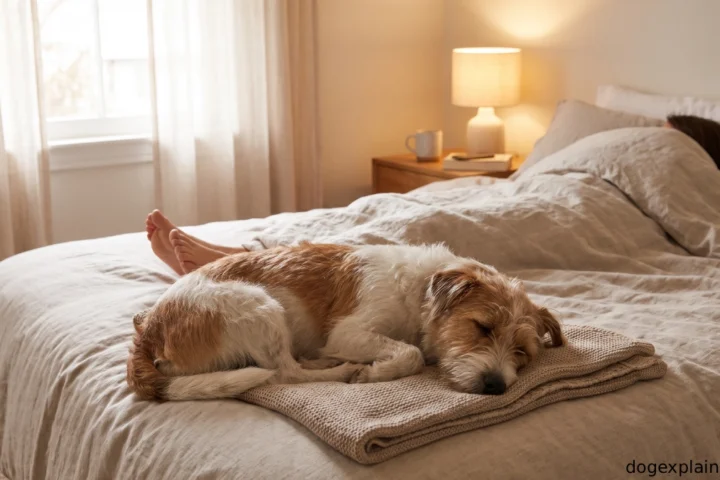
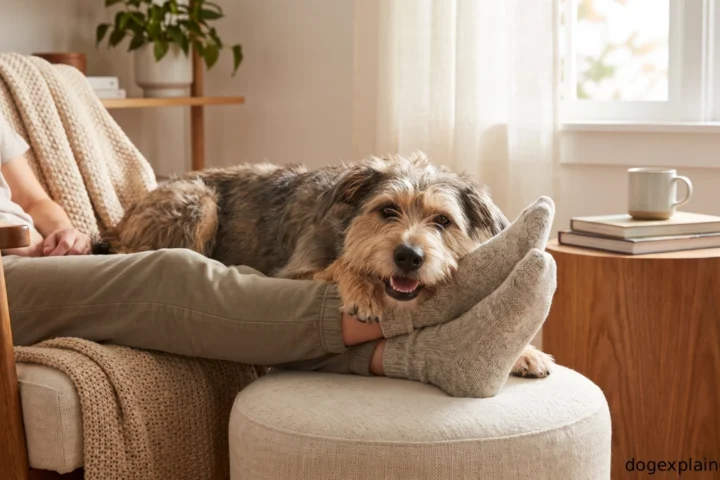
If your dog regularly curls up beside you only to point their back end in your direction, it can feel oddly personal.
It usually isn’t.
Dogs choose sleeping positions for many practical reasons, including comfort, habit, temperature, available space, and where they happen to feel relaxed. Sleeping close to you can be consistent with a strong social bond, but there is no good evidence that pointing their bum toward you has one fixed meaning.
So rather than trying to decode a single sleeping position, look at the bigger picture: Does your dog voluntarily stay close to you? Do they appear relaxed? Is this their normal habit? Have their sleeping patterns suddenly changed?
Why Does My Dog Sleep With Their Bum Facing Me?
The simplest explanation is often the best one.
Dogs don’t have to face us to enjoy sleeping beside us.
A dog may lie with their head pointing toward the room, their back pressed against you, their feet toward the edge of the bed, or their rear end unfortunately positioned right next to your face.
Sleeping position can depend on:
- what feels comfortable at that moment
- the shape of the bed or couch
- where there is space
- temperature
- habitual sleeping patterns
- where your dog prefers to place their head
- where you happen to be lying
Veterinarian-reviewed guidance on canine sleeping positions notes that dogs commonly choose different positions based on preference and comfort in the moment.
That means you should be cautious about treating one sleeping posture as a secret message.
1. That Position Is Simply Comfortable
Comfort is the most straightforward explanation.
Dogs often change positions while sleeping and may prefer a particular side, angle, surface, pillow, corner of the couch, or section of the bed.
If your dog regularly sleeps with their bum facing you but otherwise:
- settles easily
- sleeps normally
- appears relaxed
- wakes comfortably
- moves normally
- behaves as usual
there may be nothing more to interpret.
Your dog may simply have found a position that works.
The location of your body may be less important to them than where their head, spine, legs, or belly feel comfortable.
2. Your Dog Wants to Stay Close Without Facing You
Proximity and body direction are not the same thing.
A dog can choose to sleep:
- against your legs
- beside your hip
- pressed against your back
- at the foot of your bed
- next to you on the couch
while still facing the opposite direction.
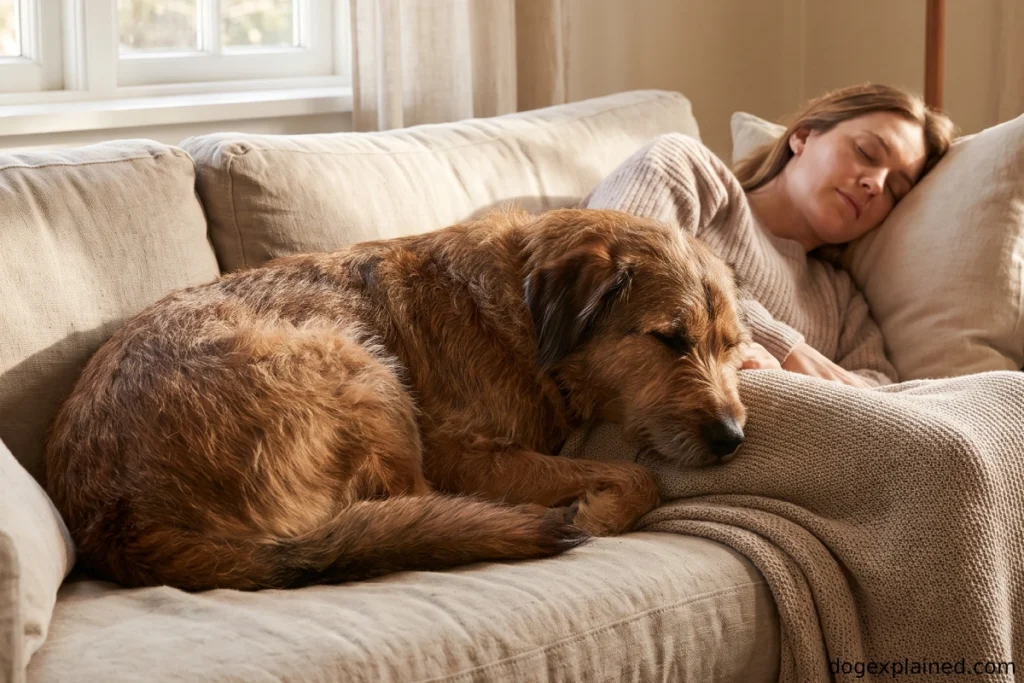
Dogs form meaningful social bonds with familiar people, and research on dog-human attachment shows that many dogs seek proximity to their caregivers and use them as a source of security.
But that does not mean researchers have established that sleeping with the bum toward an owner is a specific sign of attachment.
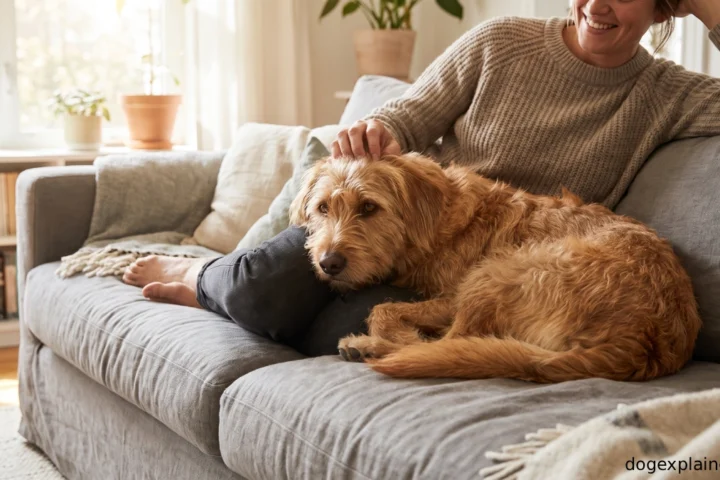
The useful observation is that your dog has voluntarily chosen to rest near you.
Which direction their nose happens to point may simply be secondary.
3. Your Dog May Feel Relaxed Enough to Sleep Beside You
A dog that voluntarily settles and falls asleep close to you is generally doing something that requires a degree of comfort with the situation.
Sleep makes animals less responsive to their surroundings than when they are fully awake, so choosing to rest near a familiar person can be consistent with feeling comfortable there.
But be careful with the common claim:
“My dog turns his back to me because he trusts me.”
That goes further than the evidence supports.
A better interpretation is:
Your dog choosing to rest calmly near you may be consistent with a relaxed relationship, but the exact direction of their body is not a validated test of trust.
Look at your dog’s overall behavior instead.
Signs of a comfortable relationship may include:
- voluntarily approaching you
- relaxing in your presence
- choosing to rest nearby
- comfortable body language
- normal social interaction
- seeking you out in familiar situations
Those observations tell you more than whether your dog is facing toward you or away from you.
4. Your Dog May Prefer Less Face-to-Face Contact While Resting
Dogs use body orientation as part of communication while they are awake.
Looking away or turning the body away can sometimes reduce social intensity or occur when a dog wants more space.
However, that does not mean a sleeping dog facing away from you is deliberately sending the same signal.
Sleeping and active social communication are different situations.
Some dogs may simply prefer resting without having someone’s face directly in front of them.
Think about humans.
Two people can feel completely comfortable sleeping beside each other without sleeping face-to-face all night.
Your dog may similarly enjoy your proximity without needing to look directly at you.
So facing away is not automatically:
- rejection
- fear
- avoidance
- disrespect
- dominance
Context matters.
5. Temperature May Influence the Position
Dogs adjust their sleeping position partly in response to temperature and comfort.
A dog may:
- stretch out when warm
- curl up when cooler
- choose a cool floor
- move away from a warm body
- sleep closer to you for warmth
- orient toward a fan or air-conditioning vent
Your dog’s bum-facing position may therefore be incidental to finding the most comfortable temperature.
For example, a dog may keep their body near you while positioning their head closer to cooler airflow.
Another dog may move their head away from your body heat while leaving their back or rear touching you.
There is no need to create a psychological explanation when the room itself may explain the position.
6. It May Be a Habit
Dogs often develop very specific routines.
Your dog may have a favorite:
- side of the bed
- couch cushion
- sleeping corner
- blanket
- bedtime position
- sleeping partner
- direction to face
Once a sleeping routine becomes familiar, your dog may repeat it simply because it works.
If they have slept this way for months or years and nothing else has changed, habit is a perfectly reasonable explanation.
You don’t necessarily need to decode every repeated behavior into a deeper emotional meaning.
Sometimes your dog sleeps that way because your dog sleeps that way.
7. The Room or Sleeping Spot May Determine Which Way They Face
Look at the physical space around your dog.
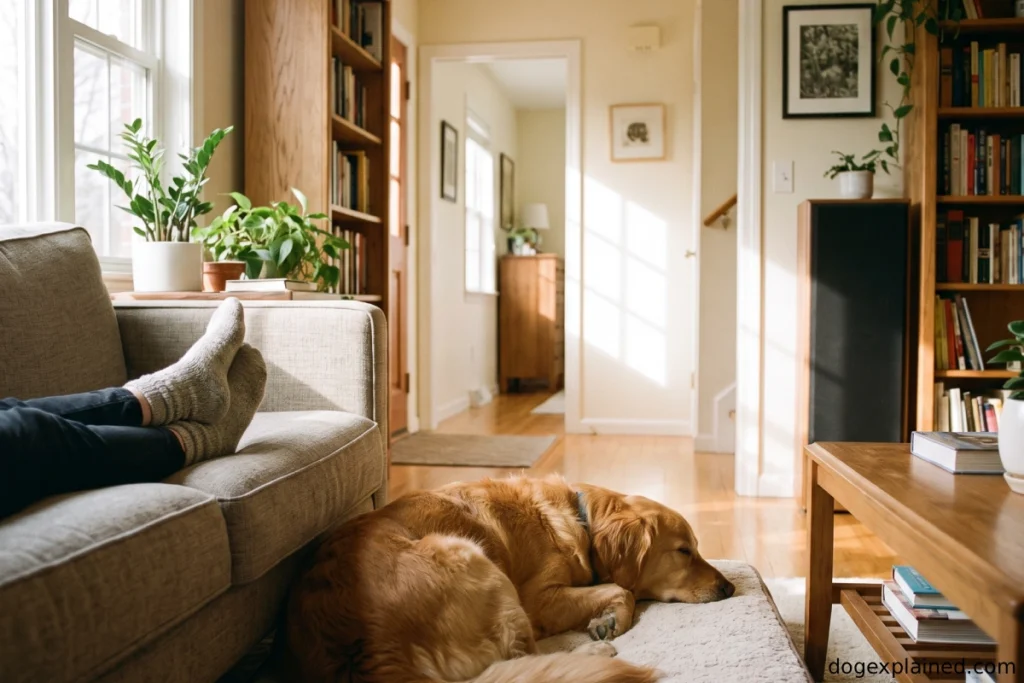
Their sleeping orientation may be influenced by:
- the edge of the bed
- the back of the couch
- a doorway
- furniture
- where people walk
- where their head fits comfortably
- the direction they entered the sleeping spot
- a wall or pillow
- available legroom
Some dogs may also naturally position their head toward the more open part of a room.
That does not necessarily mean they are deliberately guarding you.
A dog facing the room or doorway may simply prefer that orientation.
You cannot determine protective intent from sleeping position alone.
Does Sleeping With Their Bum Facing You Mean Your Dog Trusts You?
Not necessarily.
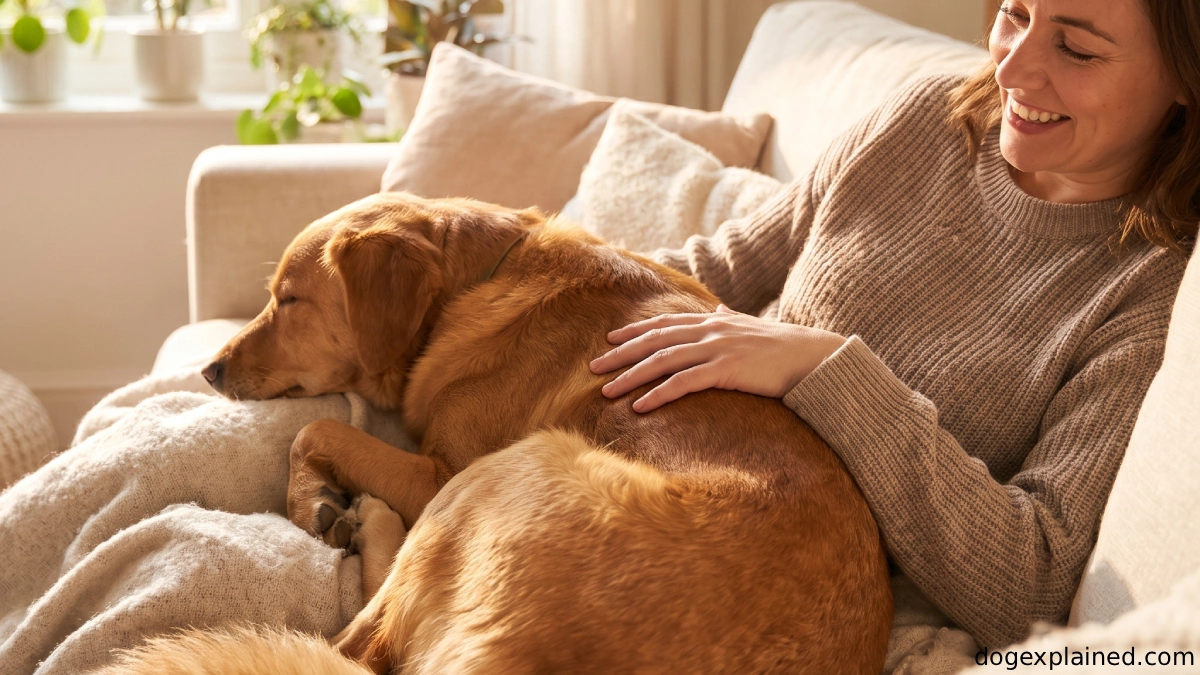
If your dog voluntarily chooses to sleep close to you, that can be consistent with feeling comfortable and secure in your presence.
But the direction of their body alone does not prove trust.
There is no scientifically established rule that says:
“Bum facing owner = trust.”
Dog-human attachment research supports the idea that dogs can form strong attachment relationships with familiar people and may seek proximity to them.
That supports interpreting voluntary closeness as meaningful.
It does not establish the rear-facing sleeping position itself as a special trust signal.
Instead of focusing on one pose, look at the whole relationship.
Does your dog:
- willingly approach you?
- relax around you?
- choose to spend time near you?
- respond comfortably to normal interaction?
- sleep peacefully in your presence?
Those are more useful clues.
Is My Dog Trying to Protect Me?
You cannot determine that from the sleeping position alone.
One popular explanation online is that a dog sleeps facing away because they are “watching the room” or “protecting their owner.”
That is possible in an individual situation, but bum-facing by itself does not prove protective intent.
A dog’s body may point toward:
- a doorway
- an open room
- a hallway
- the edge of a bed
simply because that is how they settled down.
If you want to understand whether your dog is genuinely vigilant or protective, you would need to examine their broader behavior while awake rather than interpreting one sleep position.
Does It Mean My Dog Doesn’t Like Me?
No.
Facing away from you while sleeping is not evidence that your dog dislikes you.
In fact, if your dog repeatedly chooses to sleep close beside you, the fact that they are voluntarily staying nearby may be more meaningful than the direction they face.
Dogs don’t need constant eye contact or face-to-face positioning to maintain a social bond.
If your dog is relaxed, comfortable, and behaving normally with you during the day, there is little reason to interpret a rear-facing sleeping position as rejection.
Why Does My Dog Sleep With His Back to Me?
“Sleeping with his back to me,” “sleeping with his butt towards me,” “sleeping with his bum facing me,” and “sleeping facing away from me” usually describe the same basic behavior.
Possible explanations include:
- physical comfort
- a preferred sleeping position
- staying close without facing you
- temperature
- habit
- the layout of the bed or room
There does not need to be a different psychological explanation for every version of the same sleeping posture.
If your dog voluntarily settles beside you and appears relaxed, facing away is usually not something that needs correcting.
Why Does My Dog Lay Facing Away From Me?
A dog may lie facing away from you because that position is comfortable or because something else in the room determines where they place their head.
They may also prefer physical closeness without face-to-face interaction.
Again, avoid reading one emotion into the posture.
Facing away does not automatically mean:
- your dog is upset with you
- your dog is being dominant
- your dog is protecting you
- your dog doesn’t trust you
Your dog’s overall body language and normal behavior provide much better information.
What If My Dog Suddenly Changes Sleeping Position?
A new sleeping position by itself usually doesn’t tell you that something is wrong.
Dogs move around.
They try new surfaces.
Room temperature changes.
Furniture changes.
People move.
Older dogs may also adjust their sleeping position as their physical comfort changes.
The important question is whether the new position is accompanied by other signs.
Pay more attention if your dog also:
- repeatedly gets up and lies back down
- seems unable to get comfortable
- paces or appears restless
- seems stiff after resting
- has difficulty standing
- limps
- avoids stairs or jumping
- whines or groans when lying down
- sleeps much more or less than usual
- pants unusually while resting
- loses interest in food
- acts unusually withdrawn
- has difficulty breathing
Repeated repositioning and difficulty settling can sometimes occur when a dog is uncomfortable or in pain.
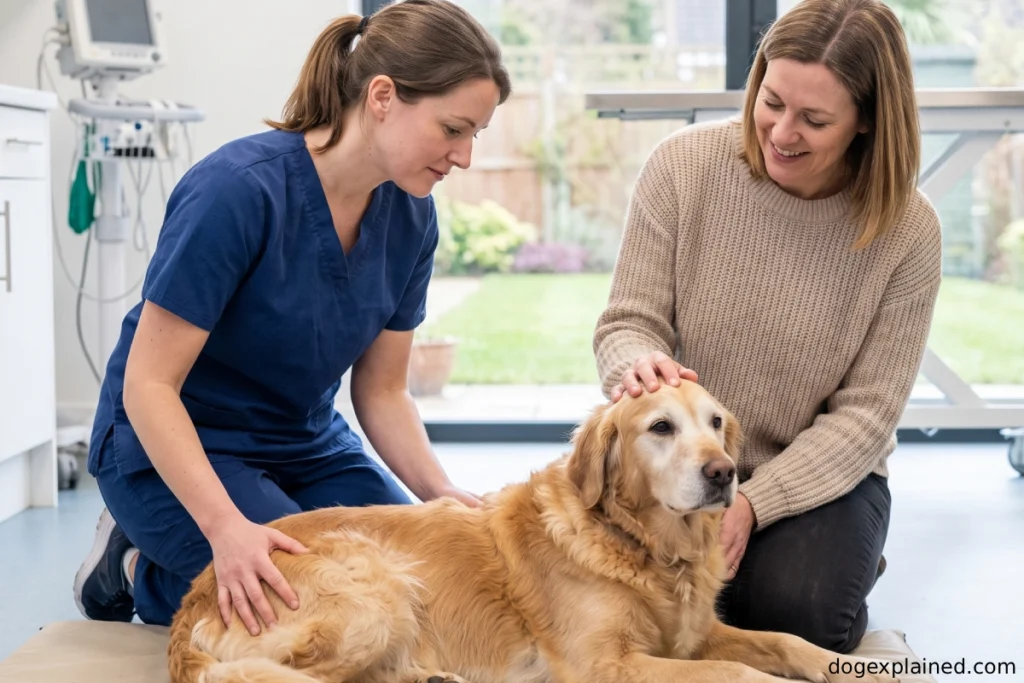
So don’t diagnose a problem from the sleeping position itself.
Look for changes in your dog’s overall comfort and behavior.
When Should You Talk to Your Vet?
Contact your veterinarian if a sudden change in sleeping behavior occurs together with:
- obvious pain
- persistent restlessness
- stiffness
- limping
- difficulty standing or lying down
- reluctance to move
- major changes in sleep
- reduced appetite
- unusual panting
- persistent behavioral changes
- inability to get comfortable
Difficulty or unusual effort when breathing deserves more urgent attention.
If your dog appears to be struggling to breathe, seek veterinary care promptly rather than waiting to see whether the sleeping position changes.
For an otherwise healthy dog that has simply turned around in bed and is sleeping comfortably, there is usually no reason to panic.
Should You Move Your Dog?
Usually, no.
If your dog is:
- safe
- relaxed
- breathing normally
- comfortable
- not blocking something important
you can generally let them choose their preferred sleeping position.
If the problem is that your dog’s rear end keeps ending up directly in your face, you have a practical problem rather than a behavioral emergency.
You can:
- move yourself slightly
- encourage your dog to another part of the bed
- provide a comfortable dog bed nearby
- teach a calm “place” or bed cue
- reward your dog for settling in the preferred location
Avoid punishing your dog for choosing a normal sleeping position.
Frequently Asked Questions
Why Does My Dog Put His Bum Towards Me When Sleeping?
Usually because that is where their preferred sleeping position happens to place their rear end.
Comfort, habit, temperature, proximity, and the layout of the sleeping area are all reasonable explanations.
If your dog voluntarily sleeps close to you and appears relaxed, facing away does not mean they are rejecting you.
Why Does My Dog Sleep Facing Away From Me?
Your dog may simply prefer that orientation.
They may want to stay close while facing the room, have more space for their head and legs, prefer the temperature in that direction, or simply have developed the habit.
Body direction during sleep does not have one fixed emotional meaning.
Does My Dog Sleep With His Back to Me Because He Trusts Me?
Possibly your dog feels very comfortable around you, especially if they voluntarily choose to sleep nearby.
But sleeping with their back toward you is not scientifically established as a specific trust signal.
The dog’s overall behavior and willingness to relax around you are more useful indicators.
Is My Dog Protecting Me While Sleeping?
You cannot tell from bum-facing alone.
A dog may happen to face toward the room or doorway, but that does not prove they are deliberately guarding you.
Protective or vigilant behavior needs to be judged from a much broader pattern of behavior.
Why Does My Dog Sleep With His Butt in My Face?
Often because that is simply where your dog’s preferred sleeping position places their rear end.
Your dog probably isn’t trying to make a statement.
If the position bothers you, calmly reposition yourself or encourage your dog to sleep in another comfortable spot.
Why Do Dogs Lay Facing Away From You?
Comfort, habit, room layout, temperature, and a preference for resting without face-to-face contact are all reasonable possibilities.
Facing away during sleep should not automatically be interpreted as rejection, dominance, fear, or protection.
Should I Worry If My Dog Starts Sleeping Differently?
Not because of one new position alone.
Pay attention if the change occurs together with pain, stiffness, restlessness, mobility problems, reduced appetite, inability to get comfortable, major behavioral changes, or abnormal breathing.
Those additional signs are much more important than the direction your dog happens to face.
The Bottom Line
If your dog sleeps with their bum facing you, there usually isn’t a hidden message that needs decoding.
Comfort, habit, proximity, temperature, and the layout of the sleeping area are more defensible explanations than claims that the position automatically means trust, dominance, rejection, or protection.
If your dog voluntarily chooses to sleep beside you and appears relaxed, the fact that they want to be near you may tell you more than which direction their nose is pointing.
And if your dog’s sleeping habits suddenly change alongside pain, restlessness, stiffness, difficulty getting comfortable, mobility problems, or unusual breathing, contact your veterinarian.