
Fresh strawberries can be an occasional treat for many healthy puppies when they are prepared correctly.
Puppies have specific nutritional needs for growth, so strawberries should remain a small extra rather than replacing complete and balanced puppy food.
Are Strawberries Safe for Puppies?
Yes. Most healthy puppies can eat fresh strawberries in moderation.
For safer serving:
- wash the strawberries thoroughly
- remove the leafy tops and stems
- cut the fruit into small pieces appropriate for your puppy
- serve the berries plain
- introduce only a small amount initially
Puppies can have more sensitive digestive systems than adult dogs, particularly when they are adapting to a new home, changing diets, or trying unfamiliar foods.
If strawberries are new to your puppy, introduce them gradually and watch for digestive or other unusual reactions.
For general strawberry safety, benefits, and serving guidance for adult dogs, see our complete guide to strawberries for dogs.
How to Prepare Strawberries for a Puppy
Proper preparation helps reduce choking and digestive risks.
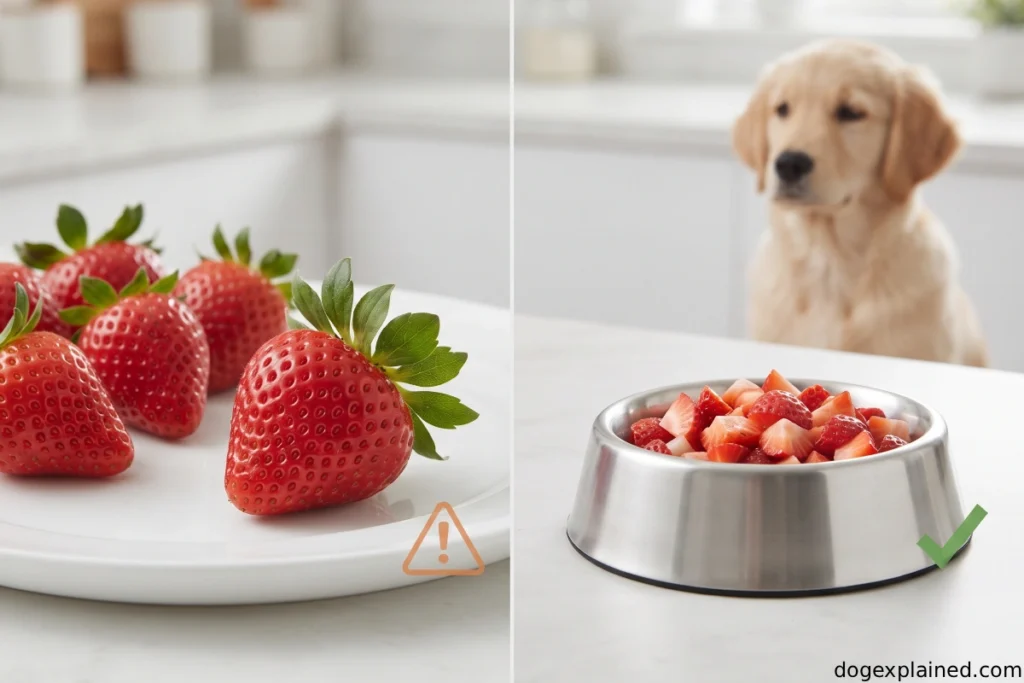
Before serving:
- Rinse the strawberries thoroughly under clean water.
- Remove the green leafy tops and stems.
- Cut large berries into small puppy-sized pieces.
- Serve the fruit plain.
- Start with a small amount the first time.
Whole strawberries may be too large for some puppies to manage comfortably, so adjust the size of the pieces to the puppy rather than serving a berry whole.
Avoid canned strawberries, strawberries packed in syrup, sweetened strawberry products, desserts, jams, and products containing artificial sweeteners.
How Much Strawberry Should a Puppy Have?
There is no single medically established number of strawberries that is appropriate for every puppy.
The right amount depends on factors such as:
- puppy size
- age
- daily calorie needs
- regular diet
- other treats
- digestive tolerance
- health conditions
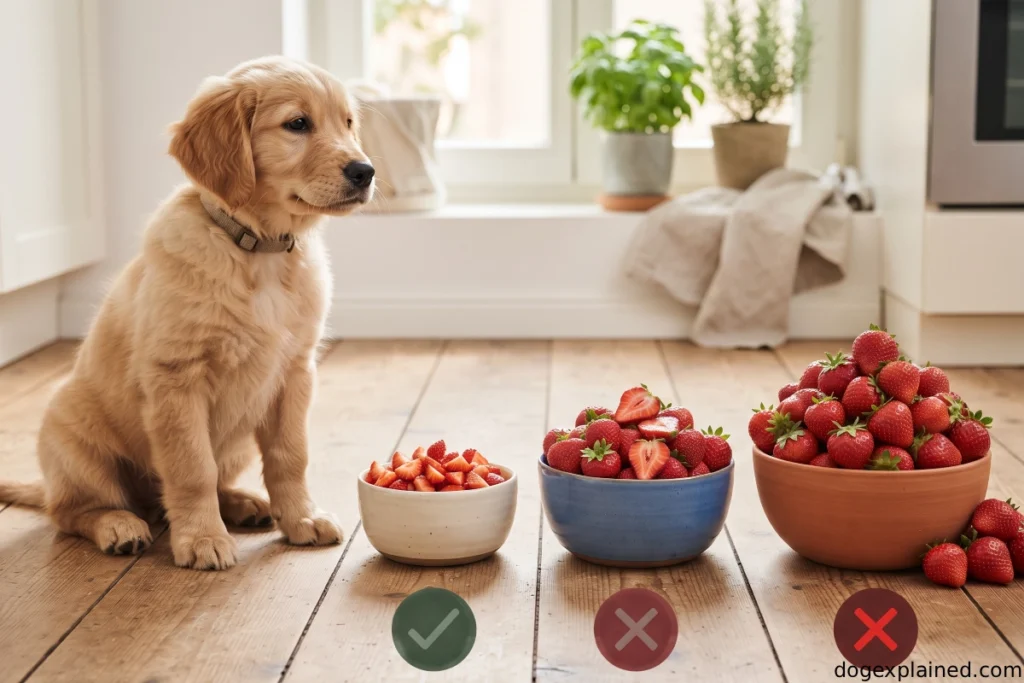
A useful general guideline is that all treats and snacks combined should provide no more than about 10% of daily calories.
That 10% is an overall treat allowance, not a target for strawberries alone.
For a puppy trying strawberries for the first time, begin with a small piece rather than trying to use the full treat allowance.
Most of a growing puppy’s calories should continue to come from complete and balanced food formulated for growth.
Are Strawberries Good for Puppies?
Fresh strawberries contain water, fiber, vitamin C, and naturally occurring plant compounds.
They can therefore be a refreshing, relatively low-calorie alternative to some more calorie-dense treats.
However, strawberries are not necessary for a puppy to obtain these nutrients.
A nutritionally complete puppy food should remain the foundation of the diet. Fruit is simply an optional treat.
Strawberries also contain natural sugar, so the presence of vitamins and fiber does not mean unlimited portions are appropriate.
Can Strawberries Upset a Puppy’s Stomach?
Yes. Even a food that is safe for many dogs can cause digestive upset if a puppy eats too much or does not tolerate it well.
Possible signs include:
- loose stool or diarrhea
- vomiting
- gas
- bloating
- stomach discomfort
- reduced appetite
Stop offering strawberries if they appear to trigger digestive problems.
Contact your veterinarian if symptoms are persistent, severe, or accompanied by lethargy, repeated vomiting, swelling, breathing difficulty, or another concerning change.
What About Strawberry Leaves and Stems?
Remove the leafy tops and stems before giving strawberries to a puppy.
They are not needed as part of the treat and may be tougher to digest than the soft fruit.
Serving only the washed strawberry flesh also makes the portion easier to cut into pieces appropriate for a young dog.
Do not intentionally offer the green tops as a chew or snack.
Can Puppies Eat Frozen Strawberries?
Plain frozen strawberries can be offered in moderation, but preparation still matters.
Wash the berries and remove the stems and leaves before freezing them.
Cut them into appropriately sized pieces before serving.
For small puppies or puppies that gulp their food, allowing a frozen strawberry piece to soften slightly may make it easier to manage.
Do not use frozen strawberry products containing added sugar, syrups, chocolate, artificial sweeteners, or other added ingredients.
When Strawberries May Not Be a Good Choice
Speak with your veterinarian before introducing strawberries or other human foods if your puppy:
- has diabetes or another condition affecting blood sugar
- is overweight or on a strict calorie plan
- has a sensitive gastrointestinal tract
- has known food allergies or sensitivities
- follows a veterinarian-prescribed diet
- is currently having vomiting or diarrhea
- is undergoing a significant diet change
Some veterinary diets depend on careful control of additional foods and treats.
If your veterinarian has recommended a specific feeding plan, follow that plan rather than adding fruit routinely.
Frequently Asked Questions
Can Puppies Eat Strawberries Every Day?
Strawberries do not need to be part of a puppy’s everyday diet.
An occasional small serving is enough for most puppies.
If strawberries are offered regularly, their calories still count toward the same overall treat allowance as training treats, chews, and other snacks.
Cut the fruit into pieces appropriate for your puppy’s size. Smaller puppies may need especially small pieces.
They provide no necessary benefit as part of the treat and are tougher than the soft fruit.
Can Puppies Eat Strawberry Yogurt?
Plain fresh strawberries are a simpler choice than strawberry-flavored yogurt.
Flavored yogurts may contain added sugar, sweeteners, flavorings, or other ingredients that are unnecessary or potentially unsafe for dogs.
If you want to offer any dairy product to your puppy, check the ingredient list carefully and ask your veterinarian if you are unsure whether it is appropriate.
For routine feeding, wash fresh strawberries, remove the tops and stems, cut the fruit into puppy-sized pieces, and offer only a small amount as an occasional treat. Stop feeding strawberries if your puppy develops digestive or other concerning symptoms, and ask your veterinarian for individualized guidance if your puppy has a medical condition or special diet.