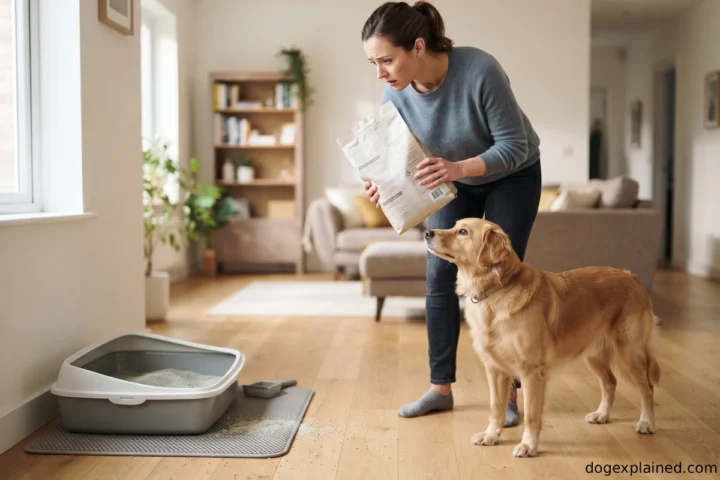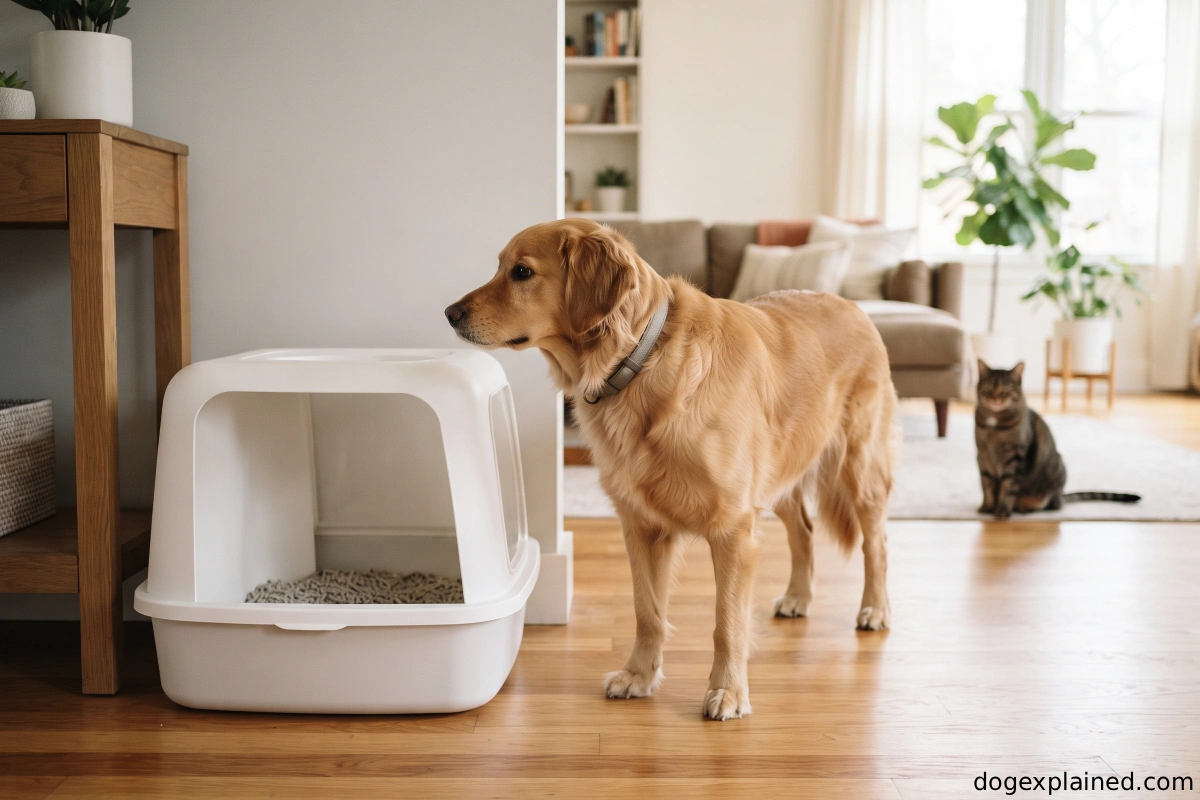
Discovering your dog with their head buried in the cat’s litter box is one of those pet-owner moments nobody enjoys.
To a dog, however, the litter box may look less like a bathroom and more like an interesting scavenging opportunity.
Eating feces is called coprophagia. Dogs may eat cat poop because of natural scavenging behavior, habit, easy access, interesting smells, boredom, or other behavioral and environmental factors.
Our broader guide to why dogs eat poop explains coprophagia across different situations, including dogs eating their own stool or feces from other animals.
The behavior is unpleasant, but understanding why it happens makes prevention much easier.
Why Do Dogs Eat Cat Poop?
Dogs do not share our opinion of what counts as disgusting.
They investigate the world largely through smell and taste, and many dogs are naturally opportunistic scavengers.
Cat feces can have a strong smell that attracts a curious dog. The litter box also provides a predictable location where the dog may repeatedly find something they consider rewarding.
If your dog gets into the litter box successfully several times, the behavior can quickly become a habit.
Our broader guide to why dogs eat poop explains coprophagia across different situations, including dogs eating their own stool or feces from other animals.
Why Is Cat Poop So Attractive to Dogs?
There probably is not one universal reason.
For some dogs, smell alone may be enough.
Cat food tends to contain ingredients and aromas that dogs find appealing, and cat feces may retain odors that attract a scavenging dog.
Other dogs may investigate simply because the litter box is:
- easy to reach
- consistently available
- interesting to smell
- somewhere humans react strongly when the dog approaches
Once the dog has eaten cat poop and found the experience rewarding, repeated access can strengthen the habit.
That is why physical management of the litter box is often more effective than repeatedly trying to tell the dog “no.”
Is It Normal for Dogs to Eat Cat Poop?
It is relatively common, but that does not mean you should encourage it.
Dogs are natural scavengers, and eating feces from other species can occur as part of exploratory behavior.
A dog occasionally showing interest in cat feces does not automatically mean they have a nutritional deficiency or behavioral disorder.
The pattern deserves more attention if the dog:
- becomes unusually obsessed with feces
- suddenly develops the behavior as an adult
- eats other non-food items as well
- has excessive hunger
- loses weight
- develops diarrhea or vomiting
- shows another significant health or behavior change
In those situations, discuss the behavior with your veterinarian.
Can Eating Cat Poop Make a Dog Sick?
Yes, it can.
Many dogs that steal a small amount of cat feces will not develop obvious illness, but another animal’s feces can contain infectious organisms.
Possible concerns include exposure to:
- intestinal parasites
- harmful bacteria
- other infectious organisms
- residues of medications or substances consumed by the cat
The actual risk depends on the cat’s health, parasite status, medications, what the dog consumed, and other individual factors.
Common signs of gastrointestinal upset after eating cat poop or litter can include:
- vomiting
- diarrhea
- excessive gas
- reduced appetite
- abdominal discomfort
- lethargy
A dog that becomes significantly unwell after eating feces should be evaluated by a veterinarian.
Can Dogs Get Worms or Parasites From Cat Poop?
Potentially.
Cat feces can contain infectious stages of certain parasites, depending on whether the cat is infected and the parasite involved.
Not every cat stool contains parasites, and not every exposure results in infection.
Risk becomes more concerning when the feces come from:
- an outdoor cat
- a cat with an unknown parasite-prevention history
- a cat with diarrhea
- an unknown animal
- areas contaminated by multiple animals
Dogs that repeatedly raid litter boxes or eat animal feces outdoors should have appropriate veterinary parasite prevention and monitoring.
Do not assume that a cat is parasite-free simply because the cat appears healthy.
What Should I Do If My Dog Ate Cat Poop?
If your dog ate a small amount of cat poop and is otherwise behaving normally, first prevent further access and monitor them.
Check whether litter was swallowed along with the feces.
Over the following period, watch for:
- repeated vomiting
- persistent diarrhea
- loss of appetite
- significant abdominal discomfort
- unusual lethargy
- difficulty passing stool
- dehydration
- another significant change from normal behavior
If your dog develops concerning symptoms, contact your veterinarian.
It is also reasonable to call your veterinarian sooner if:
- your dog is very small
- a large or unknown amount was eaten
- significant cat litter was swallowed
- the cat is taking medication
- the cat is ill
- the dog has an existing medical condition
- you are unsure what else was in the litter box
Do not try to induce vomiting or give a home remedy unless a veterinarian or veterinary toxicology professional specifically instructs you to do so.
What If My Dog Ate Cat Litter Too?
A small amount of litter stuck to cat feces is different from a dog deliberately eating a substantial quantity of litter.
Litter type and amount matter.
Some litter can cause gastrointestinal irritation, and larger amounts may contribute to constipation or obstruction concerns.
Clumping litter deserves particular attention because it absorbs moisture and forms clumps.
If your dog ate more than a small incidental amount of litter, contact your veterinarian for advice rather than guessing based only on the ingredient label.
Seek veterinary care if you notice:
- repeated vomiting
- abdominal pain
- loss of appetite
- significant lethargy
- difficulty passing stool
- failure to pass stool
- abdominal swelling
We will cover cat-litter ingestion separately because the appropriate response depends on the type and amount of litter consumed.
If your dog swallowed more than a few incidental grains of litter, see our guide on what to do if your dog ate cat litter.
How to Stop a Dog From Eating Cat Poop
The most effective strategy is to make cat poop consistently unavailable.
Training becomes much easier when the dog cannot keep rewarding themselves by reaching the litter box.
1. Restrict Access to the Litter Box
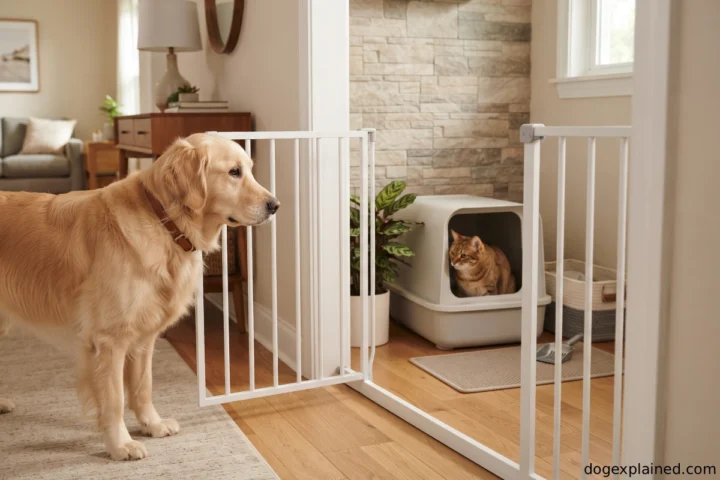
Place the litter box somewhere the cat can reach but the dog cannot.
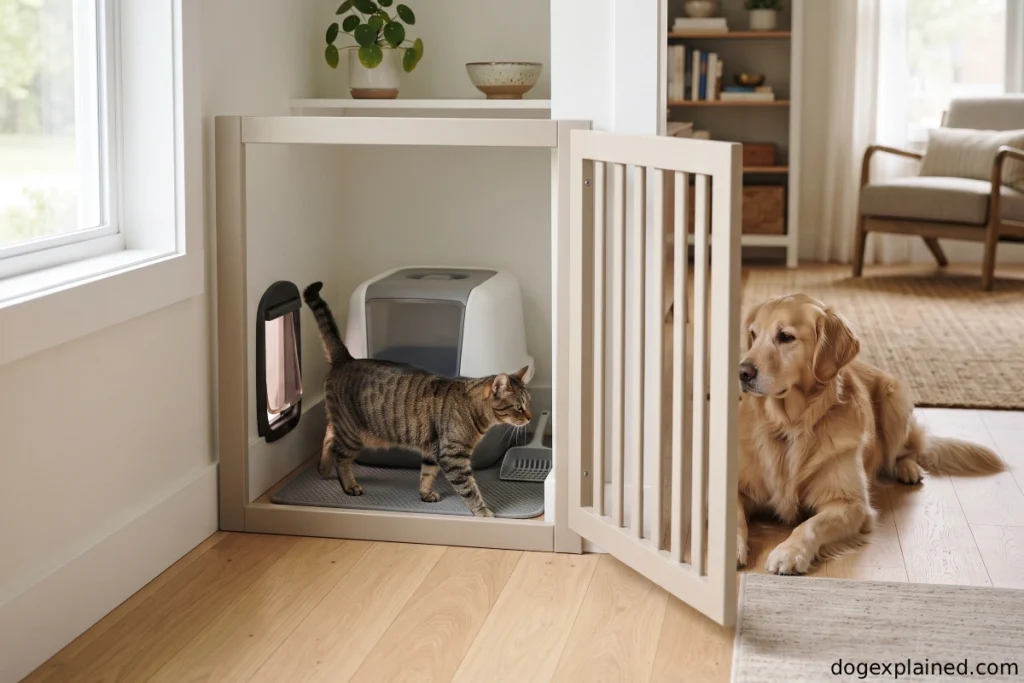
Options may include:
- a cat-only room
- a doorway controlled with an appropriate pet gate
- an elevated location that is genuinely safe and accessible for the cat
- a litter-box setup designed around the size difference between the pets
The solution should still allow the cat comfortable, reliable access.
Do not solve the dog’s problem by making the litter box stressful or difficult for the cat to use.
2. Scoop the Litter Box Frequently
Less available feces means fewer opportunities for the dog to practice the behavior.
Prompt cleanup is particularly useful if you know when your cat normally uses the litter box.
This will not replace access control, but it reduces the reward waiting for a dog that manages to reach the box.
3. Supervise the Dog Around the Litter Area
If the litter box is in a shared part of the home, pay attention when the dog begins moving toward it.
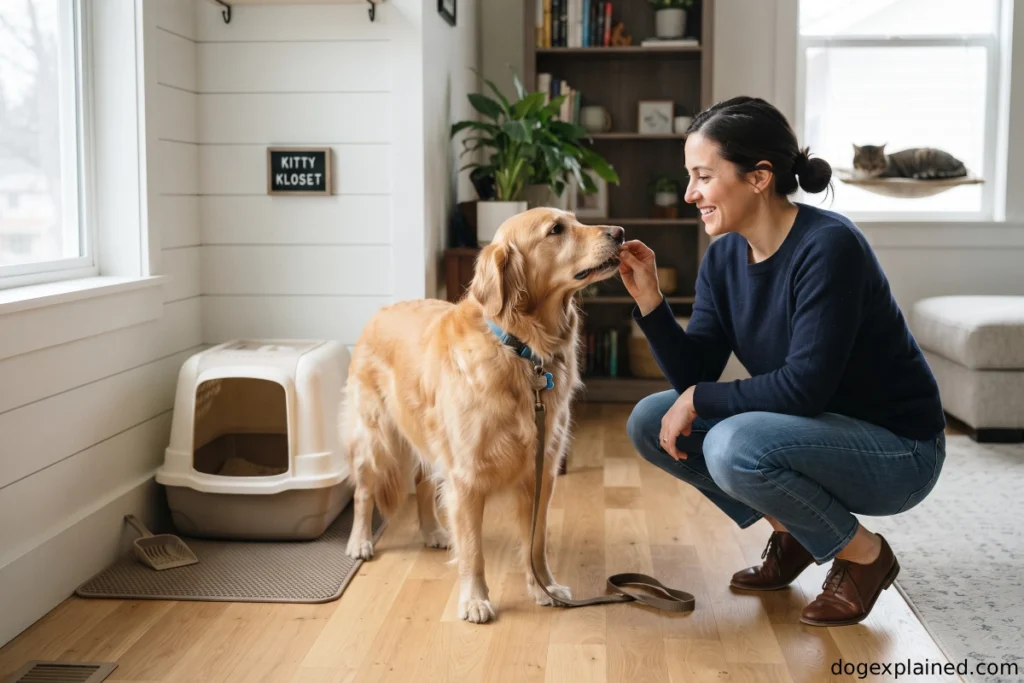
Intervene before the dog’s head is already inside the box.
Calmly call the dog away and reward them for choosing you instead.
The goal is to build this pattern:
notice litter area → turn away → move toward owner → receive something worthwhile
rather than:
reach litter box → human shouts → chase begins
4. Teach “Leave It”
Practice the cue first with ordinary low-value objects.
Reward the dog when they disengage from the object and look toward you.
Gradually work around greater distractions.
Do not repeatedly test your training by leaving an accessible dirty litter box and hoping the dog chooses correctly.
Management and training should work together.
5. Reward the Behavior You Want
If your dog walks past the litter-box area without approaching it, that is a behavior worth reinforcing.
Rewards might include:
- a small training treat
- praise
- play
- access to another activity
Over time, moving away from the litter area can become more worthwhile than investigating it.
6. Provide Enough Enrichment
Boredom is not the explanation for every dog that eats cat poop, but a dog’s daily needs still matter.
Provide appropriate opportunities for:
- walks
- sniffing
- play
- training
- food puzzles
- chewing
- social interaction
- rest
An enriched dog can still raid a litter box, so enrichment is not a substitute for access control.
It is one part of a complete management plan.
How to Keep Your Dog Away From the Litter Box
The best setup depends on your home’s layout and the size and mobility of both animals.
A useful setup has three qualities:
- the cat can reach the litter box comfortably
- the dog cannot
- the arrangement is easy enough that the household will use it consistently
For some homes that means a gated room.
For others, it may mean reorganizing where the litter box is located.
Avoid making the cat jump somewhere difficult or enter a frightening location simply to keep the dog away.
The cat’s litter-box needs still matter.
We will cover dog-proof litter-box setups in more detail in a separate guide.
For a step-by-step home setup, see our guide on how to keep a dog out of the litter box.
What Not to Do
Do Not Punish the Dog
Scolding, hitting, or frightening a dog near the litter box does not teach the alternative behavior you want.
It may add stress or teach the dog to raid the box when you are not watching.
Do Not Turn It Into a Chase
A dramatic chase through the house can make the incident more exciting.
Use environmental barriers so the dog cannot repeatedly start the game.
Do Not Assume the Dog Has a Nutritional Deficiency
Eating cat poop does not automatically mean the dog’s food is deficient.
If you are concerned about unusually intense hunger, weight loss, digestion, or nutrition, discuss those concerns with your veterinarian.
Do Not Depend on a Home Remedy
Pineapple, supplements, food additives, and other internet remedies are sometimes suggested for coprophagia.
They do not solve the basic problem of a dog having repeated access to a cat’s litter box.
Environmental management, cleanup, training, and veterinary evaluation when appropriate are more sensible starting points.
When to Call a Veterinarian
Contact your veterinarian if your dog develops illness after eating cat feces or litter.
Relevant warning signs include:
- repeated vomiting
- persistent diarrhea
- loss of appetite
- abdominal pain
- difficulty passing stool
- significant lethargy
- dehydration
- weakness
- abdominal swelling
- another major change in behavior or health
Also arrange a veterinary evaluation if your dog suddenly becomes intensely interested in eating feces or other non-food material, particularly if the behavior accompanies weight loss, excessive hunger, diarrhea, or another medical change.
Frequently Asked Questions
Why Does My Dog Eat Cat Poop but Not Dog Poop?
The smell, location, availability, and previous experience may make cat feces more attractive to an individual dog.
A litter box also provides a predictable place to find feces, which makes the habit easier to repeat.
Can Eating Cat Poop Give My Dog Diarrhea?
Yes.
Eating feces or litter can irritate the gastrointestinal tract, and infectious organisms in another animal’s stool may also cause illness.
Persistent or severe diarrhea deserves veterinary attention.
Can Dogs Get Sick From a Clean Indoor Cat’s Poop?
The risk may be lower when the cat is healthy and receives regular veterinary and parasite care, but it is not correct to assume the risk is zero.
Eating feces should still be discouraged.
Why Does My Dog Suddenly Want Cat Poop?
First look for changes in access, routine, boredom, or opportunity.
If an adult dog develops persistent new coprophagia—especially alongside increased hunger, weight loss, diarrhea, or other changes—talk to your veterinarian.
How Do I Stop My Dog From Getting Into the Litter Box at Night?
Physical access control is more reliable than expecting the dog to make the right choice while everyone is asleep.
Use a setup that lets the cat comfortably enter the litter area while preventing the dog from reaching it.
Should I Change My Cat’s Food to Stop the Dog Eating Cat Poop?
Not simply because the dog raids the litter box.
Changing a cat’s diet without a nutritional or medical reason may create an unnecessary problem for the cat.
Focus first on litter-box access, cleanup, supervision, and training.
To a scavenging dog, the litter box may remain interesting no matter how unpleasant it seems to us. The practical solution is not to convince the dog that cat poop is disgusting—it is to make the litter box unavailable, reward better choices, keep it clean, and involve your veterinarian when illness or a sudden behavior change raises concern.