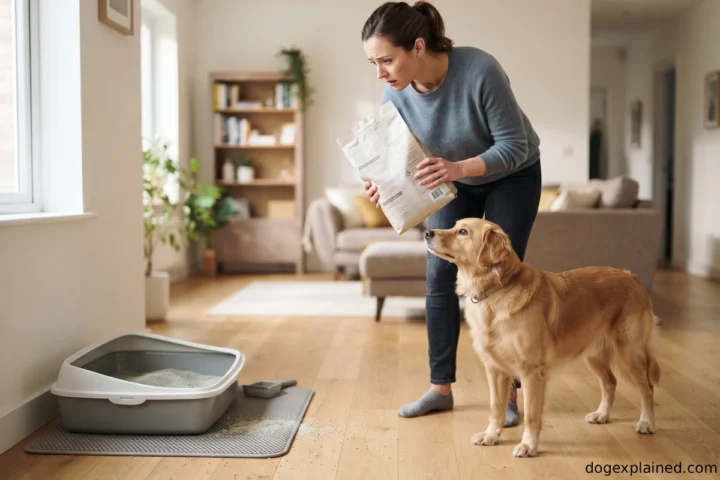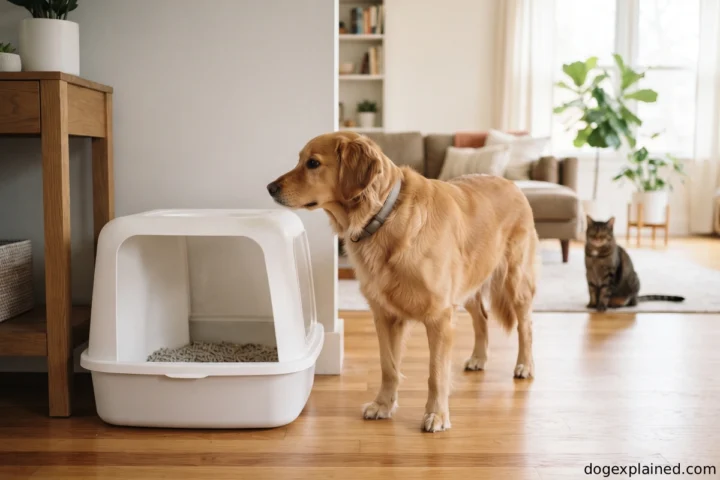
If your dog treats the litter box like an all-you-can-eat snack station, repeatedly saying “leave it” from across the room usually is not the best long-term solution.
The easiest behavior to stop is the one the dog does not get to practice.
That makes physical access control the foundation of a good setup. Training still matters, but it works much better when the litter box is not freely available every time you turn your back.
The challenge is finding a solution that works for both pets: the dog should stay out, while the cat should still be able to reach and use the litter box comfortably.
Here are eight practical options.
Why Does My Dog Keep Getting Into the Litter Box?
Dogs may investigate litter boxes because cat feces and litter carry strong and interesting smells, because scavenging is rewarding, or simply because they have learned that the box contains something worth checking.
Once a dog has successfully raided the litter box several times, the behavior can become a habit.
If you want a deeper explanation of the behavior and possible health risks, our guide to why dogs eat cat poop covers those questions in detail.
For this guide, the goal is more practical: make access difficult, keep the box clean, and teach the dog what to do instead.
1. Move the Litter Box to a Dog-Free Area
The simplest solution is often the best one.
If possible, place the litter box in a room or part of the home that the cat can reach but the dog cannot.
Possible locations include:
- a bathroom
- a utility room
- a spare room
- a cat-only section of the home
- another quiet area that can be physically separated
The location still needs to make sense for the cat.
Do not move the box somewhere noisy, frightening, difficult to reach, or so inconvenient that the cat starts avoiding it.
The ideal arrangement is boringly simple: the cat can come and go normally, while the dog never gets access to the box.
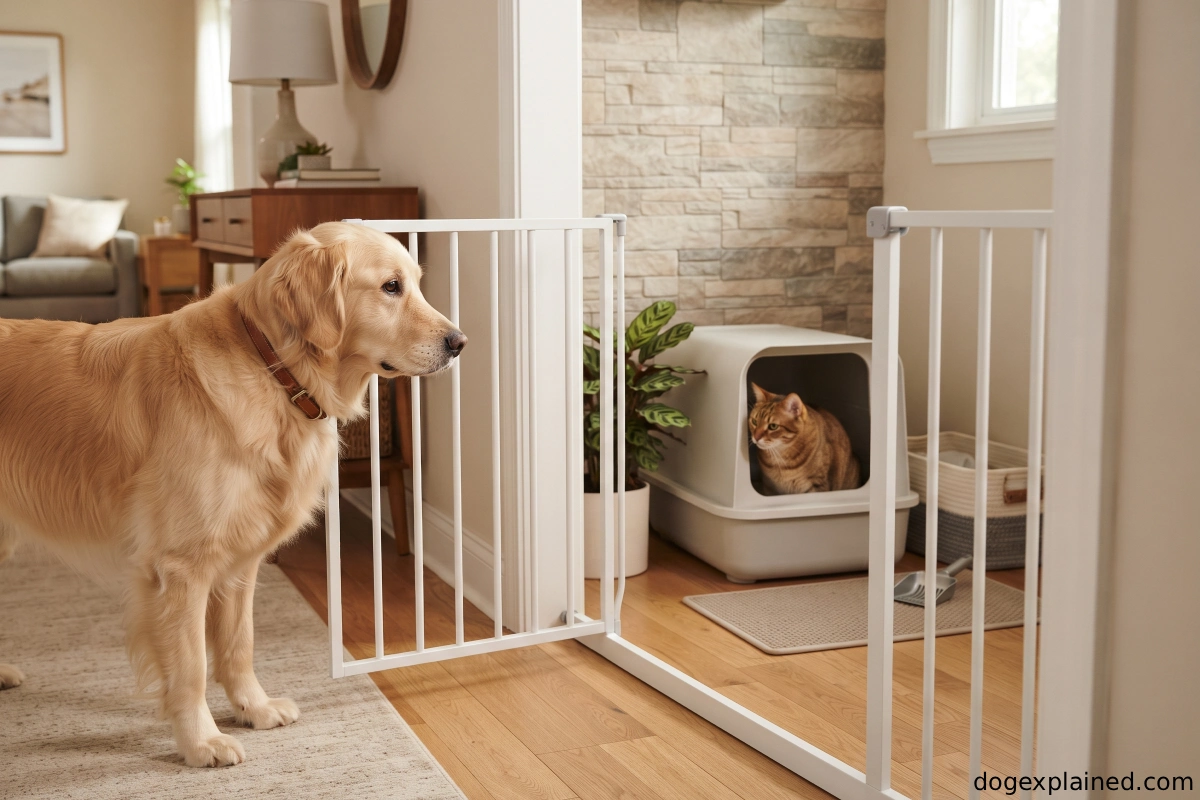
2. Use a Pet Gate With Cat Access
A pet gate can be one of the most practical solutions when cats and dogs share a home.
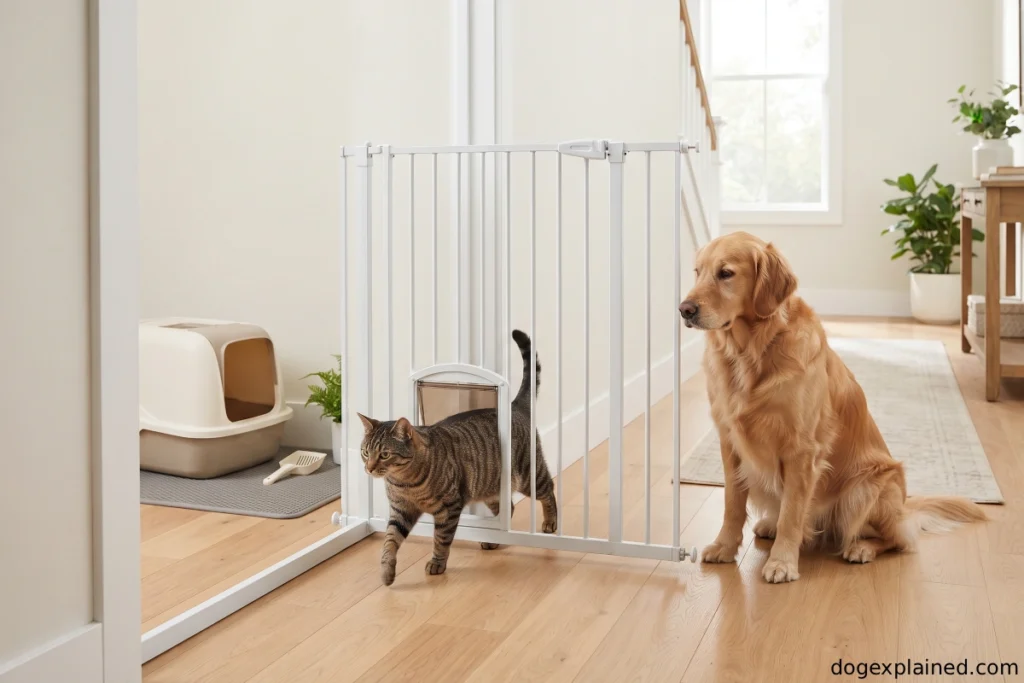
Depending on the size of your pets, you may be able to use:
- a gate with a small cat opening
- a gate positioned so the cat can move through but the larger dog cannot
- a doorway setup that gives the cat a safe route into the litter area
The key phrase is “depending on the size of your pets.”
A gate with a cat-sized opening does not help much if your dog is also cat-sized.
Make sure there is no risk of either pet becoming stuck in bars or openings, and make sure the cat does not have to squeeze, climb awkwardly, or rush past the dog every time they need the litter box.
3. Consider a Cat Door or Cat-Only Room
A cat door can work well when you have a room that can permanently become the litter-box area.
For homes with a larger dog and smaller cat, a simple cat-sized opening may be enough.
If the dog is small enough to follow the cat, a more controlled access system may be needed.
Some households use doors designed to recognize an individual pet’s microchip or collar tag.
The advantage is that access control happens automatically rather than relying on somebody remembering to close a gate.
Before making a permanent change to a door or wall, make sure:
- the cat is comfortable using the opening
- the dog cannot force their way through
- the litter-box room remains well ventilated and easy to clean
- the cat has a comfortable way to enter and leave
4. Use Height Carefully—If It Works for Your Cat
Moving the litter box higher than the dog can reach sounds like an easy solution.
For some households, it can work.
For others, it creates a new problem.
A young, agile cat may comfortably reach an elevated litter area, while an older cat or a cat with arthritis, pain, injury, obesity, or another mobility limitation may struggle.
Do not make your cat perform an obstacle course every time they need the bathroom.
If you consider an elevated location:
- make sure the platform is stable
- make sure the cat can get up and down easily
- avoid slippery surfaces
- keep the area large enough for comfortable litter-box use
- reconsider the setup if the cat hesitates or begins eliminating elsewhere
An arrangement that stops the dog but stops the cat too is not a successful solution.
5. Scoop the Litter Box Frequently
A clean litter box benefits both pets.
Removing feces promptly means there is less available for the dog to find if they manage to reach the area.
Frequent scooping can also make the litter box more pleasant for the cat.
If you know roughly when your cat tends to defecate, cleaning shortly afterward may dramatically reduce the dog’s opportunity.
However, cleanup should support access control rather than replace it.
A dog that is highly motivated to raid the box only needs one successful opportunity.
Think of cleanup and physical barriers as two parts of the same plan.
6. Supervise and Redirect Your Dog
If your dog approaches the litter area while you are present, use the moment to teach a better choice.
Instead of shouting or chasing:
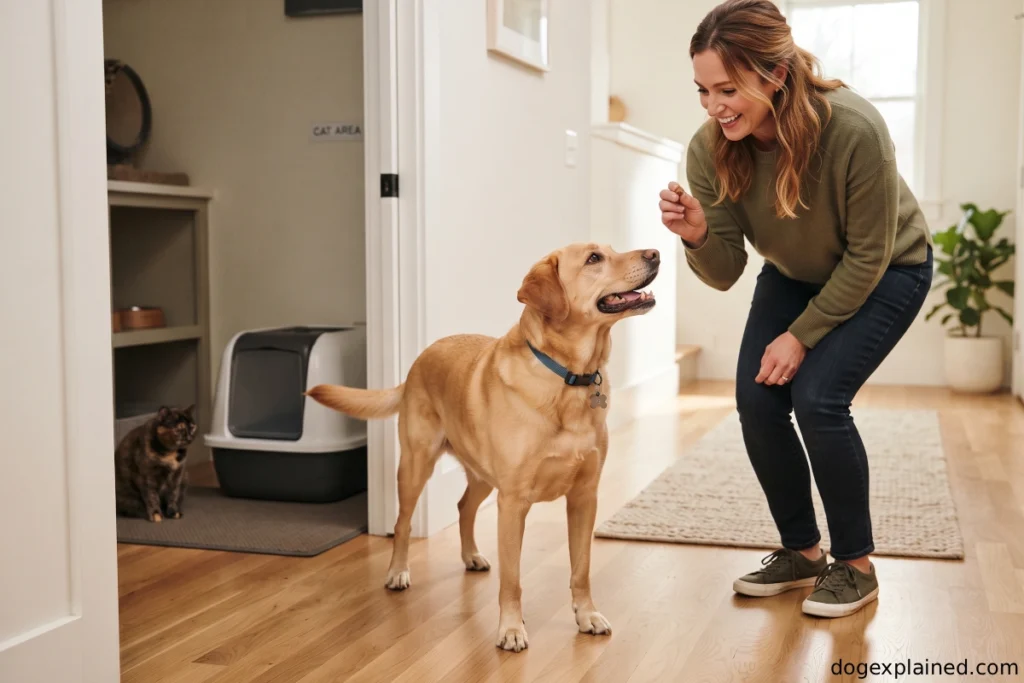
- calmly get the dog’s attention
- call them away
- reward them once they move toward you
- redirect them to another appropriate activity
That might be:
- resting on a mat
- playing with a toy
- chewing something appropriate
- following you into another room
- engaging in a brief training exercise
The goal is to make moving away from the litter area predictable and worthwhile.
Do not wait until the dog’s head is already inside the box before trying to intervene.
7. Teach a Strong “Leave It”
“Leave it” is useful well beyond the litter box.
Teach the cue away from cat feces first.
Start with something relatively uninteresting and reward your dog for disengaging from it.
Gradually increase the difficulty as the dog becomes reliable.
When training near the litter-box area:
- prevent actual access
- work at a distance where the dog can still respond
- reward generously for turning toward you
- keep sessions short
- increase difficulty gradually
Do not create a test by placing a dirty litter box in front of the dog and repeatedly seeing whether they fail.
Management prevents the unwanted behavior while training builds the alternative.
8. Reward Your Dog for Staying Away
Most owners notice the dog only when the dog’s nose is already heading toward the litter box.
Start noticing the opposite behavior too.
If your dog passes the litter-box doorway and keeps walking, reward it occasionally.
If the dog responds immediately when called away, reward it.
If the dog settles somewhere else while the cat uses the box, that can also be reinforced.
Rewards can include:
- a small training treat
- praise
- play
- access to a favorite toy
- another activity the dog enjoys
Over time, you are creating a new pattern:
litter area appears → dog chooses something else → good things happen.
Do Dog-Proof Litter Boxes Work?
Sometimes.
Products marketed as dog-proof litter boxes generally rely on features such as:
- top entry
- covered designs
- narrow entrances
- enclosed cabinets
- layouts that make it difficult for a dog’s head to reach the litter
They may solve the problem in some homes, but the word “dog-proof” should not be treated as a guarantee.
A determined small dog may fit through an opening designed for a cat.
More importantly, the litter box still has to work for the cat.
Some cats dislike enclosed or top-entry boxes, and those designs may be especially unsuitable for cats with mobility limitations.
Choose a litter-box design based on both animals rather than buying a product simply because the packaging says “dog-proof.”
What If Your Dog Is Small Enough to Follow the Cat?
This is where the classic “use a baby gate with a cat opening” advice can fall apart.
If a Chihuahua-sized dog can go everywhere the cat can go, size-based barriers may not solve the problem.
Options may include:
- a controlled-access cat door
- a separate room that can be secured
- changing the internal layout so the dog cannot approach the box directly
- closer supervision during problem times
- frequent scooping combined with training
The right answer depends more on your home and pets than on a single product.
Do not keep shrinking the cat’s entrance until the cat becomes uncomfortable using it.
What If You Have an Older or Less Mobile Cat?
Design the setup around the cat with the greatest access needs.
An older or mobility-limited cat may need:
- a low-entry litter box
- a box on the same floor where the cat spends most of their time
- an easy, level path to the box
- fewer barriers to climb over
- good lighting
- a quiet location
In this situation, protecting a normal accessible litter box behind a room-level barrier may be better than placing the box high on furniture or switching to a top-entry design.
Your dog’s convenience should not come at the expense of the cat’s ability to toilet comfortably.
Where Should You Put the Litter Box?
The best dog-resistant location is not automatically the best cat location.
Aim for somewhere that is:
- easy for the cat to reach
- relatively quiet
- away from sudden household traffic
- not right beside food or water
- easy for you to clean
- physically inaccessible to the dog
In a multi-cat home, avoid creating a situation where one pet can block everybody’s access to all available boxes.
A practical solution needs to work throughout the day, not only when someone is watching.
What Not to Do
Do Not Punish the Dog
Punishment does not make cat poop less interesting.
Shouting, hitting, frightening, or physically correcting the dog can increase stress without solving the access problem.
It may simply teach the dog to raid the box when you are not present.
Do Not Make the Cat’s Bathroom Difficult to Reach
Do not create a complicated barrier system and assume the cat will “figure it out.”
Watch what actually happens.
If the cat hesitates, struggles, stops using the box consistently, or appears uncomfortable entering or leaving the area, redesign the setup.
Do Not Assume a Covered Box Solves Everything
A covered or top-entry box can help in some homes, but it is not universally better.
Some cats prefer more open setups, and enclosed boxes can reduce visibility and escape options.
Use the individual cat’s behavior as feedback.
Do Not Depend Only on “Leave It”
Training is valuable, but expecting perfect impulse control around an unsupervised high-value temptation is unnecessary.
Physical management should do most of the heavy lifting.
Do Not Turn Litter-Box Raiding Into a Chase Game
If the dog approaches the litter box and you immediately start running after them, the interaction itself may become exciting.
Prevent access where possible and redirect calmly.
What If My Dog Keeps Eating Cat Poop Anyway?
If access continues despite your current setup, treat that as information.
Your barrier is not actually dog-proof yet.
Work through the environment again:
- Where is the dog getting in?
- Is somebody leaving a door open?
- Can the dog fit through the cat opening?
- Is the litter box sometimes accessible overnight?
- Is cleanup inconsistent?
- Does the dog have unsupervised access during certain parts of the day?
Fix the predictable opportunity first.
If your dog actually eats cat feces, especially repeatedly, our guide to why dogs eat cat poop covers health risks, warning signs, parasites, and when veterinary advice may be appropriate.
If the behavior suddenly becomes much more intense or occurs alongside excessive hunger, weight loss, vomiting, diarrhea, or another health change, discuss it with your veterinarian.
If your dog has already swallowed litter, our guide on what to do when a dog eats cat litter explains the risks, warning signs, and when to contact a veterinarian.
Frequently Asked Questions
Will a Baby Gate Keep My Dog Out of the Litter Box?
It can, particularly when the cat and dog are significantly different in size.
A gate with cat access may allow the cat through while stopping a larger dog.
It is less useful when the dog can fit through the same opening.
Is a Top-Entry Litter Box Better for Keeping Dogs Out?
A top-entry box may prevent some dogs from reaching the litter, but it is not ideal for every cat.
Cats with mobility problems, older cats, and cats that dislike enclosed or awkward litter-box designs may need another solution.
Should I Put the Litter Box on a Table?
Only if the cat can reach and use it comfortably and safely.
An elevated location may work for an agile cat and larger dog, but it is a poor choice for some senior or mobility-limited cats.
How Often Should I Scoop the Litter Box?
At least daily is a useful baseline, and more frequent scooping can help when a dog is actively trying to raid the box.
When practical, removing feces soon after the cat eliminates removes the dog’s opportunity.
How Do I Keep My Dog Out of the Litter Box at Night?
Use a physical barrier that works even when nobody is awake to supervise.
A cat-only room, appropriate gate, controlled-access door, or another secure setup is more reliable than expecting training alone to work overnight.
Can I Train My Dog to Completely Ignore the Litter Box?
Some dogs can become very reliable, but management is still sensible.
The litter box contains a highly rewarding temptation for some dogs, so there is little benefit in leaving it permanently accessible just to test the dog’s training.
Keeping a dog out of the litter box is usually less about finding one clever hack and more about building a setup that works every day. Restrict access, keep the box clean, reward the dog for choosing something else, and make sure the solution remains comfortable for the cat. The best system is the one both pets can live with consistently.